
Piece-rate pay adds complexity to compliance, especially around minimum wage, PF, and ESI. This blog explains how enterprises can manage output-based wage compliance, avoid common risks, and build structured workflows to improve payout accuracy, contractor
Introduction
Piece-rate work is widely used across blue-collar workforce environments in India.
Manufacturing units, garment factories, packaging lines, assembly operations, sorting centres, warehouses, loading teams, job-work units, agricultural processing units, and production-linked operations often use piece-rate wage models to connect worker earnings with measurable output.
At a surface level, the model looks simple.
A worker completes a defined quantity of work.
The enterprise applies a rate per unit.
The worker is paid based on accepted output.
But from a compliance standpoint, piece-rate payroll is not simple.
A piece-rate worker is still part of the workforce. The method of wage calculation does not remove the need for minimum wage compliance, PF and ESI evaluation, attendance records, wage slips, statutory deductions, overtime treatment, vendor accountability, and audit-ready documentation.
This is where many enterprises face risk.
Piece-rate systems are often treated as productivity models, while compliance teams treat payroll as a separate process. Output data may sit with supervisors. Attendance may sit in biometric systems or manual registers. Wage rates may sit in spreadsheets. Vendor bills may be raised separately. PF and ESI details may be submitted later by contractors.
When these processes are not connected, piece-rate payroll becomes vulnerable to errors.
Common risks include:
Workers earning below the applicable wage threshold
Missing attendance records
Unapproved rate changes
Incorrect output counts
Rejected units not explained clearly
PF or ESI applicability ignored
Vendor challans not reconciled
Wage slips not showing proper calculation
Payroll corrections handled manually
Weak audit trail during inspections or disputes
For enterprises, the challenge is not only to reward productivity. The challenge is to reward productivity without compromising wage protection, statutory compliance, worker trust, and payroll accuracy.
This is especially important when piece-rate workers are deployed through vendors or contractors. In such cases, the enterprise must be able to verify whether the vendor’s worker data, output records, attendance, payroll, statutory contributions, and invoice claims are aligned.
For CHROs, HR Operations leaders, payroll teams, compliance heads, plant HR teams, finance teams, and vendor managers, the core question is:
“How do we manage a piece-rate wage payment system that is productive, fair, compliant, and auditable?”
That is where structured piece-rate worker compliance becomes essential.
What Is Piece-Rate Pay?
Piece-rate pay is a wage payment model where workers are paid based on the quantity of work completed, rather than only the number of hours, days, or months worked.
In this model, the worker’s earning is linked to measurable output.
Examples include:
Number of garments stitched
Number of units packed
Number of boxes loaded
Number of parts assembled
Number of orders sorted
Number of items inspected
Number of pieces finished
Number of tasks completed
Number of production units accepted
Number of job-work items delivered
A simple piece-rate formula is:
Piece-rate payout = Accepted units completed × Rate per unit
For example:
A worker completes 500 accepted units.
The approved rate is ₹4 per unit.
The gross piece-rate value is ₹2,000 before applicable adjustments or deductions.
This model can work well when output is easy to measure and quality can be validated.
It is commonly used in environments where productivity varies by worker effort, skill, speed, or task completion. For enterprises, it helps link labour cost with actual output. For workers, it can create an opportunity to earn more when they produce more.
However, piece-rate pay must be governed carefully.
A piece-rate wage payment system should clearly define:
What counts as one unit
Which output is accepted
Which output is rejected
Who approves the output
What rate applies
When the rate applies
Whether rates differ by task, skill, product, shift, or site
How quality rejection is handled
How attendance is recorded
How minimum wage protection is validated
How PF and ESI are evaluated
How wage slips are generated
How vendor bills are reconciled
Without this structure, piece-rate payroll can quickly become dispute-heavy.
For example, a worker may claim 600 units, while the supervisor approves only 520 units after rejection. A vendor may raise an invoice based on submitted production, while the enterprise may approve only verified output. Payroll may calculate earnings based on accepted quantity, while compliance may need to validate whether the final wage meets applicable wage requirements.
These situations are common in high-volume operations.
That is why piece-rate pay should never be treated as only an output calculation. It must be treated as a payroll and compliance process.
Minimum Wage for Piece-Rate Workers in India
Minimum wage compliance is one of the most important obligations in piece-rate payroll.
Enterprises must understand a basic principle:
A worker paid on piece-rate should not be left below the applicable wage protection requirement merely because earnings are linked to output.
Piece-rate earnings may fluctuate due to several reasons.
A worker may produce fewer units because of:
Low production demand
Machine downtime
Material shortage
Supervisor allocation delay
Quality rejection
Skill difference
Short shift duration
Training period
Work interruption
Site-level operational constraints
If the enterprise pays only based on output without minimum wage validation, the worker’s earnings may fall below the required wage level for the relevant period.
This creates compliance risk.
Why minimum wage validation matters in piece-rate work
Piece-rate work is performance-linked, but compliance cannot depend only on performance.
The enterprise must ensure that the wage system does not result in underpayment for work performed under covered conditions.
This means piece-rate earnings should be checked against the applicable wage benchmark based on:
State
Zone
Scheduled employment
Skill category
Worker category
Wage period
Attendance or work duration
Applicable wage rate
Output-linked earnings
Any required adjustment
For example, if a worker’s accepted output for a wage period results in earnings lower than the applicable wage expectation, the enterprise should have a mechanism to identify the shortfall before payroll closure.
Practical enterprise scenario
Consider a packaging unit where workers are paid per box packed.
A worker is assigned to a shift but production is slowed due to material unavailability. The worker remains present for the day, but completes fewer boxes than usual.
If payroll is calculated only as units completed multiplied by rate per unit, the worker may earn less than the applicable wage threshold for that period.
In such a case, the issue is not worker productivity alone. The issue is wage protection.
The enterprise needs to ask:
Was the worker present and available for work?
Was low output caused by operational constraints?
Does the piece-rate payout meet the applicable wage requirement?
Is a shortfall adjustment required?
Is the calculation documented?
Is the wage slip clear?
Is the vendor bill aligned?
This is why minimum wage validation must be built into piece-rate payroll.
Why manual tracking fails
For one site and a small workforce, minimum wage validation may be possible through manual review.
But for large enterprises, piece-rate payroll may involve:
Thousands of workers
Multiple vendors
Multiple states
Different minimum wage rates
Different skill categories
Different products or tasks
Changing rate cards
Multiple shifts
Frequent output changes
Regular payroll corrections
Manual validation becomes unreliable in this environment.
Enterprises need a structured system that can connect worker data, site, skill category, attendance, wage rate, output, and payroll calculation before final payout.
The goal is not to avoid piece-rate pay. The goal is to make piece-rate pay compliant.
Do PF and ESI Apply to Piece-Rate Workers?
Yes, PF and ESI may apply to piece-rate workers if the worker, establishment, wage level, and employment arrangement fall within the applicable statutory coverage.
The method of wage payment does not automatically exclude a worker from statutory benefit coverage.
This is a common misunderstanding.
Some enterprises assume that if a worker is paid by output, the worker is outside PF or ESI coverage. That is not a safe assumption.
A worker may be paid:
Monthly
Daily
Hourly
Piece-rate
Task-based
Incentive-linked
Through a contractor
Through a vendor
Directly by the enterprise
The pay model alone does not decide whether PF or ESI applies.
The enterprise must evaluate the worker’s statutory coverage based on the applicable law, establishment coverage, worker status, wage thresholds, contribution rules, and the nature of engagement.
What employers should evaluate
For piece-rate workers, employers should check:
Is the establishment covered under PF?
Is the establishment covered under ESI?
Is the worker directly employed or contractor-supplied?
Is the worker eligible under PF rules?
Is the worker eligible under ESI rules?
What wage components must be considered?
Are piece-rate earnings captured in payroll?
Are vendor payroll records complete?
Are worker-wise challans available?
Are contributions reconciled with actual wages?
Are wage slips and statutory records aligned?
This becomes more important when piece-rate workers are supplied through contractors.
In such cases, the enterprise may not directly process the worker’s payroll, but it still needs visibility into whether the contractor is meeting applicable statutory obligations.
Why piece-rate complicates PF and ESI
Piece-rate earnings are variable.
One worker may earn more in one wage period and less in another. Earnings may depend on output, quality acceptance, overtime, shift allowance, incentives, and deductions.
This creates complexity because payroll teams must convert output data into wage data before statutory contribution logic can be applied.
If output data is not captured properly, PF and ESI calculations may be wrong.
If rejected output is not handled properly, worker earnings may be disputed.
If piece-rate payouts are processed outside payroll, statutory records may become incomplete.
If vendor summaries are accepted without worker-wise reconciliation, compliance gaps may remain hidden.
The safer approach is to treat piece-rate workers as part of the formal payroll and compliance process, even when their wage calculation is output-linked.
PF & ESI Obligations for Piece-Rate Workers in India
PF and ESI obligations for piece-rate workers require disciplined payroll design.
The enterprise must ensure that output-linked earnings are converted into payroll-ready wage data and that statutory applicability is evaluated correctly.
This is especially important when workers are deployed through contractors, because vendor-submitted records must be verified against enterprise workforce data.
PF obligations for piece-rate workers
For PF, the enterprise must identify whether the worker is covered and whether contributions are required based on applicable rules.
For piece-rate workers, PF compliance requires accurate wage classification.
Enterprises should ensure:
Worker identity is verified
UAN is captured where applicable
Worker is mapped to the correct vendor or employer
Worker category is defined correctly
Wage components are classified properly
Output-linked earnings are captured in payroll
Eligible wage components are considered for contribution
Contributions are calculated correctly
Worker-wise records are maintained
Vendor challans are reconciled where applicable
Exit and rehire cases are tracked
A major risk arises when piece-rate payments are handled outside the formal payroll system.
For example, if a worker receives output-linked earnings but those earnings are not reflected properly in payroll records, PF contribution records may become incomplete.
Another risk arises when vendors submit consolidated challans without worker-wise clarity. The enterprise may know the total contribution was paid, but not whether the right worker-wise wage base was used.
For large enterprises, this is not enough.
PF compliance should be traceable at worker level.
ESI obligations for piece-rate workers
ESI compliance also requires accurate wage tracking and worker eligibility assessment.
For piece-rate workers, the challenge is that wages may vary across wage periods.
Enterprises should ensure:
Worker ESI number or IP details are captured where applicable
Worker eligibility is assessed correctly
Wage-period earnings are calculated accurately
Included wage components are identified
Piece-rate earnings are linked to payroll
Attendance and work records support wage calculation
Contributions are calculated correctly
Vendor challans are reconciled
Worker-wise records are available
Wage slips are consistent with payroll data
If piece-rate earnings fluctuate, the system must still maintain accurate wage records for contribution purposes.
Contractor-supplied piece-rate workers
Many piece-rate workers are not directly employed by the enterprise. They are supplied by contractors or manpower vendors.
This creates a three-layer compliance challenge:
The worker performs output-linked work.
The contractor processes payroll and statutory contributions.
The enterprise depends on contractor records for compliance assurance.
This model can create gaps if the enterprise does not have visibility.
Common issues include:
Vendor does not submit worker-wise payroll
PF or ESI challans are submitted in aggregate
Worker count does not match attendance
Output records do not match wage records
Wage slips are not shared
Statutory deductions are not explained
Contributions do not match actual earnings
Vendor bill does not match verified output
Exit workers remain active in vendor records
Enterprises should therefore track contractor-supplied piece-rate workers at worker level, not only vendor level.
The enterprise should be able to connect:
Worker identity
Vendor
Site
Attendance
Output
Piece-rate earnings
Wage slip
PF applicability
ESI applicability
Contribution proof
Vendor invoice
Audit records
Without this linkage, piece-rate compliance remains dependent on vendor declarations.
Common Compliance Risks in Piece-Rate Payouts
Piece-rate payouts create specific compliance risks because the wage calculation depends on output, quality, rate cards, attendance, approvals, and statutory rules.
If even one input is incorrect, the final payout can become wrong.
Underpayment against minimum wage
This is the most serious risk in piece-rate payroll.
If output-linked earnings fall below the applicable wage requirement and no adjustment is made, the enterprise may face underpayment exposure.
This can happen when:
Piece rates are too low
Output is disrupted by operational constraints
Rejection rates are high
Workers are new or under training
Attendance is not considered
Minimum wage validation is not performed
Vendors calculate payout independently
Rate revisions are delayed
A compliant piece-rate payroll process must identify wage shortfalls before payroll closure.
Missing attendance records
Some enterprises focus only on output and do not maintain accurate attendance for piece-rate workers.
This is risky.
Attendance is still important for:
Wage period validation
Site presence tracking
Overtime evaluation
Statutory registers
Worker safety
Payroll audit
Vendor billing
Exit and rehire tracking
A piece-rate worker should not disappear from attendance systems simply because pay is output-linked.
Incorrect output recording
Output data is the core input in piece-rate payroll.
If output is recorded manually, verbally, or only through supervisor notes, disputes are common.
Workers may dispute:
Units counted
Units rejected
Quality status
Rate applied
Group output distribution
Supervisor approval
Timing of output capture
Incorrect output recording directly affects wage calculation.
Unclear rate cards
Piece-rate payroll depends on approved rates.
If rate cards are not documented properly, different teams may apply different rates.
This creates disputes between workers, supervisors, vendors, payroll teams, and finance teams.
Rate cards should define:
Task or product
Unit definition
Rate per unit
Skill category
Site applicability
Effective date
Approval owner
Revision history
Without rate governance, piece-rate payroll becomes vulnerable to inconsistency.
PF and ESI exclusion errors
Piece-rate workers may be wrongly excluded from PF or ESI coverage because they are not paid a fixed salary.
This is a compliance risk.
The enterprise should evaluate statutory applicability based on coverage and eligibility, not merely the pay model.
Vendor challan mismatch
For contractor-supplied workers, vendor challans may not match worker-wise wage data.
This can happen when:
Vendor submits consolidated challans
Worker names do not match
UAN or ESI numbers are missing
Wage data differs from enterprise records
Attendance is not reconciled
Exited workers remain active
New workers are missing from challans
This creates audit risk for the enterprise.
Wage slip transparency gaps
Workers should understand how their wages were calculated.
In piece-rate systems, wage slips should ideally show:
Units completed
Units accepted
Rate per unit
Gross earnings
Adjustments
Deductions
Statutory contributions
Net payout
If workers cannot understand the calculation, disputes and mistrust increase.
Manual payroll correction cycles
Piece-rate payroll often requires adjustments due to rejected output, delayed production data, rate changes, missing attendance, overtime approval, or vendor disputes.
If corrections are handled through emails and spreadsheets, audit trails become weak.
Group output allocation disputes
In group piece-rate models, team output must be divided among workers.
If the allocation method is unclear, workers may dispute individual earnings.
Enterprises should define whether allocation is based on attendance, hours worked, skill level, task contribution, or supervisor approval.
No audit trail for approvals
Piece-rate payroll needs clear approval trails.
The enterprise should know:
Who approved the rate
Who verified output
Who accepted or rejected units
Who approved wage adjustments
Who validated minimum wage
Who approved PF and ESI treatment
Who authorized vendor billing
Without this, payroll becomes difficult to defend.
Minimum Wage and PF Compliance Checklist for Piece-Rate Payrolls
Enterprises should use a structured checklist before closing piece-rate payroll.
This checklist should be used by HR, payroll, compliance, plant HR, finance, operations, and vendor teams.
Compliance Area | What Enterprises Should Check | Why It Matters |
Worker Identity | Worker profile, ID, photo, vendor, site, role, category, and employment status are correctly maintained. | Prevents duplicate records, wrong payroll mapping, and weak audit trails. |
Vendor Mapping | Worker is linked to the correct contractor, work order, department, site, and cost centre. | Ensures vendor accountability and accurate billing. |
Attendance Record | Attendance is captured for the wage period and linked to the worker profile. | Supports wage validation, overtime, compliance records, and site traceability. |
Output Record | Units completed, accepted output, rejected output, and quality status are recorded clearly. | Ensures piece-rate payout is based on verified output. |
Rate Card | Piece rate is approved, documented, version-controlled, and mapped to the correct task, site, or product. | Reduces disputes and supports audit readiness. |
Minimum Wage Validation | Output-linked earnings are checked against applicable wage requirements. | Prevents underpayment and wage compliance exposure. |
Wage Shortfall | Any shortfall is identified and adjusted before payroll closure. | Ensures productivity-linked pay does not result in unfair wages. |
PF Applicability | Eligible workers are identified and contribution logic is applied correctly. | Reduces statutory contribution errors. |
ESI Applicability | Eligible workers are identified and contribution logic is applied correctly. | Supports medical and social security compliance where applicable. |
Wage Components | Relevant wage components are classified properly for payroll and statutory contribution purposes. | Prevents incorrect contribution calculation. |
Overtime and Exceptions | Overtime, holiday work, weekly off work, missing attendance, and corrections are approved through workflow. | Prevents informal payout changes and disputes. |
Wage Slip | Wage slip shows output, rate, earnings, deductions, statutory contributions, and net payout clearly. | Improves worker trust and reduces queries. |
Vendor Challans | Contractor PF and ESI challans are reconciled with worker-wise payroll records. | Reduces contractor compliance risk. |
Vendor Billing | Vendor invoices are matched with verified attendance, output, wages, and contract terms. | Prevents overbilling and billing disputes. |
Audit Trail | Rate approvals, output approvals, payroll changes, contribution logic, and exceptions are traceable. | Improves audit readiness and defensibility. |
This checklist should not be used only after payroll is processed.
It should be embedded before payroll and vendor billing closure.
How Enterprises Can Ensure Compliance in a Piece-Rate Wage Payment System
Enterprises can ensure compliance in a piece-rate wage payment system by connecting output, attendance, wage rules, statutory eligibility, payroll, vendor billing, and audit records.
A compliant system should not treat piece-rate payout as a standalone calculation.
It should be part of a controlled workforce lifecycle.
Define clear piece-rate rules
Every piece-rate model should have documented rules.
These rules should define:
Task or unit definition
Rate per unit
Accepted output
Rejected output
Quality criteria
Minimum wage protection
Wage period
Attendance requirement
Overtime treatment
Group allocation logic
Supervisor approval
Rate revision process
Workers, vendors, supervisors, payroll teams, finance teams, and compliance teams should work from the same rule set.
Maintain approved and version-controlled rate cards
Rate cards should not sit in informal spreadsheets.
A structured rate card should include:
Task name
Product or process
Unit definition
Worker category
Skill category
Site
Vendor
Effective date
Rate per unit
Approval owner
Revision history
Expiry date where applicable
This ensures that payroll calculations are based on approved rates.
Link output with worker identity
Every output record should be linked to the correct worker.
This requires accurate worker identity, vendor mapping, site allocation, attendance, and supervisor approval.
For group piece-rate models, the enterprise should define how group output is distributed among workers.
Capture attendance even for output-linked workers
Attendance is still required in piece-rate environments.
It supports:
Site presence
Wage period validation
Overtime review
Safety tracking
Statutory records
Payroll defensibility
Vendor billing reconciliation
Piece-rate payroll should not operate without attendance.
Validate minimum wage before payroll closure
The system should compare piece-rate earnings with the applicable wage requirement.
If earnings fall below the required level, the shortfall should be flagged and corrected before payroll closure.
This is the most important compliance control in piece-rate payroll.
Apply PF and ESI rules systematically
PF and ESI applicability should not be decided manually every payroll cycle.
The system should apply configured rules based on worker category, wage data, establishment coverage, statutory eligibility, and vendor mapping.
Payroll and compliance teams should review exceptions before finalization.
Reconcile contractor records with enterprise data
For contractor-supplied piece-rate workers, vendor submissions should be reconciled with enterprise records.
This includes:
Worker list
Attendance
Output
Wage calculation
PF and ESI applicability
Challans
Wage slips
Invoice value
Contractor service charge
Billing adjustments
This prevents blind reliance on vendor declarations.
Provide transparent wage slips
Workers should understand how their payout was calculated.
A good wage slip should show:
Output completed
Accepted output
Rate per unit
Gross earnings
Adjustments
Overtime where applicable
Deductions
Statutory contributions
Net payout
Transparency improves trust and reduces disputes.
Close exceptions before payroll
Piece-rate payroll should have structured workflows for:
Missing output
Rejected output
Rate mismatch
Attendance mismatch
Overtime approval
Minimum wage shortfall
Worker category correction
PF and ESI exception
Vendor billing dispute
Exceptions should be resolved before payroll closure, not after payout.
Maintain audit-ready records continuously
Enterprises should be able to produce records for:
Worker onboarding
Attendance
Output
Rate card
Wage calculation
Minimum wage validation
PF and ESI contribution
Vendor challans
Wage slips
Approvals
Exceptions
Payroll corrections
Vendor invoice reconciliation
Audit readiness should be continuous, not last-minute.
How BeeForce Helps Manage Compliance for Piece-Rate Workers
BeeForce by BlueTree helps enterprises manage piece-rate worker compliance by connecting worker identity, attendance, output, payroll readiness, compliance checks, vendor billing, and audit trails into one workforce operating layer.
This is important because piece-rate payroll depends on multiple inputs.
If worker identity, attendance, output, rate cards, wage calculations, statutory data, and vendor billing are not connected, compliance risk increases.
BeeForce helps enterprises move from manual piece-rate calculation to structured piece-rate workforce governance.
Worker identity and vendor mapping
BeeForce helps enterprises maintain structured worker records across vendors, sites, departments, roles, and worker categories.
This ensures that piece-rate payouts are linked to the correct worker and the correct contractor.
For enterprises managing thousands of contract and blue-collar workers, this reduces duplicate records, ghost worker risk, wrong vendor mapping, and payroll mismatch.
Attendance and workforce visibility
BeeForce helps capture and manage attendance across workforce locations and operating models.
For piece-rate workers, attendance visibility supports wage period validation, site presence, overtime review, compliance records, and vendor reconciliation.
This helps enterprises avoid the risk of output being recorded without verified worker presence.
Rate card and payout governance
BeeForce can support structured rate management by helping enterprises define rates, effective dates, task categories, approval status, and revision history.
This reduces disputes around which rate applies to which worker, task, site, or period.
Output-linked payroll readiness
Piece-rate payroll needs clean output and workforce data before payout calculation.
BeeForce helps enterprises organize worker records, attendance, approvals, wage rules, exceptions, and vendor mapping so payroll teams receive cleaner payout inputs.
This reduces manual correction cycles.
Minimum wage validation support
BeeForce helps enterprises strengthen minimum wage compliance by connecting worker category, location, attendance, wage data, and payout records.
This makes it easier to identify wage shortfalls and correct them before payroll closure.
The value is not only calculation speed. The value is reducing underpayment risk.
PF and ESI compliance visibility
BeeForce helps enterprises improve visibility into statutory readiness for contract and piece-rate workers.
Worker-wise records, vendor data, wage inputs, payroll summaries, and compliance records can be aligned to support PF and ESI workflows.
This gives compliance teams better control over worker coverage, missing details, vendor submissions, and audit requirements.
Vendor billing reconciliation
For contractor-supplied piece-rate workers, BeeForce helps connect verified workforce data with vendor billing.
Vendor invoices can be validated against worker identity, attendance, approved output, rate cards, payroll-ready data, and statutory records.
This reduces disputes caused by mismatched output, attendance, wage calculation, or contribution proof.
Exception workflows and approvals
Piece-rate payroll often includes exceptions.
BeeForce helps teams manage exceptions such as missing attendance, rate mismatch, rejected output, wage shortfall, overtime approval, worker category changes, and vendor billing differences.
Each exception can be routed through defined owners and approval workflows.
This improves control and auditability.
Audit-ready records and dashboards
BeeForce helps enterprises maintain traceable records for onboarding, attendance, output, payroll readiness, compliance checks, approvals, corrections, and vendor accountability.
Dashboards help HR, payroll, compliance, finance, plant HR, and leadership teams monitor piece-rate workforce governance more effectively.
Connected workforce lifecycle
The strongest value of BeeForce is that piece-rate compliance is not managed in isolation.
Worker onboarding, attendance, payroll readiness, compliance records, vendor billing, grievance workflows, and workforce intelligence operate as connected processes.
This helps enterprises manage productivity-linked pay without losing compliance control.
The Benefits of a Compliant Piece-Rate System
A compliant piece-rate system creates value for both enterprises and workers.
It allows enterprises to maintain productivity-linked pay while protecting fairness, statutory compliance, payroll accuracy, and audit readiness.
Better productivity alignment
Piece-rate systems encourage productivity because workers are rewarded based on output.
When the system is compliant, enterprises can improve productivity without creating wage risk.
Workers can earn based on performance, while enterprises retain control over wage protection and statutory obligations.
Stronger worker trust
Workers trust the system when they understand how output is measured, how rates are applied, how deductions are calculated, and how statutory benefits are handled.
Transparent wage slips and accurate payouts reduce disputes.
This is important because wage confusion is one of the fastest ways to damage blue-collar workforce trust.
Reduced compliance exposure
A compliant system helps enterprises reduce risks related to:
Minimum wage shortfall
PF contribution errors
ESI contribution errors
Missing wage records
Poor attendance records
Weak audit trails
Contractor non-compliance
Wage slip gaps
This improves overall compliance discipline.
Lower payroll correction effort
When output, attendance, rates, and compliance checks are connected before payroll closure, correction cycles reduce.
This saves time for HR, payroll, vendors, finance, compliance, and site teams.
Better vendor accountability
For contractor-supplied workers, vendor performance becomes easier to measure.
Enterprises can track whether vendors are submitting accurate worker data, attendance, output, wage records, challans, and billing documents.
This moves vendor governance from follow-up to evidence-based control.
Improved audit readiness
A structured piece-rate system creates stronger records for wage calculation, statutory contribution, attendance, vendor billing, and compliance review.
This reduces last-minute audit preparation and improves confidence during inspections, customer audits, and internal reviews.
More controlled workforce cost
A compliant piece-rate system helps enterprises align labour cost with output while reducing leakage, billing mismatch, payroll disputes, and statutory risk.
This improves both operational control and finance visibility.
Better balance between productivity and fairness
The strongest piece-rate systems do not choose between productivity and fairness.
They support both.
Workers are rewarded for output, but the enterprise also ensures wage protection, statutory coverage, transparent calculation, and compliant records.
This makes the model sustainable at scale.
Conclusion
Piece-rate pay can be an effective model for blue-collar workforce management when output is measurable and quality can be controlled.
It helps enterprises link labour cost with productivity and gives workers the opportunity to earn based on performance.
But piece-rate pay must be managed carefully.
The model does not remove minimum wage obligations. It does not automatically exclude workers from PF or ESI coverage. It does not reduce the need for attendance records, wage slips, payroll controls, vendor reconciliation, or audit-ready documentation.
For enterprises, the real challenge is managing piece-rate compliance at scale.
This requires accurate worker identity, verified attendance, approved rate cards, output tracking, minimum wage validation, PF and ESI applicability checks, vendor challan reconciliation, transparent wage slips, and structured payroll workflows.
Manual systems are not enough for this level of complexity.
As enterprises scale piece-rate workforce models across vendors, sites, shifts, products, and worker categories, compliance must be built into the payroll process from the beginning.
BlueTree BeeForce helps enterprises manage this complexity by connecting onboarding, attendance, output-linked payroll readiness, wage rules, compliance records, PF and ESI visibility, vendor billing, approvals, and workforce intelligence.
The outcome is a piece-rate wage payment system that supports productivity without compromising fairness, statutory compliance, worker trust, or audit readiness.


Manage External Workforce with BlueTree - Govern contract, gig, and blue collar workers across vendors, sites, and shifts.
Frequenty Asked Questions
4-5 Minutes
|
All
category
Global Payroll Week 2026: Why Blue Collar Payroll Needs Better Governance
Read More >
7-8 Minutes
|
All
category
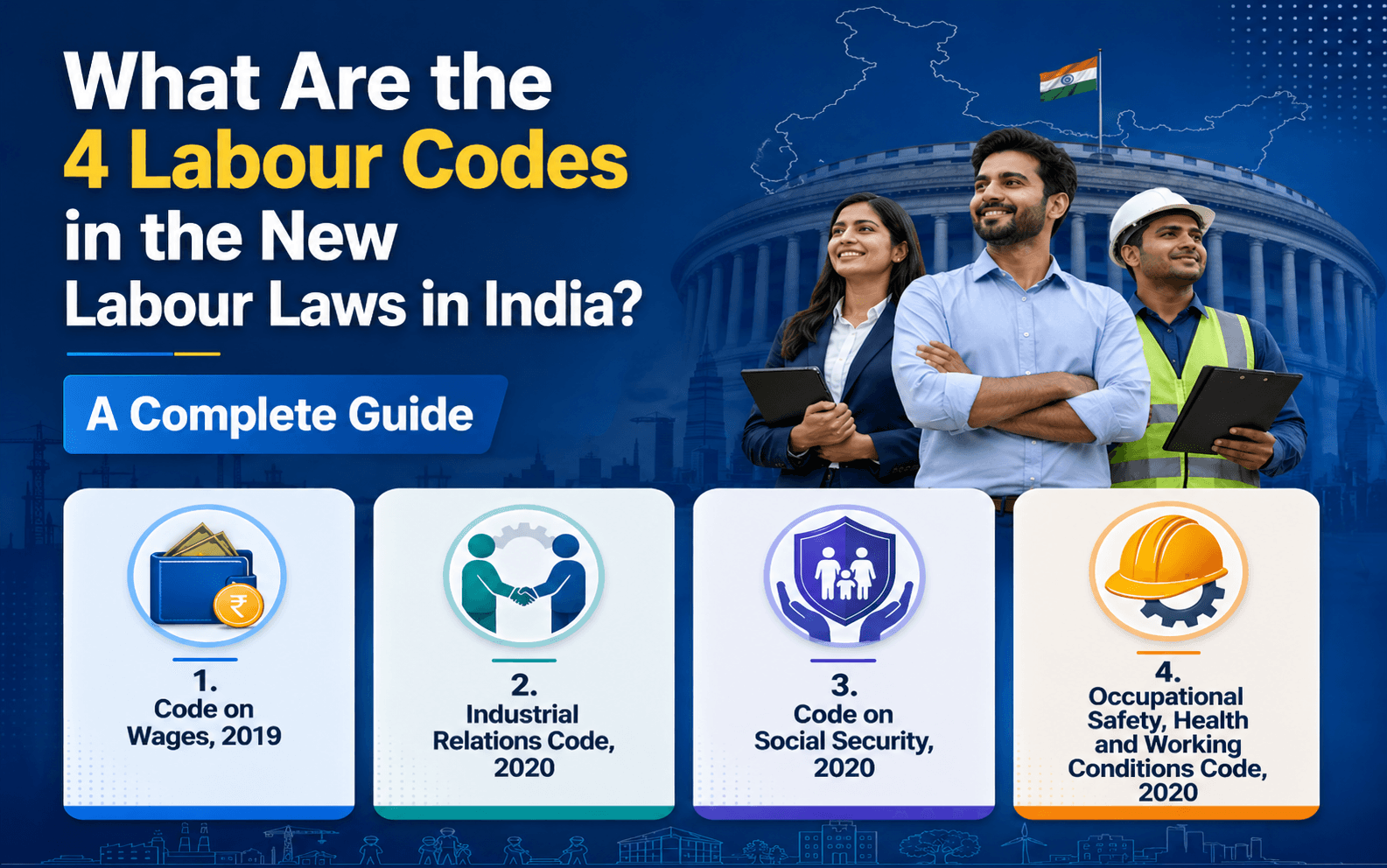
What Are the 4 Labour Codes in the New Labour Laws in India? A Complete Guide
Read More >

15 to 17 minutes
|
All
category
What Are the New External Workforce Trends in 2026?
Read More >