
External workforce management helps enterprises govern contract, gig, and blue collar workers across vendors, sites, and workforce types. This blog explains what an external workforce is, the roles external workers perform, common engagement models, and why structured this becomes critical as workforce scale increases. It highlights the operational and visibility challenges enterprises face without a unified approach and outlines how a centralized framework enables better control, consistency, and risk reduction across large, distributed workforce
Introduction: The Workforce Model Has Changed
The enterprise workforce model has changed. In industries like manufacturing, logistics, ecommerce, retail, facility management, and food services, daily operations now depend heavily on contract workers, gig workers, flexi staff, apprentices, trainees, piece-rate workers, and vendor-deployed teams — not just permanent employees. Across factories, warehouses, stores, and client sites, these external workers form the operational backbone, supporting production, warehouse movement, last-mile delivery, retail execution, and seasonal demand.
Yet most enterprises still manage this workforce through fragmented systems — onboarding with vendors, attendance in biometric devices, wages in spreadsheets, compliance documents in email folders, and invoices reconciled separately by finance. As workforce scale grows, this fragmentation creates real operational risk: HR loses visibility, site teams struggle with deployment accuracy, compliance teams chase documents, and finance faces payout and billing mismatches.
This is why external workforce management is no longer just HR administration — it's becoming a core operating control layer. A strong external workforce management system connects onboarding, attendance, shifts, overtime, payouts, compliance, and offboarding into one structured workflow, giving enterprises better visibility, faster deployment, stronger compliance readiness, and greater control across sites and vendors.
What Is an External Workforce?
An external workforce refers to workers or external employees engaged outside an organization's permanent employee structur. These workers are usually deployed through contractors, staffing agencies, labour vendors, aggregators, or task-based engagement models.
Unlike permanent employees, external workers may be engaged for a specific site, shift, project, season, production requirement, service contract, or output-based activity. Their employment relationship, deployment model, attendance tracking, wage calculation, and compliance responsibilities may differ depending on the worker category and vendor arrangement.
Common external workforce categories include:
Contract labour
Gig workers
Piece-rate workers
Apprentices and trainees
Seasonal workers
Flexi workforce
Vendor-deployed staff
Facility, logistics, retail, and field workers
In large enterprises, the external workforce plays a critical role in maintaining operational continuity. These workers support production lines, warehouse operations, logistics hubs, retail stores, facility services, customer-facing roles, and project-based execution.
For CHROs and HR operations leaders, the key challenge is not only identifying who belongs to the external workforce. The larger challenge is ensuring that every external worker is correctly onboarded, verified, deployed, tracked, paid, and governed across sites and vendors.
Types of External Workers in Modern Businesses
Modern enterprises use different external workforce models depending on the nature of work, demand variability, deployment duration, and payout structure. The right model depends on whether the business needs long-term site support, short-term workforce availability, task-based execution, or output-linked productivity.
Contract Workers
Contract workers , a common form of external employee are deployed through contractors, staffing agencies, or labour vendors for a defined duration, project, site, or operational requirement
They are widely used in industries where workforce demand changes across production cycles, shifts, plants, warehouses, stores, or client locations.Contract workforce management and contract worker management at the individual level becomes critical because enterprises need to track worker onboarding, contractor mapping, attendance, wage calculation, statutory compliance, and vendor billing accurately.
Contract workers are commonly used in:
Manufacturing
Warehousing
Logistics
Retail operations
Facility management
Gig Workers
Gig workers are engaged for task-based, assignment-based, or short-duration work. They are usually deployed where businesses need speed, availability, and high-volume workforce coordination.
Gig workforce management focuses on rapid onboarding, identity verification, availability tracking, task allocation, attendance or proof-of-work capture, payout accuracy, and worker communication.
Gig workers are commonly used in:
Last-mile delivery
Hyperlocal commerce
Field operations
On-demand staffing
Piece-Rate Workers
Piece-rate workers are paid based on output completed rather than hours worked. Their payout depends on units produced, tasks completed, quantity handled, or measurable work output.
This model is common in manufacturing, packaging, assembly, textiles, industrial operations, and other production-led environments where productivity-linked payout structures are followed.
Managing piece-rate workers requires accurate production data, worker-level output tracking, rate mapping, approval workflows, and payout validation. Without these controls, enterprises may face disputes, incorrect payouts, productivity mismatch, and billing errors.
Flexi Workers
Flexi workers are deployed based on operational demand, shift variability, seasonal workload, or short-term manpower requirements. They help enterprises manage fluctuating workforce needs without committing to a fixed long-term workforce structure.
Flexi workforce models are useful during festive peaks, sales campaigns, production surges, warehouse volume spikes, retail expansion, and temporary site requirements.
Effective flexi workforce management depends on quick onboarding, shift allocation, attendance tracking, availability management, and payout readiness. The goal is to maintain workforce availability without losing control over cost, compliance, or deployment accuracy.
Apprentices and Trainees
Apprentices and trainees are engaged for skill development, learning, and structured workforce readiness programs. They may be deployed under formal apprenticeship schemes, trainee programs, or organization-specific training models.
Enterprises use this workforce category to build future-ready talent pipelines while supporting operational needs. However, apprentices and trainees still require structured onboarding, identity records, attendance tracking, stipend or payout management, compliance documentation, and training progress visibility.
6. Seasonal Workers
Seasonal workers are engaged during predictable demand peaks such as festivals, agricultural cycles, ecommerce sale periods, retail campaigns, tourism seasons, or production surges.
They help enterprises meet short-term workforce demand without increasing permanent headcount. The challenge is to onboard them quickly, deploy them accurately, track their attendance, process payouts on time, and offboard them cleanly once the season ends.
What Does the External Workforce Do?
The external workforce supports day-to-day operational execution across workforce-heavy industries. These workers are often involved in the activities that keep factories running, warehouses moving, stores staffed, facilities maintained, and field operations active.
In many enterprises, external workers are not peripheral support. They form a critical part of the operating model, especially in roles that require high-volume deployment, shift coverage, seasonal flexibility, or site-level execution.
Common responsibilities of the external workforce include:
Running production, packaging, and assembly operations
Managing warehouse picking, packing, sorting, loading, and dispatch
Supporting logistics, hub operations, and last-mile delivery
Executing retail, store-level, and promoter activities
Managing housekeeping, maintenance, security, and facility services
Handling field service, installation, collection, and customer support tasks
Supporting project-based, seasonal, or shift-based manpower requirements
For CHROs and operations leaders, the important point is that external workers directly influence productivity, service continuity, wage cost, compliance exposure, and customer experience. This is why enterprises need more than vendor coordination. They need clear visibility into who is working, where they are deployed, what work they are performing, and whether their attendance, payout, and compliance records are accurate.
Pros and Cons of Using External Workforce Management
External workforce management gives enterprises the ability to scale operations with external employees rather than adding permanent headcount. For industries such as manufacturing, logistics, ecommerce, retail, facility management, and food services, this flexibility is often essential. External workers help companies manage seasonal demand, site-level workforce shortages, project-based execution, and high-volume operational requirements.
However, external workforce management only creates value when it is governed through a structured system. If workers, vendors, attendance, wages, compliance documents, and billing data are managed across spreadsheets, emails, and disconnected tools, the same model can create visibility gaps, payout errors, compliance exposure, and vendor accountability issues.
BlueTree defines external workforce management as a connected operating layer across onboarding, attendance, shifts, payouts, billing, compliance, and offboarding. Its BeeForce platform is positioned to help enterprises manage gig, contract, and piece-rate workforces across the full lifecycle.
Advantages of External Workforce Management
External workforce management helps enterprises turn workforce flexibility into measurable operational control. Instead of treating external workers as a vendor-managed layer outside the enterprise system, companies can bring worker data, deployment, attendance, approvals, wage inputs, compliance status, and billing checkpoints into one structured workflow.
This gives HR, operations, compliance, finance, and site teams better visibility over daily workforce activity while retaining the flexibility of an external workforce model.
Workforce Scalability
One of the biggest advantages of external workforce management is the ability to scale manpower quickly. Enterprises can increase or reduce workforce strength based on production cycles, festive demand, warehouse volumes, retail expansion, site openings, or project requirements.
For example, an ecommerce company may need additional workers during peak-sale periods, while a manufacturing plant may need contract labour for a specific production line. With a structured external workforce management system, HR, operations, and vendors can manage this scale without losing control over worker records, deployment, attendance, and payouts.
Operational Flexibility
External workforce models allow enterprises to deploy workers across multiple sites, shifts, roles, vendors, and business units. This is especially useful in distributed operations where workforce demand changes frequently.
In logistics, flexibility may mean moving workers across hubs or shifts. In manufacturing, it may mean deploying different skill categories across plants or production lines. In retail, it may mean adding store associates during campaign periods.
This flexibility creates value only when enterprises can track who is deployed, where they are deployed, under which vendor, and for which role or shift.
Faster Workforce Deployment
External workforce management enables faster deployment when onboarding is standardized and digital. Instead of depending on manual document collection, vendor emails, and delayed approvals, enterprises can capture worker details, verify documents, validate bank information, and complete statutory checks before the worker reports to the site.
This reduces day-one delays, incomplete records, and last-minute vendor pressure. For high-volume industries, faster deployment directly improves shift readiness, production continuity, and site-level execution.
Cost Optimization
External workforce management can help reduce cost leakage when attendance, overtime, payouts, and vendor billing are connected.
Many workforce cost issues come from small recurring gaps such as attendance mismatch, unapproved overtime, manual payout corrections, duplicate worker records, wrong wage mapping, or vendor invoice differences.
A structured system creates a single source of truth across attendance, approvals, wage rules, payout summaries, and billing reconciliation. This helps enterprises ensure that workforce spend reflects actual work performed.
Better Compliance Control
External workforce management also strengthens compliance control. Contract workers, gig workers, apprentices, trainees, facility staff, warehouse workers, and vendor-managed workers all create statutory and audit obligations.
When records are maintained manually, compliance gaps are often discovered late. A system-led approach connects worker identity, vendor mapping, attendance, wage rules, statutory records, document expiry, approvals, and audit trails.
This helps enterprises move from reactive compliance preparation to continuous compliance readiness.
Challenges of External Workforce Management
External workforce management can create strong business value, but it becomes difficult to control when worker data, vendor records, attendance, payouts, billing, and compliance documents are managed separately.
For large enterprises, the challenge is not only the number of external workers. The real challenge is managing them across multiple vendors, locations, shifts, wage categories, and statutory requirements without losing visibility, accuracy, or governance.
Limited Workforce Visibility
Many organizations struggle to maintain a centralized view of their external workforce. Worker data often sits across vendor spreadsheets, site-level records, biometric devices, payroll files, emails, and compliance folders.
As a result, HR and operations teams may not have real-time answers to basic workforce questions:
Who is deployed today?
Which vendor do they belong to?
Are their documents complete?
Are they mapped to the right site, shift, and wage category?
Are they eligible for payout and compliance processing?
This visibility gap delays decision-making and increases dependency on vendors for basic workforce information. In large, distributed operations, lack of visibility can affect shift planning, payroll accuracy, compliance readiness, and vendor accountability.
Manual Coordination Across Teams
External workforce management involves multiple stakeholders, including HR, operations, compliance, finance, site teams, security, and vendors. When these teams work through disconnected tools, the process becomes heavily dependent on emails, spreadsheets, calls, and manual follow-ups.
This affects every stage of the worker lifecycle. Onboarding gets delayed. Attendance corrections take longer. Approvals are missed. Payout summaries require manual checks. Compliance teams have to chase documents before audits.
Manual coordination may work at a small scale, but it becomes unreliable when enterprises manage thousands of contract, gig, flexi, or vendor-deployed workers across plants, warehouses, stores, hubs, or client sites.
Vendor Governance Complexity
Managing multiple contractors is one of the most difficult parts of external workforce management. Each vendor may follow a different process for sourcing workers, collecting documents, coordinating attendance, submitting statutory proof, replacing workers, and raising invoices.
Without a structured system, enterprises struggle to compare vendor performance objectively. They may not know which vendors have frequent document gaps, delayed corrections, attendance mismatches, statutory pending items, or repeated billing differences.
This creates operational overhead for HR, procurement, compliance, and finance teams. It also makes vendor accountability dependent on follow-ups instead of measurable workforce and compliance data.
Compliance Exposure
External workforce compliance depends on accurate worker records, statutory identity, wage data, attendance, contractor documents, safety records, and audit trails. When these records are incomplete or disconnected, compliance risk builds quietly over time.
Common gaps include delayed PF and ESI validation, missing worker documents, expired contractor licences, incomplete registers, manual attendance corrections, unapproved overtime, and inconsistent wage records.
These gaps may not be visible during daily operations. They often surface during payroll closure, vendor billing, worker disputes, inspections, or audits. By then, teams are forced into reactive reconciliation instead of proactive compliance control.
Attendance and Payout Mismatch
Attendance and payout mismatch is a common challenge in external workforce management. When attendance, shifts, overtime, leave, wage rules, and vendor invoices are not connected, errors are difficult to detect early.
This can lead to overpayments, underpayments, worker disputes, duplicate billing, unapproved overtime, delayed payouts, and finance reconciliation issues.
For enterprises with large blue-collar, contract, or off-roll workforces, even small daily mismatches can become significant cost leakage at scale. A reliable external workforce management system should connect attendance capture, supervisor approvals, wage rules, payout summaries, and vendor billing in one flow.
What Is External Workforce Management (EWFM)?
External Workforce Management, or EWFM, is the structured management of non-permanent workers across the complete workforce lifecycle. This includes contract workers, gig workers, piece-rate workers, apprentices, trainees, facility staff, warehouse workers, retail associates, field teams, and vendor-deployed workers.
For large enterprises, external workforce management is not just about hiring temporary manpower. It is about creating a controlled operating system for how external workers are onboarded, verified, deployed, tracked, paid, governed, and offboarded across multiple sites and vendors.
An external workforce management system typically covers:
Worker onboarding and document collection
Identity, bank, PF, ESI, and compliance validation
Attendance, shift, roster, and overtime tracking
Vendor and contractor coordination
Wage, payout, and billing processing
Statutory compliance and audit records
Worker communication and grievance tracking
Offboarding and final settlement workflows
Without a structured EWFM approach, external workforce data often gets scattered across vendor spreadsheets, biometric systems, payroll files, emails, and manual registers. This makes it difficult for HR, operations, compliance, and finance teams to maintain real-time visibility and control.
A strong external workforce management framework creates a centralized operating layer across workforce data, attendance, payouts, compliance, and vendor governance. It helps enterprises answer critical questions such as: who is deployed, where they are deployed, whether they are compliant, whether their attendance is accurate, and whether their payout or vendor billing is correct.
In simple terms, external workforce management helps enterprises move from vendor-dependent coordination to system-led workforce control.
Understanding Gig Workforce Management in Modern Organizations
Gig workforce management requires a different operating model from traditional workforce management. Unlike permanent or long-term contract workers, gig workers are often engaged for short-duration, task-based, location-specific, or demand-driven work.
This makes the gig workforce highly dynamic. Workers may join quickly, move across locations, work flexible shifts, complete specific tasks, and expect faster payout cycles. For enterprises managing gig workers at scale, speed is important, but control is equally important.
A gig workforce is usually:
Highly dynamic
Rapidly deployed
Task-driven
Geographically distributed
Mobile-first by nature
Dependent on fast communication and payout visibility
Because gig workforce movement is high, organizations need systems that can support fast onboarding, identity verification, real-time attendance or proof-of-work capture, shift allocation, mobile communication, payout processing, and exception handling.
Without centralized gig workforce management, enterprises may face workforce duplication, attendance inconsistencies, payout disputes, worker drop-offs, task allocation gaps, and operational leakages.
A structured gig workforce management system helps organizations maintain workforce continuity without losing visibility. It gives HR, operations, site teams, and finance teams a clearer view of who is onboarded, who is active, where they are deployed, what work has been completed, and whether payouts are aligned to verified work.
How Blue Collar Workforce Management Improves Workforce Operations
Blue collar workforce management focuses on improving operational execution at scale. Unlike office workforce models, blue collar operations depend heavily on site-level deployment, shift coverage, attendance accuracy, overtime control, safety readiness, and supervisor coordination.
This is especially important in industries such as manufacturing, logistics, ecommerce, retail, facility management, and food services, where daily output depends on whether the right workers are present, verified, trained, assigned, and paid correctly.
Blue collar workforce operations typically involve:
Multi-shift workforce deployment
Daily attendance dependency
Site and supervisor-level coordination
Overtime and weekly-off management
Safety, training, and medical readiness
Contractor-led workforce movement
Wage, payout, and billing dependencies
As workforce scale increases, manual tracking becomes difficult. Site teams may struggle to know who is present, which shifts are short-staffed, where overtime is increasing, or whether workers are eligible for deployment. HR and finance teams may also face delays in attendance approvals, payout calculation, and vendor reconciliation.
Effective blue collar workforce management improves workforce operations by bringing deployment, attendance, shifts, overtime, approvals, payouts, and compliance into a connected workflow.
This helps enterprises improve:
Workforce deployment visibility
Attendance accuracy
Shift discipline
Overtime governance
Payout consistency
Safety and compliance readiness
Site-level operational control
For large enterprises, blue collar workforce management is not only about tracking attendance. It is about creating a reliable operating layer for workforce-heavy environments where daily execution, cost control, compliance, and productivity depend on accurate worker-level data.
Why Contract Workforce Management Matters for Businesses
Effective contract worker management starts with understanding what a contract or contingent workforce model usually includes: Multiple contractors and labour vendors, gig workers, and contingent staff across onboarding, attendance, compliance, payouts, and billing. It matters because large companies no longer rely only on permanent employees they depend on multiple contractors, staffing partners, and site-level teams to keep daily operations running.
Why do large companies need external workforce management? As organizations
scale, workforce operations get harder to control manually. Large companies
managing external workforce across multiple sites, vendors, and worker
categories need a system that keeps deployment, attendance, and compliance
consistent everywhere.
Industries that rely heavily on external workforce management include:
manufacturing, logistics, ecommerce, retail, facility management,
infrastructure, and food services. Contract workers in these sectors typically
support production, warehousing, loading, dispatch, housekeeping, maintenance,
store operations, and project execution.
What Does a Contract Workforce Model Involve?
A contract or contingent workforce model usually includes:
Multiple contractors and labour vendors
Distributed deployment locations
Different worker categories and wage structures
Site-wise attendance and shift processes
Vendor-managed onboarding and replacement
Statutory records, licences, and compliance documents
Payout and billing dependencies
What Happens Without External Workforce Management?
Without a structured system, companies lose visibility and control over
worker-level data. This typically leads to:
Inconsistent worker records
Unclear contractor-wise headcount
Manual attendance corrections
Delayed statutory validation
Vendor invoices that don't match actual deployment
These gaps create real operational and compliance risk — HR teams lose
workforce visibility, site teams struggle with contract labour deployment,
compliance teams chase missing documents, and finance teams spend hours
reconciling attendance, payouts, and vendor bills.
How Does External Workforce Management Solve This?
A centralized external workforce management (EWFM) platform gives large
companies one control layer across the entire contract workforce lifecycle —
onboarding, attendance, compliance, payouts, billing, and vendor accountability.
It shows who is deployed, which contractor or staffing agency they belong to,
whether their documents are complete, whether attendance is accurate, whether
statutory requirements are on track, and whether billing matches actual work
performed.
In short: whether a company is very large or still growing, contract
workforce management isn't just about managing contractors — it's about
building a reliable control layer across the entire external workforce.
The Importance of External Workforce Management
External workforce management is important because external workers directly influence business continuity, cost, compliance, and service delivery. In workforce-heavy industries, even a small gap in worker availability, attendance accuracy, statutory validation, or vendor performance can affect daily operations.
For enterprise leaders, EWFM matters because it helps:
Protect business continuity by ensuring the right workforce is available across sites, shifts, and demand cycles.
Reduce hidden workforce risk by making worker identity, vendor ownership, attendance, and compliance status traceable.
Improve cost discipline by connecting actual work performed with payable days, overtime, vendor billing, and workforce spend.
Support faster decisions by giving HR, operations, compliance, and finance teams a shared view of workforce activity.
Strengthen enterprise governance by replacing vendor-dependent updates with system-driven accountability.
Improve audit confidence by ensuring workforce records are built from daily operational data instead of being reconstructed later.
In simple terms, external workforce management helps enterprises move from manpower coordination to workforce governance. It gives leaders better control over a workforce that is often large, distributed, vendor-managed, and business-critical.
What Should You Look for in an External Workforce Management System?
An external workforce management system should help enterprises manage the complete worker lifecycle with visibility, control, and compliance readiness. The right platform should not only digitize individual tasks. It should connect worker data, vendor governance, attendance, payouts, compliance, exceptions, and audit trails into one operating flow.
End-to-End Workforce Lifecycle Coverage
The system should support the complete external workforce lifecycle, from onboarding to offboarding.
This includes:
Worker onboarding
Document collection
Attendance and shift tracking
Overtime approvals
Payout processing
Vendor billing
Compliance tracking
Worker communication
Offboarding and final settlement
A lifecycle-based system reduces dependency on separate tools and helps HR, operations, compliance, finance, and site teams work from a single source of workforce truth.
Vendor and Contractor Governance
Since external workforce operations depend heavily on vendors, the platform should provide strong vendor governance.
Look for capabilities such as:
Contractor master management
Work order and PO mapping
Licence and document tracking
Vendor-wise worker visibility
Vendor SLA tracking
Escalation workflows
Contractor-level compliance dashboards
This helps enterprises move from vendor follow-ups to vendor accountability.
Mobile-First and Bulk Onboarding
High-volume external workforce onboarding should be fast, structured, and scalable.
The system should support:
Mobile onboarding
Assisted onboarding
Bulk upload workflows
Pre-joining document collection
Site and vendor mapping
Day-zero readiness checks
This is especially important for manufacturing plants, warehouses, logistics hubs, retail stores, and facility sites where workers need to be deployed quickly without creating documentation gaps.
Identity and Statutory Validation
A strong external workforce management system should validate worker identity and statutory readiness early in the lifecycle.
Important checks include:
Aadhaar validation
Face match
Bank validation
UAN validation
ESI validation
Background verification workflows
Duplicate worker checks
These validations help reduce identity risk, payout failures, compliance gaps, and duplicate workforce records.
Attendance and Shift Connectivity
Attendance should not operate as a standalone process. It should connect directly with shifts, overtime, approvals, payouts, and billing.
The platform should support:
Real-time attendance capture
Shift and roster mapping
Overtime rules and approvals
Leave or absence tracking
Attendance regularization
Payout-ready attendance summaries
Vendor billing linkage
This ensures that workforce cost is based on approved, traceable, and accurate attendance data.
Compliance Embedded Into Daily Operations
Compliance should not be handled only at the end of the month or during audits. The system should embed compliance into daily workforce transactions.
This means the platform should track:
Worker documents
Statutory IDs
Contractor licences
PF and ESI readiness
Wage and overtime rules
Register-ready records
Document expiry alerts
Audit trails
This helps enterprises shift from post-facto reconciliation to continuous compliance readiness.
Real-Time Workforce Visibility
Leadership teams need real-time visibility into workforce activity across sites, vendors, shifts, and categories.
The system should provide dashboards for:
Workforce deployment
Active and inactive workers
Attendance status
Shift coverage
Pending approvals
Vendor performance
Compliance gaps
Payout and billing readiness
This helps HR, operations, compliance, and finance teams make faster, more reliable decisions.
Exception Ownership and Audit Trails
External workforce operations involve frequent exceptions. A good system should not allow exceptions to disappear into emails or manual follow-ups.
Every exception should have:
Reason codes
Defined ownership
SLA tracking
Escalation visibility
Approval history
Closure status
Audit trail
This is important for missed punches, incomplete documents, failed validations, urgent deployment, overtime approvals, payout corrections, and vendor billing differences.
Integration Readiness
An external workforce management system should be able to integrate with the enterprise’s existing technology stack.
Look for integration readiness with:
HRMS
Payroll systems
ERP systems
Biometric devices
Access control systems
Compliance portals
Finance and billing systems
This reduces duplicate data entry and ensures that workforce data flows smoothly across business functions.
Enterprise-Grade Reporting and Analytics
The platform should help teams track operational and compliance performance, not just store records.
Useful reports include:
Site-wise workforce strength
Vendor-wise deployment
Attendance exceptions
Overtime trends
Wage and payout summaries
Compliance pending reports
Billing variance reports
Audit-ready registers
Worker lifecycle reports
For enterprise leaders, these insights help improve cost control, vendor governance, compliance confidence, and workforce productivity.
The right external workforce management system should give enterprises a reliable control layer across worker data, vendor governance, attendance, payouts, compliance, exceptions, and audit readiness.
Best Practices in External Workforce Management
Organizations with mature external workforce operations do not manage external workers only through vendor follow-ups. They create standard processes, early validations, connected workflows, and clear accountability across the worker lifecycle.
The following best practices help enterprises manage external workers with better visibility, control, and compliance readiness.
Standardize Workforce Processes Across Locations
Enterprises should maintain uniform onboarding, attendance, shift, payout, compliance, and offboarding workflows across all vendors and locations.
Without standardization, every site or vendor may follow a different process. This creates inconsistent worker records, delayed approvals, unclear ownership, and difficulty during audits.
A standardized process helps ensure that every external worker follows the same basic control path before deployment, during attendance capture, before payout, and at the time of exit.
Validate Workers Before Deployment
Strong contract worker management means worker validation happens before the worker reaches the site, not after joining. Enterprises should verify identity, documents, bank details, statutory information, contractor mapping, role eligibility, and site readiness early in the onboarding process. For roles where safety or background checks are required, those validations should also be built into the workflow.
Early validation reduces duplicate records, payout failures, compliance gaps, and day-one deployment issues.
Connect Workforce Transactions End to End
External workforce operations should not run as separate activities. Onboarding, attendance, shifts, overtime, payouts, billing, compliance, and offboarding should be connected into one operational flow.
When these transactions are connected, teams can trace how worker data moves from onboarding to attendance, from attendance to payout, from payout to billing, and from daily records to compliance outputs.
This reduces manual reconciliation and improves workforce accuracy across HR, operations, finance, compliance, and vendor teams.
Reduce Spreadsheet and Email Dependency
Spreadsheets and emails may support small teams, but they do not provide reliable control for large external workforce operations.
As workforce scale increases, manual coordination leads to version issues, missed approvals, delayed corrections, and limited audit trails. Enterprises should digitize repeatable workflows such as onboarding, attendance regularization, document expiry tracking, payout approvals, vendor submissions, and exception closures.
Digitization helps teams work faster while maintaining ownership, timestamps, and traceability.
Monitor Vendor Performance Continuously
Vendor performance should be measured through data, not only through relationship or follow-up quality.
Enterprises should track vendor-wise onboarding completion, document gaps, attendance accuracy, replacement turnaround time, statutory readiness, invoice mismatches, correction delays, and SLA adherence.
This helps HR, procurement, compliance, and finance teams identify which vendors are creating operational risk and which vendors are delivering consistently.
Build Exception Management Into the Process
External workforce operations involve frequent exceptions such as missed punches, failed verification, urgent deployment, shift changes, document gaps, overtime approvals, payout corrections, and vendor billing differences.
Every exception should have a reason code, owner, approval trail, SLA, escalation path, and closure status. This prevents issues from being handled informally and reduces confusion during payroll, compliance review, billing closure, or audits.
Create Real-Time Workforce Visibility
Leadership teams should not wait for audits, escalations, or month-end reconciliation to understand workforce risk.
Enterprises should maintain real-time visibility into worker deployment, attendance status, pending approvals, compliance gaps, vendor performance, payout readiness, and billing variances across sites and vendors.
This helps leaders act early, reduce operational leakage, and manage external workforce risk more confidently.
Review Workforce Controls Regularly
External workforce management should be reviewed as an ongoing operating discipline. Enterprises should periodically check whether onboarding rules, wage mappings, attendance policies, overtime thresholds, compliance documents, vendor SLAs, and reporting formats are still accurate.
This is especially important when organizations add new sites, vendors, worker categories, business units, or statutory requirements.
Regular reviews help keep the external workforce management system aligned with operational and compliance realities.
How To Manage an External Workforce Effectively for Maximum Results
Managing an external workforce effectively requires enterprises to move beyond reactive coordination and build structured operational governance. External workforce management should not depend only on vendor follow-ups, spreadsheets, or month-end reconciliation. It should be managed through connected processes that give teams visibility across the full worker lifecycle.
To manage an external workforce effectively, enterprises should focus on:
Centralized workforce data: Maintain one reliable record for worker identity, vendor mapping, site deployment, role, wage category, documents, and statutory details.
Workforce validation at onboarding: Verify worker identity, bank details, statutory readiness, documents, and role eligibility before deployment.
Connected attendance and payout systems: Link attendance, shifts, overtime, leave, approvals, wage rules, payout summaries, and vendor billing to reduce disputes and manual corrections.
Real-time compliance visibility: Track statutory IDs, contractor documents, licence validity, wage compliance, overtime rules, registers, and audit trails continuously.
Vendor accountability: Monitor vendor-wise onboarding completion, document gaps, attendance accuracy, correction delays, statutory readiness, and invoice mismatches.
Workflow-driven approvals: Use structured approvals for onboarding exceptions, attendance corrections, overtime, payout changes, vendor submissions, and compliance gaps.
Operational dashboards: Give HR, operations, compliance, finance, and leadership teams visibility into workforce deployment, attendance status, pending approvals, payout readiness, compliance gaps, and vendor performance.
The goal is not simply to digitize workforce records. The goal is to create operational control in workforce-heavy environments where scale, variability, compliance requirements, and vendor dependency are high.
A strong external workforce management model helps enterprises know who is deployed, whether they are verified, whether attendance is accurate, whether payouts are aligned, whether compliance records are complete, and whether vendors are performing as expected.
BlueTree’s BeeForce platform is designed around this lifecycle-driven workforce operating model by connecting onboarding, attendance, compliance, payouts, billing, and workforce governance into one unified system.
Why External Workforce Management Is No Longer Optional
External workforce operations have become too large, distributed, and business-critical to manage through disconnected processes. In many enterprises, external workers directly support production, logistics movement, warehouse execution, retail operations, facility services, and field delivery.
As external workforce scale increases, the impact of poor control also increases:
Workforce visibility gaps become harder to manage
Vendor coordination becomes more complex
Attendance and payout mismatches increase
Compliance exposure expands across sites and contractors
Manual reconciliation slows down payroll and billing closure
Operational inconsistency becomes difficult to control
This is why external workforce management is moving from an administrative HR process to a strategic operating capability.
Enterprises that adopt a system-led external workforce management model gain:
Better worker-level visibility
Stronger site and shift control
Faster onboarding and deployment
More accurate attendance and payouts
Better vendor governance
Stronger compliance readiness
Reduced workforce and audit risk
For workforce-heavy industries, the question is no longer whether external workers are needed. The real question is whether the enterprise has enough visibility, governance, and control to manage them at scale.
Conclusion
External workforce management has become essential for enterprises that depend on large, distributed, and vendor-managed workforces.
As contract workers, gig workers, flexi staff, piece-rate workers, and blue collar teams become central to daily execution, fragmented workforce processes create avoidable gaps in visibility, attendance accuracy, payout control, compliance readiness, and vendor accountability.
A structured external workforce management approach helps enterprises connect onboarding, deployment, attendance, shifts, overtime, payouts, compliance, billing, and offboarding into one reliable operating framework.
For workforce-heavy industries, this is no longer only about digitizing workforce records. It is about building the visibility, consistency, and governance needed to manage external workforce operations at scale.


Manage External Workforce with BlueTree - Govern contract, gig, and blue collar workers across vendors, sites, and shifts.
Frequenty Asked Questions
4-5 Minutes
|
All
category
Global Payroll Week 2026: Why Blue Collar Payroll Needs Better Governance
Read More >
7-8 Minutes
|
All
category
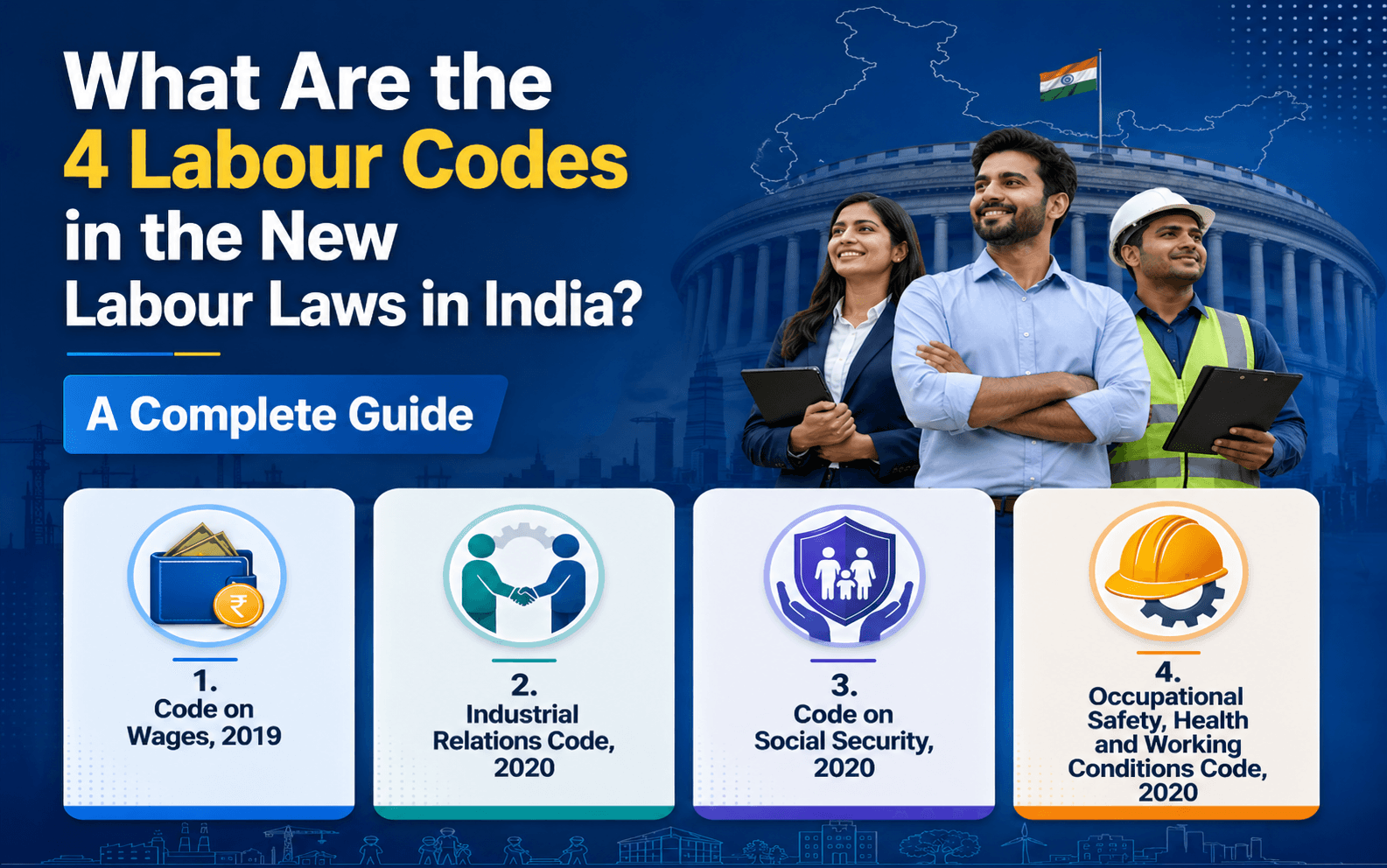
What Are the 4 Labour Codes in the New Labour Laws in India? A Complete Guide
Read More >
15 to 17 minutes
|
All
category
What Are the New External Workforce Trends in 2026?
Read More >