
In 2026, blue-collar payouts are no longer a routine back-office task. A 27th pay period can disrupt budgets, the 50 percent basic pay rule can trigger statutory exposure, and exit settlements must close within 48 hours. Multi-state taxes, variable wage models, and disconnected attendance and invoicing increase errors and overpayments. This blog explains what changed and what a rules-driven payout system must deliver.
Introduction
Payout has always been one of the most sensitive workflows in blue-collar operations. In 2026, it also became one of the fastest ways to trigger avoidable statutory exposure if the wage structure, payout cadence, and payroll controls are not tightly aligned.
Consider a manufacturing plant with 300 contract workers running payouts on a fixed calendar. A small shift in dates can create an extra payout cycle in a year, impacting cash planning. At the same time, changes in wage structure expectations and higher automated scrutiny mean a missed rule in the basic pay split or statutory calculation can lead to penalties, back-calculations, and worker arrears. What earlier felt like a routine processing issue now becomes a finance, HR, and audit problem within a single cycle. This guide breaks down the payout challenges blue-collar employers are facing in 2026, what changed, and why traditional payout approaches struggle at scale.
The 2026 Payout Crisis: What Changed
The 27th Pay Period Trap
For organizations on a bi-weekly payout cycle, some calendar years create an anomaly: instead of 26 bi-weekly periods, there are 27. This happens when the year starts on a day that causes an extra pay cycle to fall within the same calendar year. It is not tied to any particular type of year — it can occur in any year depending on your cycle's start date.
What goes wrong:
The budget was planned for 26 periods. Period 27 creates an unbudgeted expense.
Accounting systems are hardcoded for 26 periods per year. Period 27 breaks reconciliation.
Tax calculations may fail if systems assume 26 periods when annualizing salary figures.
Employees expect payment on their usual cycle but receive an extra check. This creates confusion if not communicated clearly.
Example: A logistics company with 500 contract workers. Average payout per period: 40 lakhs. An unbudgeted 27th period costs them 40 lakhs in unexpected expenses. Their annual budget was based on 26 periods (10.4 crores). They now face 10.8 crores in total payout. No contingency budget. No warning.
The 50 Percent Basic Pay Rule
India's new labour codes introduced a uniform wage definition. Basic pay must now equal at least 50 percent of total CTC (Cost to Company). This rule applies uniformly across states and sectors.
Many organizations structured wages differently. A worker with 20,000 CTC might have had Basic 8,000, HRA 5,000, DA 4,000, Other 3,000. This violates the new rule (Basic should be 10,000 minimum).
When Basic changes, PF contributions change. Gratuity calculations change. Bonus bases change. Overtime liability changes.
Retroactive liability: If an organization failed to apply this rule from November 2025 (when labour codes took effect), they owe backpay plus penalties.
Penalty: 8 to 12 lakhs per violation. For an organization with 300 workers on non-compliant structures, total exposure could be 2.4 to 3.6 crores.
The 48-Hour Exit Settlement Mandate
New rules require that when a worker is terminated or leaves, final settlement (full and final payment) must be processed within two working days. Not two weeks. Not after the next payout cycle. Two working days.
Why this is hard:
Current payout cycles are monthly. A worker leaves on the 5th. They should get their final settlement by the 7th. But payout is not processed until the 25th.
This requires separate, parallel processing outside the regular payout cycle.
Mistakes in hurried settlements are common, triggering disputes or recovery cases.
Example: A worker leaves on Friday. Settlement is due by Tuesday. To pay them by Tuesday, payout teams must calculate exact days worked, deduct PF, calculate gratuity, deduct any advances or overpayments, process payment through bank, and obtain acknowledgment — all within two working days. Manual processes fail. Systems without instant settlement capability fail.
The Error Cost Explosion
A single payout mistake now costs 24,000 rupees to fix. This includes:
Initial error discovery
Calculation of correction amount
Processing reversal and re-payment
Payslip reissue
Communication to worker
Bank processing of reversal and new payment
Documentation and audit trail cleanup
Potential dispute resolution if worker does not accept the correction
The Root Causes: Why Blue-Collar Payout Breaks in 2026
Multi-State, Multi-Tax Complexity
Contract workers are geographically distributed. A company might have workers across 18 states. Each state has different professional tax rates (ranging from 0 to 2.5 percent depending on state and salary), labour welfare fund contributions, local compliance calendars, and minimum wage rules. A centralized payout system designed for one state breaks when applied across 18 states. Manual workarounds are error-prone and do not scale.
Contractual Wage Structures
rate pay, performance bonuses, overtime multipliers. Traditional payout systems assume a fixed monthly salary. Adding variable compensation requires custom configuration. Many organizations patch it together with spreadsheets, leading to calculation errors.
Compliance Rule Fragmentation
The new labour codes introduced rules across wage definition, overtime, gratuity, safety, gender benefits, and social security. A single payout system must now handle uniform wage definition, overtime calculation, gratuity eligibility, PF contribution, ESI coverage, professional tax, and statutory bonuses. Each rule has exceptions, phase-ins, or state-specific variations. A system that does not update automatically when new rules take effect will fall out of compliance immediately.
Limited Integration
Attendance data, vendor invoices, and payout live in separate systems. Attendance is recorded in biometric machines or mobile apps. Invoices come from vendor management systems. Payout is processed in standalone software. No system cross-checks these. If vendor invoices show 50 workers but attendance shows only 45 worked, payout still processes for 50. Overpayment happens silently.
The Real Financial Impact
Wage Overpayment and Recovery
A vendor bills for 500 workers. Attendance shows 480 actually worked. payout processes for 500 A vendor bills for 500 workers. Attendance shows 480 actually worked. Payout processes for 500 anyway. Extra 20 workers at 500 daily wage over 22 working days equals 2.2 lakhs monthly overpayment - 26.4 lakhs annually. When discovered (often during audit), recovery is difficult. Vendors claim workers did work, workers are long gone. The loss is written off.
Compliance Penalties
Non-compliance with 50 percent basic pay rule: 8 to 12 lakhs per violation. An organization with 300 workers faces potential exposure of 2.4 to 3.6 crores.
CLRA non-compliance (Contract Labour Act): 10,000 to 1 lakh per violation, plus jail time in severe cases.
PF/ESI filing errors: Interest on delayed contributions, penalties up to 25 percent of outstanding amount.
Administrative Overhead
Organizations manage payout in spreadsheets, sending corrections back and forth to workers, dealing with disputes because calculations were unclear. Average: 5 to 8 hours per week in manual payout correction work. For a team of 2 to 3 payout staff, that is 26 percent of productive time spent on fixes.
Cash Flow Disruption
When a 27th pay period occurs, organizations without a buffer get stuck: they have committed to employee payments but did not forecast the extra pay period. Without system-level alerts and forward planning, this becomes an avoidable cash crisis.
Why Traditional Payout Systems Fail Blue-Collar Workforces
Fixed Employee Assumption
Traditional payout assumes stable, permanent employees. Employee joins, gets a salary structure, remains for years. Blue-collar contract workers have completely different patterns: join, work 6 months or 2 years, leave. The contract may be renewed or not. Wage may change. Traditional systems cannot handle this fluidity efficiently.
No Compliance Rules Engine
Traditional payout calculates salary based on a preset template. They do not update automatically when the law changes. In 2026, the 50 percent basic rule changed. Systems should have enforced this automatically. Instead, organizations had to manually reconfigure every worker's salary structure. Mistakes were inevitable.
Monthly payout Cycle Lock-In
Traditional systems process payout once a month on a fixed date. Settlement or special payments outside that cycle require manual processing. The 48-hour exit settlement mandate requires processing outside the normal monthly cycle. Systems inflexible about this fail.
No State-Specific Automation
Traditional payout is often designed for a single state. Multi-state organizations use workarounds like separate modules per state — expensive and fragmented — or apply incorrect tax rates across all states.
What Actually Works: Building Payout Resilience for 2026
Solution 1 : Compliance Rules Engine
payout system should have embedded rules for:
50 percent basic wage calculation
State-specific professional tax
Overtime multipliers
Gratuity eligibility
Variable contribution rules
When law changes, these rules update once. All future payout runs reflect the change automatically.
Solution 2 : Real-Time Integration
Attendance, invoices, and payout are integrated in a single platform:
Attendance is recorded (biometric or mobile)
Invoice is submitted by vendor
System validates: Invoice headcount matches attendance headcount
payout is calculated based on validated attendance
Payment is processed
If the invoice claims 50 workers but attendance shows 45, the system flags the discrepancy before payment. No silent overpayment.
Solution 3 : Instant Settlement Capability
The system can process special payments outside the regular monthly payout cycle.
The worker leaves on Friday. System calculates their final settlement instantly:
Exact days worked
PF deduction
Gratuity
Deductions and advances
Net amount due
Payment can be processed same-day or next-day. Complies with 48-hour mandate.
Solution 4 : Multi-State Compliance Management
System knows which worker is in which state and applies:
Correct professional tax rate for that state
Correct minimum wage for that state
Correct labour welfare fund contribution for that state
Correct compliance calendar for that state
No manual state management needed.
Solution 5: Leap Year and Special Period Handling
System is programmed to handle:
27 pay periods in leap years
Irregular calendars
Advance and delayed payments
Budgeting reflects these anomalies, so finance can plan ahead.
Conclusion
In 2026, payout is no longer just a processing function. It directly impacts compliance readiness, closure discipline, and cash flow predictability. Enterprises that shift from manual processing to rules-driven payout gain cleaner cycles, fewer exceptions, and faster month-end control as workforce complexity increases.


Manage External Workforce with BlueTree - Govern contract, gig, and blue collar workers across vendors, sites, and shifts.
Frequenty Asked Questions
4-5 Minutes
|
All
category
Global Payroll Week 2026: Why Blue Collar Payroll Needs Better Governance
Read More >
7-8 Minutes
|
All
category
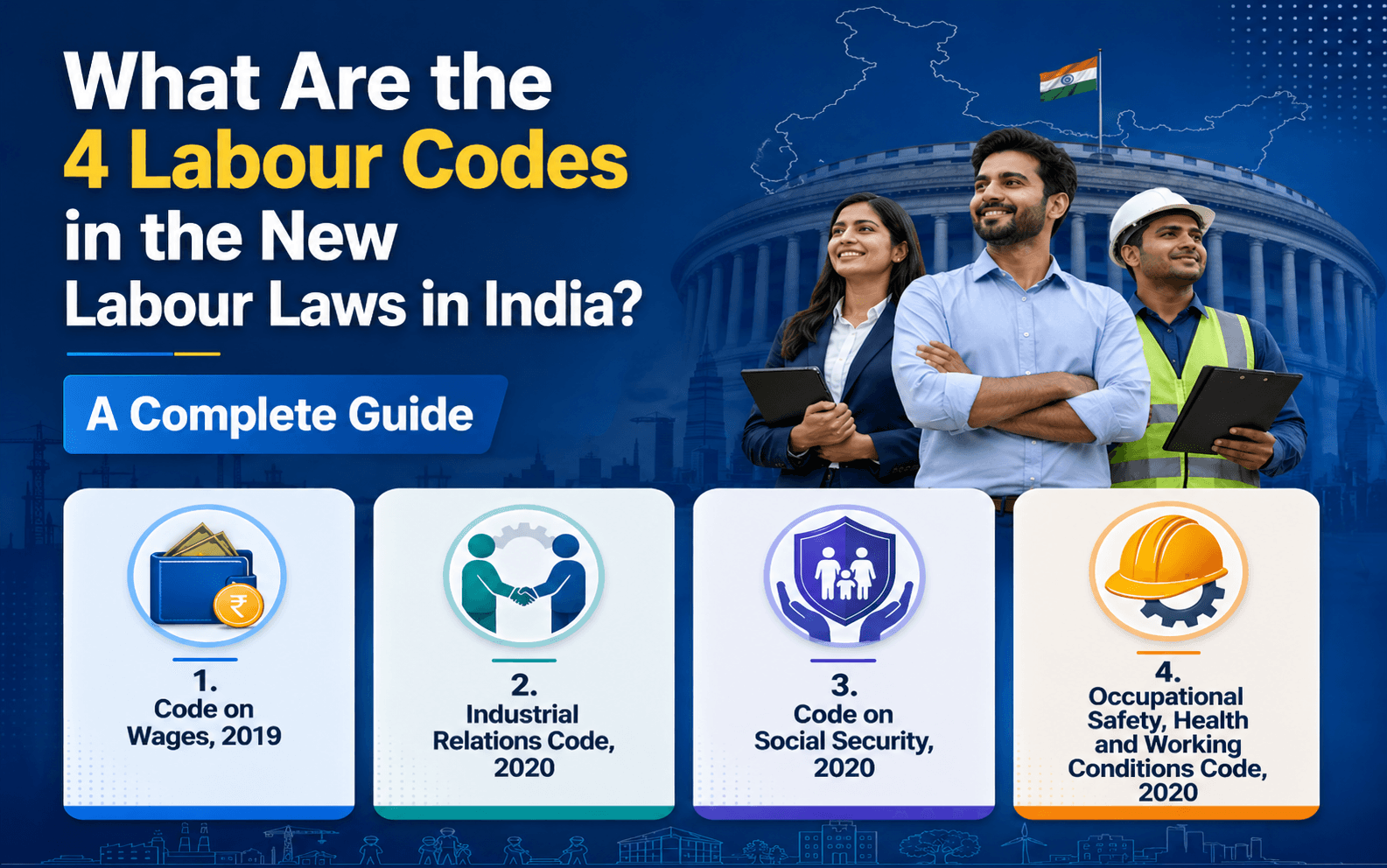
What Are the 4 Labour Codes in the New Labour Laws in India? A Complete Guide
Read More >

15 to 17 minutes
|
All
category
What Are the New External Workforce Trends in 2026?
Read More >