
This 2026 statutory audit guide explains how enterprises can improve workforce compliance readiness across onboarding, attendance, wages, PF, ESI, contractor governance, vendor billing, and audit records. It covers common audit gaps, what auditors typically review, and how BeeForce by BlueTree helps enterprises build a more connected, traceable, and audit-ready workforce compliance model.
Introduction
For enterprises managing large contract, gig, blue-collar, and vendor-deployed workforces, statutory audits in 2026 will demand more than document collection.
Auditors are no longer only checking whether records exist. They are checking whether records match.
Worker data must match contractor records. Attendance must match wage calculation. Wage slips must match payroll. PF and ESI records must match worker eligibility and contribution proof. Vendor invoices must match approved attendance and payout data.
This blog focuses on statutory audits from a workforce and labour compliance perspective. It is especially relevant for CHROs, HR operations teams, compliance leaders, plant HR teams, finance teams, and vendor management teams.
The timing is important. The Government of India made the four Labour Codes effective from 21 November 2025, rationalising 29 existing central labour laws. These include the Code on Wages, Industrial Relations Code, Code on Social Security, and Occupational Safety, Health and Working Conditions Code.
For 2026, audit readiness is not about preparing files at the last minute.
It is about building a system-led compliance operating model where every worker, wage, attendance record, vendor bill, statutory proof, and approval trail is traceable.
Why Statutory Audits Matter in 2026
Statutory audits matter because they test whether an enterprise is following labour, wage, social security, safety, and contractor compliance requirements in actual operations.
In external workforce-heavy industries like manufacturing, logistics, ecommerce, facility management, retail, and infrastructure, the audit risk is higher because workforce records are often spread across multiple vendors, sites, departments, and systems.
Why 2026 is different
The new labour law environment places stronger focus on structured wage records, timely wage payment, minimum wage protection, social security coverage, working hours, overtime, contractor governance, and auditable records.
The Ministry of Labour and Employment’s employer handbook under the Labour Codes highlights employer responsibilities around wage compliance, overtime, working hours, and maintenance of compliance records.
For enterprises, the practical impact is clear: compliance must be connected across the employee lifecycle.
What statutory audits reveal
A statutory audit often reveals whether the enterprise has control over:
Worker onboarding and identity records
Contractor records
Work order and purchase order mapping
Attendance and muster records
Wage calculation and wage slips
Minimum wage compliance
Overtime calculation and approvals
PF and ESI coverage
Contractor licenses and registrations
Statutory registers
Vendor invoices
Payment proof
Exit and final settlement records
Grievance and dispute records
Audit trails for approvals and corrections
The issue is not only whether these records are available.
The bigger question is whether they are consistent across systems.
For example, if a worker appears in the vendor invoice but not in the approved attendance record, the audit risk is immediate. If PF and ESI details exist in one file but not in the worker master, the record is incomplete. If overtime is paid but not supported by shift, attendance, or approval records, the enterprise may struggle to defend the payment.
This is why 2026 statutory audit readiness needs connected workforce data.
What Auditors Look for in a Statutory Audit
Auditors typically look for evidence that the enterprise has followed applicable labour, wage, contractor, and social security requirements.
For large enterprises, this evidence is usually reviewed across worker records, vendor records, payroll records, statutory registers, and payment proof.
1. Worker master accuracy
Auditors check whether worker records are complete and valid.
This may include:
Name
Date of birth
Identity proof
Address
Mobile number
Contractor mapping
Location mapping
Department or cost center
Skill category
Wage category
Date of joining
Bank details
PF and ESI details, where applicable
Employment or engagement status
BeeForce supports day-zero readiness, ensuring workers are site-eligible, compliance-eligible, and payout-eligible before reporting. It also includes identity checks, bank validation, BGV, UAN and ESI creation or validation, and centralized worker profiles across locations and contractors.
This matters because incomplete onboarding creates downstream compliance gaps in attendance, payroll, billing, and statutory records.
2. Contractor and vendor records
For contract labour, auditors check whether the contractor ecosystem is properly governed.
This includes:
Contractor legal entity details
GST and statutory IDs
PF and ESI establishment details, where applicable
Licenses and registrations
Work order or purchase order mapping
Site and category mapping
Contract validity
Contractor SPOC and escalation details
Worker deployment records
If contractor records are incomplete, the enterprise may struggle to prove that worker deployment was properly controlled.
3. Attendance and muster records
Attendance is one of the most important audit data points.
Auditors may check:
Daily attendance
Shift mapping
In and out punches
Leave records
Weekly off
Overtime
Attendance regularisation
Supervisor approvals
Contractor attendance submissions
Attendance to wage reconciliation
If attendance is maintained in one system and payroll is calculated in another, mismatch risk increases.
4. Wage and payroll records
Wage records are central to statutory audit readiness.
Auditors may review:
Wage structure
Minimum wage mapping
Wage period
Payable days
Overtime wages
Deductions
Allowances
Wage slips
Payment proof
Wage registers
Bonus or statutory payments, where applicable
The Code on Wages includes provisions around minimum wages, payment of wages, wage slips, registers, and related records. PIB has also highlighted that wage slips may be issued electronically or physically on or before wage payment, supporting transparency and reducing disputes.
5. PF, ESI, and social security proof
Auditors check whether workers who are eligible for statutory benefits are correctly mapped, contributed for, and supported with proof.
This includes:
UAN availability
ESIC details, where applicable
Contribution records
Challans
Remittance proof
Contractor submission proof
Worker-level reconciliation
Missing or delayed contribution cases
The Code on Social Security consolidates social security laws and covers areas including provident fund, ESI, gratuity, maternity benefit, and employee compensation.
6. Vendor billing and payout reconciliation
For external workforce-heavy enterprises, auditors may also review whether vendor bills are supported by approved attendance and wage records.
This includes:
Worker count
Attendance days
Wage rate
Service charges
Statutory components
Deductions
Invoice amount
Payment approval
Statutory proof before payment
BeeForce helps automate vendor billing and bulk payout based on approved attendance, wage rates, and contractual terms, making invoices standardized and auditable.
Common Compliance Gaps That Cause Audit Issues
Most statutory audit issues do not happen because enterprises ignore compliance.
They happen because compliance data is fragmented.
HR has one record. Vendors have another. Finance has invoice data. Site teams have attendance. Compliance teams have statutory proofs. Payroll has wage outputs.
When these do not reconcile, audit issues begin.
Incomplete worker onboarding
A worker may be deployed before identity, bank, statutory, or contractor mapping is complete.
This creates risk because the worker may appear in attendance or billing without a complete compliance profile.
Missing contractor master controls
If a contractor is not mapped to valid licenses, registrations, work orders, or statutory IDs, every worker deployed through that contractor becomes harder to defend during audit.
Attendance and payroll mismatch
This is one of the most common audit issues.
Examples include:
Worker marked present but not paid
Worker paid but not present in attendance
Overtime paid without approval
Leave records not reflected in payroll
Attendance correction made after payroll closure
Manual attendance file not matching system data
Minimum wage gaps
Minimum wage gaps can occur when wage rules are not updated by state, location, skill category, zone, or effective date.
This is especially risky for enterprises operating across multiple states or contractor models.
PF and ESI proof gaps
Contractors may submit PF and ESI proof late or in summary format.
But audit readiness requires worker-level traceability.
If a statutory proof cannot be mapped back to a worker, wage period, and contractor, the record is weak.
Vendor billing without statutory validation
Vendor invoices may be approved even when PF, ESI, wage, or attendance records are pending.
This creates financial and compliance risk.
The enterprise may release payment before confirming whether the contractor has met statutory obligations.
Manual register preparation
Registers prepared only during audit are more likely to contain inconsistencies.
Audit-ready records should be generated from approved operational data, not manually rebuilt after the audit notice.
No exception ownership
Many audit gaps remain unresolved because there is no clear owner.
For every exception, enterprises need:
Reason code
Responsible owner
SLA
Escalation path
Approval trail
Closure proof
BeeForce helps enterprises track missing records, missing statutory IDs, wage gaps, overtime breaches, pending vendor proofs, billing mismatches, and pending approvals as part of exception management.
How BlueTree Can Help Improve Audit Readiness
BlueTree helps enterprises improve statutory audit readiness through BeeForce, its external workforce management platform built for contract, gig, piece-rate, and blue-collar workforce operations.
BeeForce is designed to connect the data points that statutory audits usually test separately.
Instead of maintaining separate files for onboarding, attendance, payroll, vendor billing, PF, ESI, and compliance records, enterprises can bring these workflows into one connected operating layer.
BeeForce helps improve audit readiness across key areas
Onboarding compliance
BeeForce supports high-volume, mobile-first onboarding across sites and vendors.
It helps enterprises capture worker data, validate identity, map contractors, collect bank details, and support statutory readiness through UAN and ESI creation or validation.
This reduces the risk of workers entering the system without complete compliance records.
Attendance and shift traceability
BeeForce helps connect attendance, shifts, leave, overtime, and regularisation workflows.
This creates stronger traceability between actual deployment and payable wages.
For audits, this means HR and compliance teams can explain how attendance was captured, approved, corrected, and used for payroll.
Wage and payout control
BeeForce can help enterprises manage wage structures, payable days, overtime, deductions, and payout-ready summaries.
This makes payroll outputs easier to reconcile with attendance, vendor submissions, and statutory records.
PF, ESI, and statutory visibility
BeeForce helps enterprises track PF and ESI readiness at the worker and vendor level.
This includes statutory identifiers, contribution readiness, missing data, vendor proof, and billing risk.
BlueTree project material positions BeeForce around PF and ESIC remittance validation, non-remittance monitoring, minimum wage adherence reports, and vendor-wise compliance dashboards.
This is especially useful for enterprises where vendors submit statutory proof after invoice generation or where PF and ESI records are checked manually.
Vendor billing reconciliation
BeeForce helps connect vendor billing with approved attendance, wage rates, contractual terms, and compliance records.
This reduces back-and-forth with vendors and gives finance teams stronger confidence before invoice approval.
Audit trails and exception management
Statutory audits require proof.
BeeForce helps create traceability across:
Worker creation
Contractor mapping
Attendance approvals
Overtime approvals
Payroll changes
Wage calculations
Vendor billing
Statutory proof submissions
Exception approvals
Exit and final settlement workflows
This helps enterprises move from document-based audit preparation to data-backed audit readiness.
Why this matters for enterprise leadership
For CHROs, audit readiness protects workforce continuity.
For compliance leaders, it reduces exposure during inspections and audits.
For finance teams, it improves vendor payment control.
For plant HR teams, it reduces last-minute record chasing.
For leadership, it provides better visibility into workforce risk across locations, contractors, and worker categories.
This is where BlueTree’s platform-led approach becomes important.
Audit readiness is not achieved by storing documents alone. It is achieved when every workforce transaction creates reliable compliance evidence.
Conclusion
A 2026 statutory audit is not only a checklist exercise.
For enterprises managing external workforces, it is a test of workforce data discipline.
Auditors look for consistency across worker records, contractor records, attendance, wages, PF, ESI, vendor bills, statutory registers, and payment proof. If these records are disconnected, audit issues become difficult to avoid.
The best way to improve statutory audit readiness is to build compliance into daily workforce operations.
That means verified onboarding, trusted attendance, wage rule controls, statutory proof tracking, vendor billing reconciliation, and audit trails across every approval and exception.
BlueTree helps enterprises achieve this through BeeForce by connecting workforce operations, payroll, vendor governance, and compliance into one audit-ready workflow.


Manage External Workforce with BlueTree - Govern contract, gig, and blue collar workers across vendors, sites, and shifts.
Frequenty Asked Questions
4-5 Minutes
|
All
category
Global Payroll Week 2026: Why Blue Collar Payroll Needs Better Governance
Read More >
7-8 Minutes
|
All
category
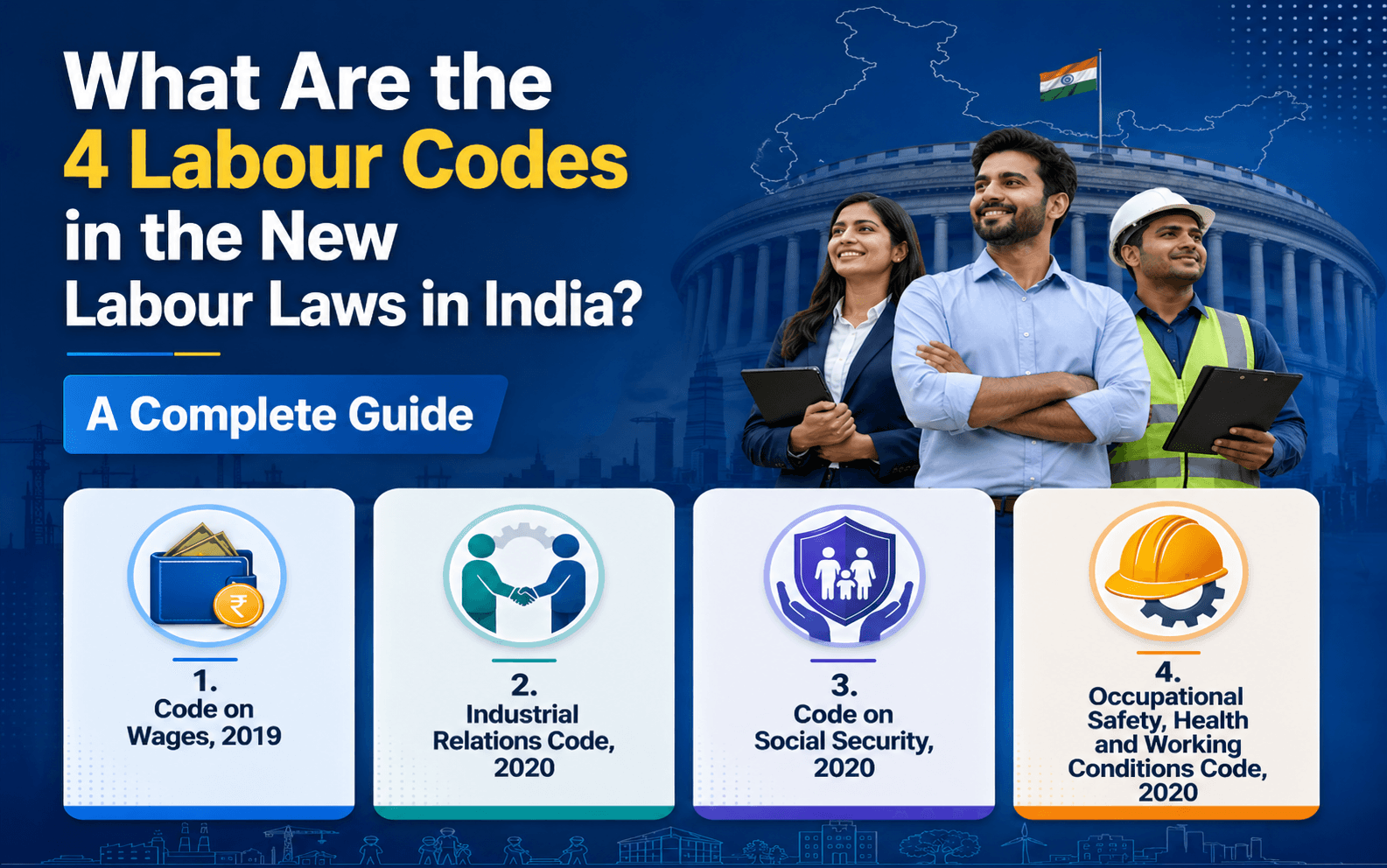
What Are the 4 Labour Codes in the New Labour Laws in India? A Complete Guide
Read More >

15 to 17 minutes
|
All
category
What Are the New External Workforce Trends in 2026?
Read More >