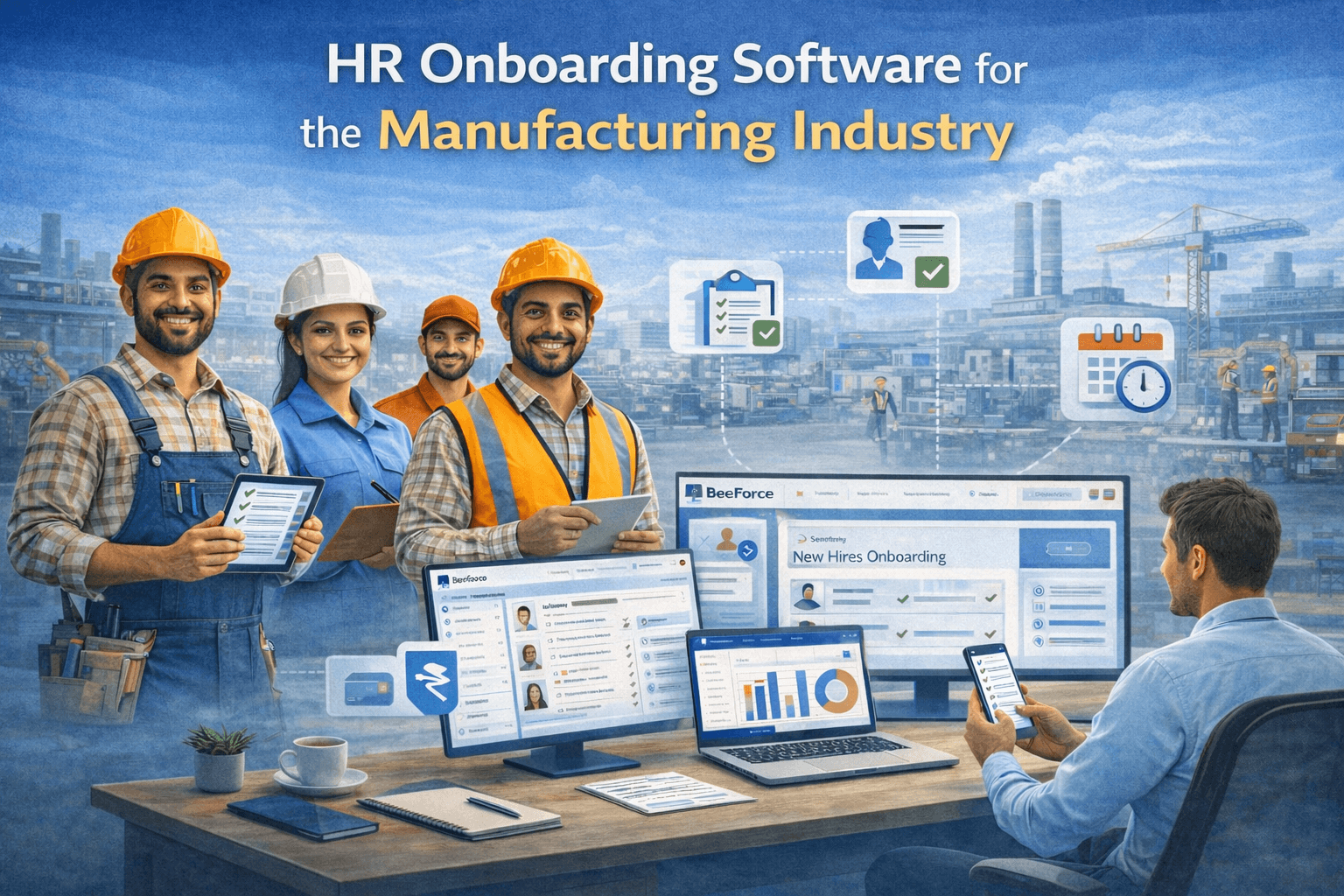
Manufacturing onboarding is an operational control point that determines whether workers are site-ready, shift-ready, and payout-ready from Day 1. This blog explains what HR onboarding software for the manufacturing industry should include, how it differs from white-collar onboarding tools, how enterprises can select the right workforce onboarding platform, and how BlueTree helps standardize contract labour onboarding across plants and contractors through structured workflows, bulk onboarding, readiness checks, centralized visibility, and compliance-ready records such as identity and document verification, statutory readiness where applicable, and audit-traceable onboarding evidence.
Introduction
Manufacturing onboarding is very different from office employee onboarding.
In a corporate environment, onboarding usually means collecting documents, issuing appointment letters, setting up email access, assigning a manager, and introducing the employee to company policies. In manufacturing, onboarding is much more operational.
A worker may need to be verified, mapped to a contractor, assigned to a plant, linked to a shift, checked for statutory readiness, approved by site HR, cleared by safety, enabled for attendance, and made payroll-ready before entering the shop floor.
This becomes even more complex when manufacturers manage contract labour, blue-collar workers, trainees, apprentices, piece-rate workers, flexi staff, and vendor-deployed workers across multiple plants and shifts.
This is why manufacturing onboarding software cannot be evaluated like generic HR software onboarding tools. The right workforce onboarding platform for manufacturing should help enterprises onboard workers faster, validate compliance earlier, reduce manual coordination, improve shift readiness, and create a reliable worker record from day zero.
For HR, IR, compliance, safety, finance, and plant operations teams, onboarding automation in manufacturing is not just about digitizing joining forms. It is about ensuring that every worker is verified, compliant, deployed correctly, and ready for attendance, payout, and audit processes.
What Is HR Onboarding Software for the Manufacturing Industry?
HR onboarding software for the manufacturing industry is a digital system that helps enterprises collect worker details, validate documents, manage approvals, complete compliance checks, assign workers to sites and shifts, and prepare them for work before deployment.
Unlike basic digital employee onboarding tools, manufacturing onboarding software must support both permanent and non-permanent workforce models. This includes contract workers, blue-collar workers, apprentices, trainees, piece-rate workers, gig workers, flexi workers, and vendor-managed workers.
A manufacturing-ready HR onboarding solution typically supports:
Worker profile creation
Document collection and validation
Aadhaar, bank, PF, ESI, and identity checks
Contractor and vendor mapping
Work order and site allocation
Role, department, skill, and shift mapping
Safety and induction workflows
Medical or fitness checks where required
Approval workflows across HR, site, safety, compliance, and security teams
Attendance and payroll readiness
Worker communication and onboarding status tracking
The goal is not only to create a worker record. The goal is to ensure that the worker is eligible, verified, compliant, site-ready, attendance-ready, and payout-ready before they start work.
For manufacturers, onboarding failure does not remain an HR issue. It affects production continuity, manpower availability, compliance readiness, safety control, vendor accountability, and wage accuracy.
How Is Manufacturing HR Onboarding Software Different From White-Collar HR Onboarding Software?
Manufacturing onboarding software is different from white-collar HR onboarding software because the workforce environment is completely different. Office onboarding is usually designed for salaried employees who join a fixed role, use email, access HR systems directly, and follow relatively standard working patterns.
Manufacturing onboarding is more operationally complex. It must support high-volume joining, contract labour onboarding, contractor mapping, statutory checks, shift allocation, attendance readiness, safety documentation, wage category mapping, and site-level approvals.
This is why a generic HR onboarding solution may work well for office employees but fail when used for shop-floor, contract, blue-collar, trainee, apprentice, or vendor-deployed workers.
Comparison Area | White-Collar HR Onboarding Software | Manufacturing Onboarding Software |
Workforce type | Designed mainly for permanent employees, executives, managers, and office staff. | Built for permanent workers, contract labour, trainees, apprentices, piece-rate workers, flexi staff, and vendor-deployed workforce. |
Joining volume | Usually handles smaller batches of employees joining across corporate functions. | Must support high-volume onboarding where 100, 1000, or more workers may join across shifts, vendors, and plants. |
Onboarding method | Mostly email-led, form-based, and employee self-service driven. | Needs mobile-first onboarding, assisted onboarding, bulk upload, vendor-led data capture, and site HR verification. |
Worker access | Assumes employees have email, laptops, and regular access to HR portals. | Must work for workers who may not have corporate email or desktop access and may rely on mobile, kiosk, vendor, or site-assisted workflows. |
Identity verification | Usually limited to standard KYC and employment documents. | Requires Aadhaar validation, face match, bank validation, duplicate checks, UAN/ESI validation, and background verification where applicable. |
Contractor mapping | Usually not a core requirement. | Essential for contract labour onboarding software because every worker must be mapped to contractor, vendor, work order, site, department, and supervisor. |
Site and shift mapping | Often limited to office location and reporting manager. | Must map workers to plant, line, shift, roster, department, skill category, wage category, and attendance rule. |
Compliance depth | Focuses on employee records, tax details, policies, and basic employment documents. | Must support statutory records, PF, ESI, contractor licences, wage category mapping, safety readiness, medical checks, and audit trails. |
Attendance dependency | Attendance may not directly affect monthly salary for most salaried employees. | Attendance directly affects payable days, overtime, shift allowance, payout, vendor billing, and compliance records. |
Payroll linkage | Payroll is often fixed salary based. | Payroll may depend on attendance, overtime, wage rates, piece-rate output, contractor billing, deductions, and approvals. |
Safety and induction | Usually limited to policy acknowledgement or orientation. | Requires safety induction, medical fitness, and role-specific training where applicable. |
Approval workflows | Often limited to HR, IT, admin, and manager approvals. | Requires approvals from HR, vendor, site, security, safety, compliance, finance, and sometimes plant operations. |
Exception handling | Exceptions are relatively limited and mostly administrative. | Must handle failed verification, missing documents, urgent joining, duplicate worker records, shift changes, attendance issues, and statutory pending cases. |
Audit readiness | Focuses on employee file completeness. | Must support audit-ready worker records, contractor-wise documentation, statutory fields, approval history, wage records, and deployment traceability. |
Business impact | Improves employee joining experience and HR efficiency. | Directly impacts shift readiness, production continuity, compliance confidence, attendance accuracy, payroll correctness, and vendor governance. |
For manufacturing companies, HR onboarding automation should not stop at document collection. A manufacturing-ready workforce onboarding platform must ensure that every worker is verified, mapped, compliant, shift-ready, attendance-ready, and payout-ready before deployment.
If onboarding data is incomplete, the impact does not remain limited to HR. It flows into attendance errors, payroll mismatches, compliance gaps, vendor billing disputes, and shop-floor execution delays.
That is why manufacturing HR software must be evaluated differently from generic HR software onboarding tools. The right contractor onboarding software should be built around plant realities, not office assumptions.
Why Manufacturing HR Software Fails When It’s Built for Office Work
Manufacturing HR software fails when it assumes that onboarding is only a document collection process. In manufacturing, onboarding is the starting point for workforce deployment, attendance, payroll, compliance, safety, and vendor governance.
Here are common scenarios where office-style onboarding breaks down in manufacturing environments.
Scenario 1: You’re Onboarding 30 People at Once, and the Process Is Collapsing
A plant needs 30 workers to join for a new shift or production line. The vendor sends worker details through Excel. HR collects documents over email. Site teams ask for access clearance. Compliance asks for statutory details. Attendance teams wait for worker IDs.
By the time workers arrive, some profiles are incomplete, some bank details are missing, some documents are unclear, and some workers are not mapped to the right vendor or department.
This creates day-one delays, idle manpower, manual corrections, and pressure on site HR.
A manufacturing-ready workforce onboarding platform should support bulk onboarding, mobile capture, assisted onboarding, mandatory fields, document checks, approval workflows, and day-zero readiness before deployment.
Scenario 2: Your Compliance Documentation Is One Audit Away From a Problem
Manufacturing enterprises must maintain reliable worker records, statutory details, contractor documentation, wage-related information, and deployment history.
If worker documents are incomplete or stored across vendor files, email folders, spreadsheets, and physical registers, compliance teams may not see the gaps until an audit, inspection, or dispute.
A strong contract labour onboarding software should capture compliance data early and keep worker records audit-ready. It should also help track statutory IDs, document validity, contractor mapping, and approval history.
Scenario 3: Your Hourly Workers Can’t Access HR, and They’re Leaving Because of It
Hourly and shop-floor workers often need basic HR support around joining status, attendance regularization, wage slips, ID issues, shift changes, and payout queries.
If they depend only on supervisors, contractors, or site HR desks, delays increase. Workers may feel disconnected from the organization, especially when onboarding status, attendance, and payout information are not transparent.
Mobile-first digital employee onboarding and assisted onboarding workflows can reduce friction by giving workers, vendors, and supervisors clearer visibility into the joining process.
Scenario 4: Your Shift Data Lives in Three Systems and None of Them Talk to Payroll
In many plants, worker onboarding data sits in HR files, shift data sits with operations, attendance sits in biometric systems, and payroll inputs sit in spreadsheets.
When these systems do not talk to each other, errors become common. A worker may be onboarded but not mapped to the right shift. Attendance may be captured but not linked to wage rules. Overtime may be approved outside the system. Payroll may need manual corrections.
Manufacturing onboarding software should connect worker master data with attendance, shift, overtime, payroll, payout, and billing workflows.
Scenario 5: You Can’t See What’s Happening Until It’s Already a Problem
Many onboarding issues become visible only after workers arrive, payroll closes, audits begin, or vendor invoices are submitted.
By then, teams are reacting to errors instead of preventing them.
A manufacturing-ready HR onboarding solution should provide dashboards for pending documents, approval delays, statutory gaps, vendor-wise onboarding status, site readiness, and worker deployment. This allows HR, operations, compliance, and finance teams to intervene earlier.
Benefits of Selecting the Right HR Onboarding Software for External Workforce
For manufacturing enterprises, the right onboarding software can improve far more than HR efficiency. It can strengthen workforce readiness, compliance control, site execution, and vendor governance.
Faster Worker Deployment
Digital employee onboarding reduces dependency on physical forms, email follow-ups, and manual document checks. Workers can be invited, verified, approved, and made site-ready faster.
This helps plants avoid day-one delays and improves manpower availability during ramp-ups, production peaks, and shift expansions.
Better Compliance Readiness
A manufacturing-ready onboarding system captures statutory and worker records early. This helps reduce gaps in identity data, PF, ESI, bank details, contractor mapping, licences, safety documents, and worker registers.
When compliance data is captured at onboarding, enterprises are better prepared for audits, inspections, payroll closure, and vendor reviews.
Reduced Manual Coordination
Manufacturing onboarding involves HR, vendors, site teams, safety, compliance, security, and finance. A structured HR onboarding automation system reduces repetitive calls, spreadsheet follow-ups, and manual status checks.
Each stakeholder can see what is pending, who owns it, and when it needs to be completed.
Improved Attendance and Payroll Accuracy
Onboarding data directly affects attendance and payroll. If a worker is mapped to the wrong site, shift, vendor, wage category, or supervisor, downstream payroll errors are likely.
A connected onboarding system ensures that worker master data flows correctly into attendance, shift, overtime, wage, payout, and billing processes.
Better Vendor Accountability
Manufacturers often depend on multiple labour contractors and staffing vendors. A good contractor onboarding software helps track vendor-wise submission quality, pending documents, correction delays, approval status, and deployment readiness.
This allows enterprises to measure vendor performance based on data rather than follow-ups.
Stronger Worker Experience
A faster and clearer onboarding process improves worker confidence. Workers know what documents are required, whether their profile is approved, when they can report, and how their attendance and payout will be processed.
This matters especially for high-volume blue-collar and contract workforce environments where worker drop-off can affect shift readiness.
How to Select the Right HR Onboarding Software for the Manufacturing Industry
Choosing HR onboarding software for manufacturing should not be based only on a feature checklist. Enterprises should evaluate whether the system can handle manufacturing workforce complexity at scale.
Check Whether It Supports External Workforce Categories
The system should support contract workers, trainees, apprentices, piece-rate workers, gig workers, flexi staff, and vendor-deployed workers.
If the software is built only for permanent employees, it may not manage contractor mapping, bulk onboarding, wage category mapping, work orders, or vendor workflows properly.
Look for Bulk and Mobile-First Onboarding
Manufacturing onboarding must work at volume. The software should support:
Bulk uploads
Mobile onboarding
Assisted onboarding
Vendor-led data capture
Site HR verification
Worker self-service where possible
This is essential when plants onboard large batches of workers quickly.
Validate Identity and Statutory Readiness
A good contract labour onboarding software should support verification workflows such as:
Aadhaar validation
Face match
Bank validation
UAN validation
ESI validation
Background verification where required
Duplicate worker checks
These controls help reduce identity risk, payout failures, and compliance gaps.
Ensure Site, Shift, and Vendor Mapping
The onboarding system should allow workers to be mapped to:
Plant
Site
Department
Line
Contractor
Work order
Shift
Supervisor
Wage category
Skill category
This mapping is critical for attendance, shift planning, payroll, compliance, and vendor billing.
Evaluate Compliance and Audit Capabilities
The software should help maintain worker records, document history, approval trails, statutory fields, contractor documentation, and audit-ready reports.
Compliance should not be an afterthought. It should be embedded into onboarding workflows.
Check Integration With Attendance and Payroll
Manufacturing onboarding software should connect with attendance systems, biometric devices, payroll platforms, ERP systems, and billing workflows where required.
If onboarding data cannot flow into attendance and payroll, HR teams will continue to depend on manual reconciliation.
Review Exception Management
Manufacturing onboarding often involves exceptions such as missing documents, failed validation, urgent joining, duplicate records, rejected bank details, or pending statutory information.
The system should support reason codes, approval workflows, escalation rules, SLA tracking, and audit trails for exceptions.
Assess Dashboards and Reporting
Leadership and site teams need visibility into:
Workers invited
Workers verified
Workers pending approval
Vendor-wise onboarding status
Document gaps
Statutory pending items
Site readiness
Joining trends
Drop-offs and rejections
Good reporting helps teams act before onboarding gaps become operational problems.
Top 5 HR Software for Manufacturing in 2026
There is no single best HR software for every manufacturer. The right choice depends on workforce structure, plant complexity, external workforce dependency, compliance needs, and integration requirements.
Here are five relevant HR software options for manufacturing enterprises in 2026.
BeeForce by BlueTree
BeeForce is relevant for manufacturers that manage large external, contract, blue-collar, gig, flexi, or piece-rate workforces across multiple sites and vendors.
It focuses on the full external workforce lifecycle, including onboarding, attendance, payouts, compliance, vendor governance, billing, and offboarding. For manufacturing enterprises, this is useful when onboarding is not just about hiring but about site readiness, contractor mapping, statutory validation, shift linkage, and workforce control.
Best suited for:
Large manufacturing enterprises
Contract workforce-heavy plants
Multi-site operations
Vendor-managed workforce models
Enterprises needing onboarding-to-payout visibility
Organizations with compliance and contractor governance complexity
SAP SuccessFactors
SAP SuccessFactors is a broad enterprise HCM suite suited for large organizations that need HR standardization across regions, functions, and workforce processes.
For manufacturers already operating in an SAP ecosystem, it may support broader HR transformation across core HR, talent, payroll, analytics, and workforce processes. Manufacturers with complex external workforce or contractor onboarding needs should evaluate how well it integrates with shop-floor attendance, compliance, contractor governance, and plant-level workflows.
Best suited for:
Large enterprises
Global manufacturing organizations
SAP ecosystem users
Companies needing broad HCM standardization
Complex HR and talent management environments
Darwinbox
Darwinbox is a cloud HRMS platform with digital onboarding and broader employee lifecycle capabilities. It can be relevant for mid-to-large enterprises looking for configurable HR workflows, employee self-service, mobile access, and modern HR automation.
Manufacturers should evaluate how well it supports plant-level onboarding, blue-collar access, bulk worker onboarding, shift mapping, external workforce data, and contractor workflows in their specific environment.
Best suited for:
Mid-to-large manufacturing companies
Enterprises seeking a modern HRMS
Organizations prioritizing mobile access
Companies looking for configurable HR workflows
Businesses managing both office and plant workforce
UKG
UKG is known for workforce management, scheduling, time, attendance, compliance, and labour visibility. It can be relevant for manufacturers where shift planning, scheduling accuracy, workforce productivity, and time management are major priorities.
Manufacturers should evaluate regional payroll, India-specific statutory compliance, contractor governance, and external workforce onboarding requirements carefully.
Best suited for:
Shift-heavy manufacturing environments
Enterprises focused on workforce scheduling
Organizations needing time and attendance depth
Manufacturers prioritizing labour optimization
Multi-location operations with workforce planning needs
Keka
Keka is an HR and payroll platform in India with capabilities across employee data, attendance, payroll, compliance, hiring, onboarding, and employee self-service.
It can work well for growing businesses that need HR and payroll automation with attendance and onboarding workflows. For large manufacturing enterprises with complex contractor, vendor, work order, statutory validation, and external workforce needs, companies should evaluate whether the platform can support manufacturing-specific onboarding complexity at scale.
Best suited for:
Growing Indian businesses
Mid-market companies
HR and payroll automation
Attendance and compliance workflows
Organizations needing a modern employee self-service experience
Trends Shaping Manufacturing HR Tech in 2026
Manufacturing HR technology is moving from basic HR automation to operational workforce control. The following trends are shaping how manufacturers select onboarding and workforce management systems.
External Workforce Visibility Is Becoming a Priority
Manufacturers are realizing that permanent employee HRMS data is not enough. Contract workers, trainees, apprentices, piece-rate workers, and vendor-deployed staff also need to be visible in the enterprise workforce layer.
Onboarding Is Moving Before Day One
Onboarding automation in manufacturing is shifting from post-joining documentation to pre-joining readiness. Enterprises want workers verified, approved, mapped, and compliant before they reach the site.
Compliance Is Becoming System-Led
Manufacturers are moving away from document chasing and manual audit preparation. Compliance records, statutory fields, document expiry, wage categories, and approval trails are increasingly being built into daily workflows.
Mobile-First Access Is Becoming Essential
Shop-floor and contract workers may not have laptops or email access. Mobile-first and assisted onboarding models are becoming important for worker self-service, supervisor approvals, document capture, and communication.
Attendance, Shift, and Payroll Data Are Becoming Connected
Manufacturers are increasingly looking for systems where onboarding data flows into attendance, attendance flows into payroll, and payroll connects with compliance and vendor billing.
Vendor Governance Is Becoming Data-Driven
Vendor performance is no longer measured only through relationship or availability. Enterprises are beginning to track vendor-wise onboarding quality, document gaps, statutory readiness, replacement speed, attendance issues, and billing accuracy.
AI and Analytics Are Moving Into Workforce Operations
Analytics is being used to identify onboarding bottlenecks, compliance gaps, workforce shortages, attendance anomalies, overtime patterns, and vendor performance issues. Over time, this will support more predictive workforce planning.
Conclusion
Manufacturing onboarding is not a simple HR formality. It is the foundation for workforce readiness, attendance accuracy, payroll correctness, compliance confidence, safety control, and vendor governance.
Generic office-focused onboarding tools often fail because they do not account for manufacturing realities such as bulk joining, shift-based deployment, contractor mapping, statutory validation, site readiness, blue-collar access, and attendance-to-payroll dependency.
The right manufacturing onboarding software should help enterprises onboard workers faster, validate records earlier, connect onboarding with attendance and payroll, reduce manual coordination, and maintain audit-ready worker data.
For manufacturers managing large external, contract, trainee, apprentice, flexi, or piece-rate workforces, onboarding software should not only digitize joining documents. It should create a reliable operating layer for workforce deployment, compliance readiness, and shop-floor execution at scale.


Manage External Workforce with BlueTree - Govern contract, gig, and blue collar workers across vendors, sites, and shifts.
Frequenty Asked Questions
4-5 Minutes
|
All
category
Global Payroll Week 2026: Why Blue Collar Payroll Needs Better Governance
Read More >
7-8 Minutes
|
All
category
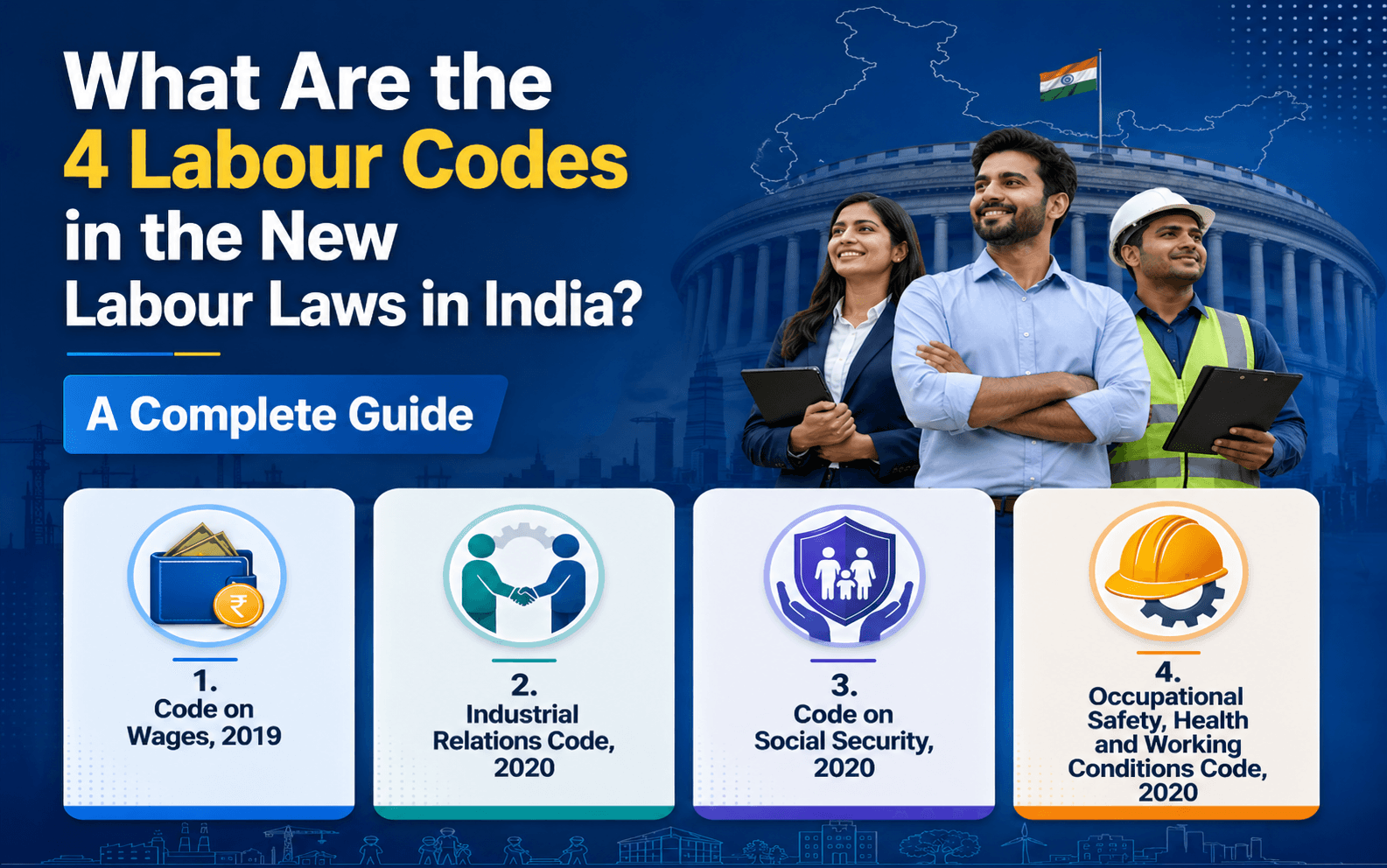
What Are the 4 Labour Codes in the New Labour Laws in India? A Complete Guide
Read More >
15 to 17 minutes
|
All
category
What Are the New External Workforce Trends in 2026?
Read More >