
This guide explains how Indian enterprises can manage contract labour compliance across multiple states, contractors, and locations. It covers state level compliance considerations, contractor management, minimum wage adherence, PF and ESI remittances, statutory records, compliance checklists, penalties for non compliance, and the challenges of manual processes. It also explains how BlueTree helps organisations centralise workforce data, contractor documentation, statutory validations, and compliance workflows to improve visibility and audit readiness across large external workforces.
Introduction
Managing contract labour across multiple states can make workforce compliance increasingly complex for Indian enterprises. Differences in applicable contract labour rules, wage requirements, statutory obligations, documentation, and state-level processes require businesses to maintain consistent oversight across workers, contractors, and locations.
A structured approach to contract labour compliance helps enterprises monitor contractor obligations, maintain required workforce records, track statutory requirements, and reduce compliance gaps. For organisations managing large external workforces, platforms such as BlueTree can further centralise contractor, workforce, and compliance processes across locations.
This guide covers the key requirements of contract labour management, state-level considerations, statutory obligations, compliance checklists, and the risks associated with non-compliance.
What Is Contract Labour Compliance?
Contract labour compliance refers to the processes organisations follow to meet the legal and statutory requirements associated with engaging workers through contractors or vendors. It covers areas such as worker documentation, wages, attendance, statutory contributions, contractor records, and applicable compliance registers.
For enterprises managing a large external workforce, effective contract labour management also requires visibility into whether contractors are meeting their obligations across locations. This can include monitoring minimum wage adherence, PF and ESI remittances, maintaining compliance documents, and managing approval workflows.
BlueTree helps organisations structure these processes by bringing vendor, workforce, and compliance information into connected workflows, making it easier to track compliance across contractors and locations.
What Makes Contract Labour Compliance Critical for Indian Enterprises?
Indian enterprises often engage contract workers across multiple contractors, vendors, sites, and states. This makes contract labour compliance important not only for meeting regulatory requirements but also for maintaining consistent oversight of a distributed external workforce.
Effective compliance helps enterprises:
Monitor statutory obligations: Track requirements such as minimum wages, PF and ESI remittances, and applicable compliance records.
Improve contractor accountability: Maintain visibility into documents and compliance submissions across vendors.
Reduce compliance risks: Identify missing documents, non-remittances, and other compliance gaps before they become recurring issues.
Maintain reliable records: Keep workforce and contractor information organised for compliance reviews and audits.
Standardise multi-location processes: Establish structured compliance workflows across contractors and operational locations.
BlueTree supports contract labour management through capabilities such as vendor compliance, PF and ESI remittance validation, minimum wage adherence, compliance registers, document tracking, and approval workflows, helping enterprises maintain better visibility across their external workforce.
How Contract Labour Rules Differ Across Indian States
Contract labour rules in India can vary by state because establishments may need to comply with state-specific rules, wage notifications, registration and licensing procedures, working conditions, registers, returns, and other local requirements. For enterprises operating across India, a single compliance process may therefore not be sufficient for every location.
Key state and Union Territory considerations include:
State / UT | Key Contract Labour Compliance Consideration |
Andhra Pradesh | State-specific labour rules, minimum wage notifications, registrations, records, and applicable returns need to be monitored. |
Arunachal Pradesh | Employers should verify locally applicable contract labour procedures, wage notifications, and prescribed records. |
Assam | State labour rules, minimum wages, contractor documentation, and establishment-level records require location-specific tracking. |
Bihar | Enterprises should monitor state wage notifications, contractor compliance, registers, and applicable labour department requirements. |
Chhattisgarh | State-specific wage rates, contract labour requirements, records, and contractor compliance should be tracked for each establishment. |
Goa | Employers need to consider state labour rules, notified wages, registrations, and applicable record-keeping requirements. |
Gujarat | Contract labour management should account for state-specific rules, minimum wages, documentation, and establishment requirements. |
Haryana | Enterprises should track applicable state rules, wage notifications, contractor documentation, registers, and returns. |
Himachal Pradesh | State-specific minimum wages, labour procedures, and required contractor and establishment records should be monitored. |
Jharkhand | Employers should consider state wage notifications, applicable labour rules, contractor obligations, and documentation requirements. |
Karnataka | Multi-location employers need to track Karnataka-specific labour requirements, notified wages, records, and applicable registrations or filings. |
Kerala | State labour requirements, minimum wages, contractor records, and establishment-specific compliance need to be considered. |
Madhya Pradesh | Enterprises should monitor state-specific rules, wage revisions, contractor records, and applicable registers and returns. |
Maharashtra | Employers need to account for Maharashtra-specific labour requirements, minimum wage notifications, contractor documentation, and establishment records. |
Manipur | Locally applicable wage notifications, labour procedures, and contract workforce records should be verified. |
Meghalaya | Enterprises should check applicable state rules, minimum wages, contractor obligations, and documentation requirements. |
Mizoram | State-specific wage and labour requirements, along with prescribed workforce records, should be monitored. |
Nagaland | Employers should verify applicable local labour requirements, wage notifications, and contractor documentation. |
Odisha | State rules, minimum wage notifications, contractor compliance, registers, and other establishment requirements need to be tracked. |
Punjab | Enterprises should monitor state-specific labour requirements, wage rates, contractor records, and applicable filings. |
Rajasthan | Contract labour compliance should reflect state-specific rules, notified wages, documentation, and establishment requirements. |
Sikkim | Employers should verify applicable state labour procedures, minimum wages, and contract workforce documentation. |
Tamil Nadu | Enterprises need to account for state-specific labour requirements, minimum wage notifications, contractor records, and applicable registers and filings. |
Telangana | State-specific rules, wage notifications, contractor documentation, and establishment-level compliance should be monitored. |
Tripura | Employers should track applicable state wage rates, labour requirements, and contractor and workforce records. |
Uttar Pradesh | Enterprises should account for state-specific labour requirements, minimum wage notifications, contractor compliance, registers, and applicable filings. |
Uttarakhand | State wage notifications, contractor obligations, records, and other establishment-specific requirements should be monitored. |
West Bengal | Employers should track state-specific rules, notified wages, contractor records, registers, and applicable labour requirements. |
Andaman and Nicobar Islands | Applicable UT labour requirements, wage notifications, and contract workforce records should be verified. |
Chandigarh | Employers should monitor applicable UT labour requirements, notified wages, registrations, and contractor records. |
Dadra and Nagar Haveli and Daman and Diu | Applicable UT rules, wage notifications, and establishment and contractor documentation should be tracked. |
Delhi (NCT) | Enterprises should monitor Delhi-specific wage notifications, labour requirements, contractor records, and applicable filings. |
Jammu and Kashmir | Employers should verify applicable UT labour requirements, wage notifications, and contractor documentation. |
Ladakh | Applicable UT requirements, wage notifications, and contract workforce records should be checked for establishments operating in Ladakh. |
Lakshadweep | Employers should verify applicable UT labour requirements and prescribed wage and workforce documentation. |
Puducherry | UT-specific labour requirements, minimum wage notifications, contractor records, and applicable establishment processes should be monitored. |
For multi-state enterprises, the challenge is not simply knowing the contract labour rules, but keeping up with location-specific requirements and changes. Minimum wages, documentation, filings, and administrative procedures can differ by jurisdiction and can change through government notifications.
BlueTree can help enterprises centralise contract labour compliance data, configure compliance requirements by location, track contractor documents and statutory records, and maintain approval workflows across a distributed workforce. This gives compliance teams greater visibility while allowing state-specific requirements to be managed within a more consistent process.
Essential Pillars of Contract Labour Management
Effective contract labour management requires enterprises to maintain visibility across contractors, workers, statutory obligations, and operational locations. A structured approach helps ensure that external workforce processes remain consistent throughout the worker lifecycle.
Key pillars include:
Contractor and vendor management: Maintain vendor registrations, empanelment records, work orders, licenses, and relevant documentation.
Worker onboarding and verification: Digitise onboarding, document collection, identity validation, and employee record creation.
Attendance and workforce tracking: Maintain accurate attendance, shifts, leave, overtime, and working-hour records for contract workers.
Wage and statutory compliance: Monitor minimum wage adherence, PF and ESI remittances, and other applicable payroll compliance requirements.
Compliance documentation: Maintain registers, supporting documents, notices, and records required for contract labour compliance.
Approval and monitoring workflows: Establish structured reviews and approvals to identify missing documents or compliance gaps across contractors and locations.
BlueTree brings these processes together through vendor management, onboarding, attendance, payroll, and compliance workflows, helping enterprises maintain greater visibility across large and distributed contract workforces.
Managing Wages and Statutory Compliance
Wage management is a critical part of contract labour compliance, particularly when enterprises manage workers through multiple contractors and across different locations. Organisations need visibility into whether applicable wage and statutory requirements are being followed consistently.
Key areas to monitor include:
Minimum wage adherence: Ensure contract workers are paid according to applicable minimum wage requirements.
PF compliance: Track PF remittances, arrear remittances, and instances of non-remittance.
ESI compliance: Validate ESI remittances and identify potential non-remittance cases.
Payroll compliance: Maintain accurate wage and payroll records across contractors and workers.
Compliance documentation: Track registers, supporting documents, and approval records required for compliance monitoring.
Location-specific requirements: Account for applicable wage and statutory requirements across different operating locations.
BlueTree supports these processes through minimum wage adherence, PF and ESI remittance validation, compliance registers, document tracking, and approval workflows, helping enterprises strengthen oversight across contractors and locations.
Contract Labour Act Compliance Checklist
A structured contract labour act compliance checklist helps enterprises monitor contractor obligations, worker records, wage payments, and statutory compliance across locations. Since requirements can vary by establishment and state, the checklist should be mapped to the rules applicable to each location.
Key areas to include are:
Contractor and vendor documentation: Maintain vendor registration, empanelment, licenses, work orders, and supporting documents.
Worker onboarding records: Maintain worker details, identity documents, employment information, and required validations.
Attendance and working hours: Track attendance, shifts, leave, overtime, and paid days accurately.
Minimum wage adherence: Verify that applicable minimum wage requirements are being followed.
PF and ESI compliance: Monitor remittances, arrears, and potential cases of non-remittance.
Wage and payroll records: Maintain reliable records of wages, deductions, statutory contributions, and related payroll information.
Compliance registers: Maintain and review applicable registers and supporting compliance documents.
Document approvals: Establish workflows for reviewing contractor submissions and identifying missing or non-compliant documents.
Notices and statutory records: Track applicable notices, cess-related records, and other required documentation.
Periodic compliance reviews: Regularly review contractor compliance instead of waiting for an audit or inspection to identify gaps.
BlueTree helps digitise several elements of the contract labour compliance checklist, including vendor documentation, work orders, minimum wage adherence, PF and ESI remittance validation, compliance registers, document tracking, and approval workflows. This can provide enterprises with more consistent compliance visibility across contractors and locations.
What Are the Penalties for Contract Labour Act Non-Compliance?
Failure to meet contract labour compliance requirements can expose both contractors and principal employers to legal and financial risks. The consequences depend on the nature of the violation, applicable legislation, state-specific rules, and whether non-compliance continues after authorities identify it.
Potential consequences may include:
Financial penalties: Violations of applicable contract labour requirements can attract fines or other monetary penalties.
Recovery of unpaid statutory dues: Authorities may require payment of outstanding wages, PF, ESI, or other applicable dues.
Regulatory action: Missing registrations, licences, records, or statutory submissions can result in proceedings by labour authorities.
Operational disruption: Serious compliance gaps can affect contractor engagement and workforce operations.
Increased audit and inspection risk: Incomplete registers, wage records, or contractor documents can create difficulties during inspections and compliance reviews.
Reputational risk: Repeated violations can affect relationships with workers, vendors, clients, and other stakeholders.
The exact penalty for non compliance of contract labour act requirements should be determined based on the legislation currently applicable to the establishment and its jurisdiction. Enterprises should therefore maintain an updated contract labour compliance checklist rather than relying on a uniform penalty framework across all states.
BlueTree can help organisations identify compliance gaps through structured contractor documentation, statutory validation, compliance registers, and approval workflows, supporting stronger compliance oversight across locations.
Challenges of Managing Contract Labour Manually
Manual contract labour management becomes increasingly difficult as enterprises expand across contractors, workers, sites, and states. When workforce and compliance information is maintained through spreadsheets, emails, and separate documents, teams may struggle to maintain consistent visibility.
Common challenges include:
Fragmented contractor data: Vendor records, work orders, licences, and worker information may be stored across different systems.
Compliance gaps: Missing documents, expired records, or incomplete statutory submissions can be difficult to identify on time.
Limited statutory visibility: Manually tracking PF and ESI remittances, minimum wage adherence, and compliance registers can increase the risk of missed exceptions.
Inconsistent processes across locations: Different teams may follow different methods for managing the contract labour compliance checklist.
Time-consuming approvals: Reviewing contractor documents and compliance submissions manually can delay approvals.
Audit readiness challenges: Collecting records from multiple contractors and locations during audits or inspections can require significant manual effort.
BlueTree helps centralise vendor management, workforce records, compliance documentation, statutory validations, and approval workflows, reducing dependence on fragmented processes and providing better visibility into contract labour compliance across locations.
Conclusion
Managing contract labour compliance across multiple contractors, locations, and states requires consistent oversight of workforce records, wages, statutory obligations, and compliance documentation. A well-defined contract labour compliance checklist can help enterprises standardise these processes and identify potential compliance gaps early.
For organisations with large external workforces, BlueTree brings vendor management, worker data, statutory validations, compliance registers, and approval workflows into a more structured system. This helps enterprises strengthen contract labour management and maintain better compliance visibility across their operations.


Manage External Workforce with BlueTree - Govern contract, gig, and blue collar workers across vendors, sites, and shifts.
Frequenty Asked Questions
4-5 Minutes
|
All
category
Global Payroll Week 2026: Why Blue Collar Payroll Needs Better Governance
Read More >
7-8 Minutes
|
All
category
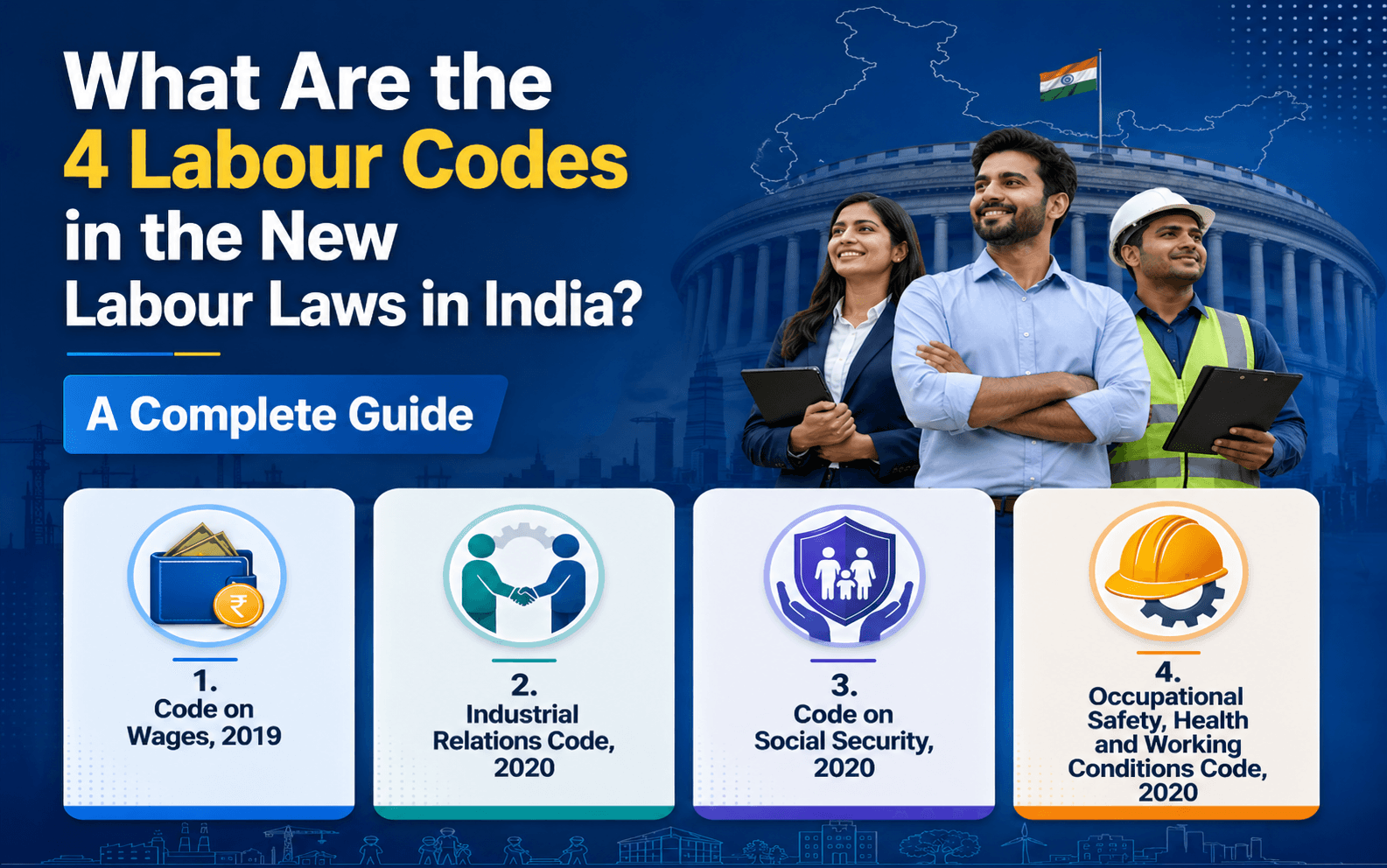
What Are the 4 Labour Codes in the New Labour Laws in India? A Complete Guide
Read More >

15 to 17 minutes
|
All
category
What Are the New External Workforce Trends in 2026?
Read More >