How Coca-Cola Solved Payroll Leakage & Onboarding Delays for 14,000+ Contract Labour & Field Workers

Hindustan Coca-Cola Beverages (HCCB), established in 1997 and headquartered in Bengaluru, is one of India’s leading FMCG and beverage manufacturing companies. HCCB manufactures, packages, and distributes a diverse portfolio of beverages from The Coca-Cola Company, including Coca-Cola, Thums Up, Sprite, Maaza, Fanta, Kinley, and Minute Maid. With 14 bottling plants across 10 states, supported by eight co-packers, HCCB operates a large-scale manufacturing and distribution network serving approximately 17 lakh retailers and 2,000+ distributors, combining extensive operational reach with technology-led manufacturing, supply chain, and distribution capabilities.
Managing thousands of contract labourers and field workers across multiple locations creates a very different workforce challenge from managing permanent employees.
For Coca-Cola, the complexity extended across two distinct workforce groups: contract labour supporting operations and Market Growth Representatives working across distributed market locations.
At this scale, workforce management was not simply about recording attendance. It involved ensuring that the right workers were onboarded and deployed quickly, manpower demand was accurately fulfilled, attendance represented actual work, vendor payments were linked to verified man-days, and statutory compliance could be monitored without extensive manual reconciliation.
BlueTree's BeeForce platform helped connect these processes into a unified workforce management framework, bringing together onboarding, manpower planning, attendance, productivity, payout, and statutory validation.
The result was greater workforce visibility, reduced payroll leakage, faster onboarding, more accurate invoicing, and stronger control over a large distributed workforce.
Managing a Distributed Workforce of 14,000+ Workers Across 20+ Locations
Managing a workforce at this scale becomes particularly complex when workers do not operate in one environment.
Contract workers are deployed according to operational manpower requirements, while Market Growth Representatives work across distributed market locations and are expected to complete predefined store visits as part of their daily responsibilities.
This creates multiple questions for HR and operations teams every day: How many workers are actually required? How many have been supplied? Who has reported for work? How many man-days were delivered? Did field representatives actually complete their assigned visits? And should the resulting attendance translate into payout?
When these answers sit across separate processes, workforce scale quickly becomes an operational control problem.
BeeForce helped establish a connected digital workforce layer across these activities, giving teams greater visibility from worker onboarding and manpower allocation through attendance, productivity validation, payout, and compliance.
Manual, Slow and Unverified Worker Onboarding Causing Onboarding Delays
For a large contract workforce, onboarding speed directly affects workforce readiness.
The existing process was time-consuming and lacked real-time employee verification. When identity, statutory details, duplicate profiles, or worker eligibility cannot be validated during onboarding, workers may remain unavailable for deployment while HR and vendor teams complete manual checks.
BeeForce digitized the onboarding process with real-time validation of Aadhaar, UAN, ESI number, age, blacklist status, and duplicate employee profiles.
Instead of relying on downstream verification, these controls were brought into the onboarding workflow itself.
This helped Coca-Cola create a more verified workforce at the point of entry while reducing onboarding turnaround time and improving the time required to make workers deployment-ready.
Lack of Real-Time Attendance Visibility
For distributed contract labour, attendance determines far more than whether a worker was present.
It influences actual man-days, manpower utilization, vendor payments, invoicing, and workforce planning.
When attendance information is captured separately from manpower demand and payout, HR and operations teams must manually reconcile whether the workers requested were actually supplied and whether those workers genuinely reported for work.
BeeForce integrated attendance through biometric and device-based attendance systems and connected attendance with workforce indents.
This enabled teams to validate actual worker presence against planned manpower requirements and provided a more reliable attendance foundation for downstream payout and invoicing.
Paying Field Sales Workers Based on Punches Instead of Actual Work
For Market Growth Representatives, simply recording attendance created an even bigger business problem.
These employees were expected to complete a minimum number of store visits every day. However, without an integrated validation mechanism, an employee could mark attendance without confirming whether those visits actually happened.
That created a direct payroll leakage risk. A valid punch could trigger compensation even when the required on-ground work had not been completed.
BeeForce was integrated with the existing Field Assist application to connect attendance with actual field activity.
Geo-tagged check-ins and check-outs at store locations were mapped against predefined route plans. Attendance was considered valid only when the representative completed the minimum required number of store visits.
This changed the underlying payroll logic from:
Punch recorded → Attendance → Pay
to:
Verified store visits → Valid attendance → Pay
As a result, compensation became more closely aligned with actual fieldwork, helping reduce overpayments and payroll leakage while improving field-force accountability and productivity visibility.
Manual Contract-Labour Manpower Planning
For contract labour operations, workforce requirements change based on production and operational demand.
Previously, daily workforce planning through indent creation was handled manually. There was no centralized system to consolidate manpower requests, communicate demand to vendors, or compare requested manpower against actual supply.
This resulted in miscommunication with vendors, mismatches between required and supplied manpower, and limited visibility into real-time workforce demand.
BeeForce digitized the indent planning process.
Departments could raise manpower requests digitally, enabling centralized consolidation of workforce requirements and better vendor coordination. Because indents were connected with attendance, teams could also compare planned manpower against actual worker deployment.
This helped move manpower planning from a manual request process to a more structured, demand-driven workforce allocation model.
Manual Vendor Payment Processing & Labour Attendance Disconnected With Payout
When attendance, manpower planning, and vendor payout operate independently, reconciliation becomes unavoidable.
The organization had limited visibility into actual man-days delivered against manpower requirements. Attendance records had to be manually reconciled before invoicing and payments, creating opportunities for errors, delays, and potential financial leakage.
BeeForce connected indent planning, attendance, actual man-days, payout, and invoicing.
Once worker attendance was validated, payouts could be calculated based on actual man-days rather than disconnected manual inputs.
Integration with the finance system further automated vendor payment processing, supporting more timely and accurate disbursal.
This created a direct digital link between manpower requested, manpower deployed, attendance delivered, and payment processed.
Manual PF & ESI Compliance Verification Causing Compliance Risks
For enterprises managing thousands of contract workers through multiple vendors, statutory compliance cannot depend entirely on manual verification.
PF and ESI remittances previously required manual validation, while the absence of reliable reports made it difficult to identify short payments, excess payments, zero remittances, or non-remittance.
Apart from consuming significant administrative effort, this exposed the organization to statutory compliance risk.
BeeForce automated PF and ESI remittance validation and categorized remittance outcomes as short, excess, zero, or accurate.
This gave teams clear visibility into discrepancies and enabled corrective action without depending on extensive manual validation.
The result was stronger compliance oversight and a more audit-ready statutory verification process.
Complex Shift Management & No Real-Time Data
Managing shifts across a large distributed contract workforce becomes difficult when workforce planning, attendance, and deployment information are maintained independently.
The larger issue is not simply creating a shift roster. Operations teams need visibility into whether planned manpower was actually deployed, whether workers reported as expected, and whether attendance corresponds with workforce requirements.
By connecting workforce planning with attendance and actual man-days, BeeForce created a stronger operational data foundation for managing daily workforce deployment.
Instead of relying on disconnected records and month-end reconciliation, teams gained greater visibility into actual workforce utilization and operational manpower delivery.
From Fragmented to Unified Workforce Data
The core transformation was not the digitization of one isolated HR process.
It was the connection of processes that previously operated independently:
Onboarding → Manpower Planning → Attendance → Productivity → Payout → Compliance
For contract labour, this meant manpower indents could be connected with actual attendance and man-days, which could subsequently drive payout and invoicing.
For Market Growth Representatives, field activity could be connected with attendance so that compensation reflected verified work rather than simply a recorded punch.
For compliance teams, statutory remittance information could be validated systematically rather than through manual checks.
This connected workforce data gave Coca-Cola greater control over the complete external workforce lifecycle while reducing the manual reconciliation required between HR, operations, vendors, payroll, and compliance teams.
What Has BlueTree Helped Coca-Cola Achieve?
Through BeeForce, Coca-Cola was able to move from fragmented workforce processes toward a more integrated and controlled external workforce operating model.
The implementation helped deliver:
Reduced onboarding turnaround time through real-time worker validations
Elimination of manual indent-planning errors through digitized manpower requests and vendor coordination
More accurate attendance and man-day validation by connecting workforce demand with actual worker presence
100% accurate invoices within minutes through attendance-linked calculations
Reduced payroll leakage by linking Market Growth Representative attendance to verified store visits
Improved field-force accountability and performance through productivity-linked attendance
Better visibility into market activity and workforce productivity
Automated PF and ESI remittance validation, strengthening statutory compliance oversight
More timely vendor payments through finance-system integration
Centralized visibility into distributed workforce operations
For enterprises managing large contract and field workforces, the lesson is clear: attendance, onboarding, manpower planning, productivity, payout, and compliance cannot operate as separate processes.
The greatest value comes when the entire workforce lifecycle is connected, so that the organization knows who was required, who was deployed, who actually worked, what work was completed, what should be paid, and whether the workforce remained compliant.
Manage Bulk Contract Labour with Greater Control
Managing thousands of contract workers across plants and locations should not require thousands of manual reconciliations.
Digitize onboarding, manpower planning, attendance, payout, vendor management, and compliance with BlueTree BeeForce.


Manage External Workforce with BlueTree - Govern contract, gig, and blue collar workers across vendors, sites, and shifts.
Frequenty Asked Questions
4-5 Minutes
|
All
category
Global Payroll Week 2026: Why Blue Collar Payroll Needs Better Governance
Read More >
7-8 Minutes
|
All
category
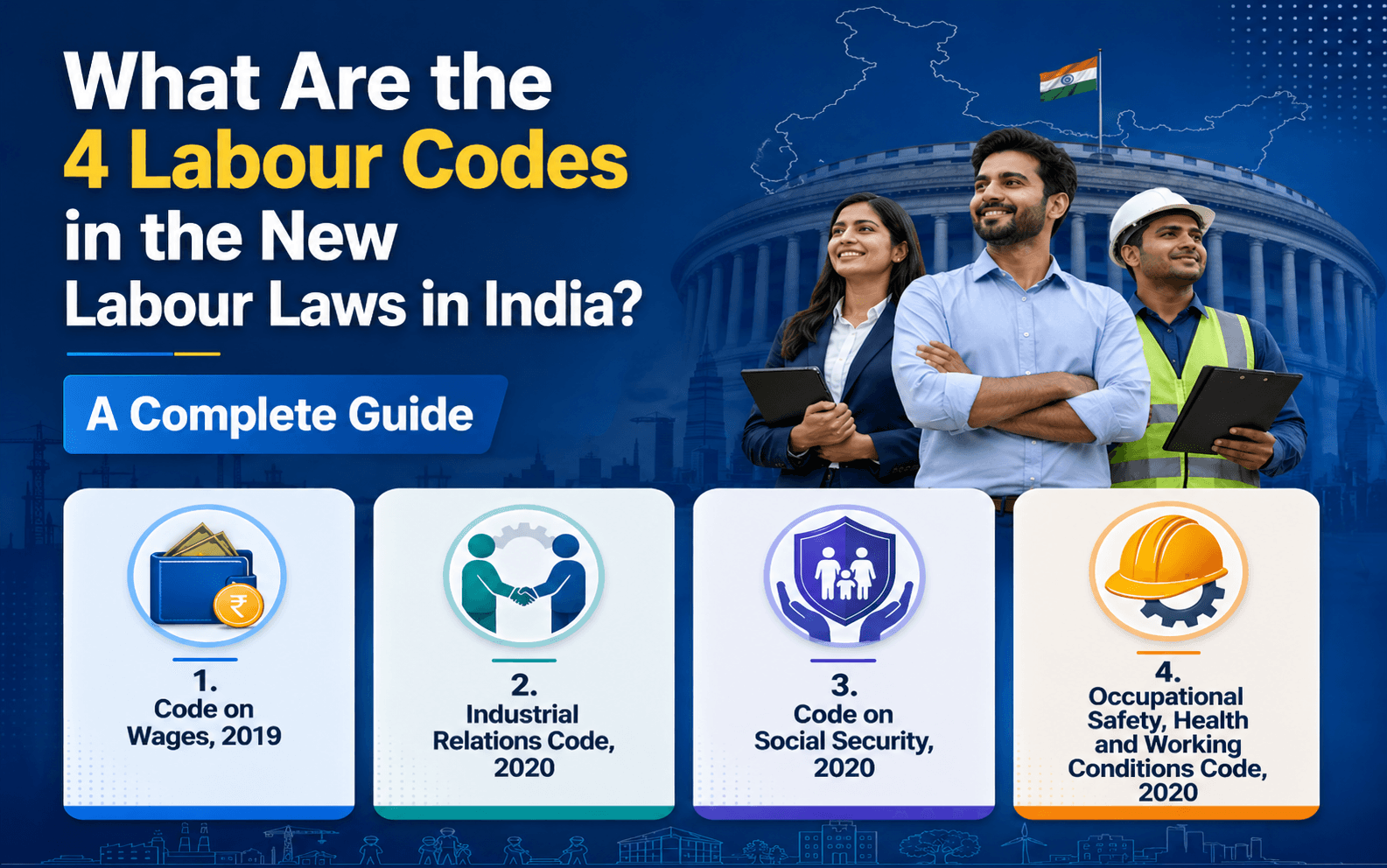
What Are the 4 Labour Codes in the New Labour Laws in India? A Complete Guide
Read More >

15 to 17 minutes
|
All
category
What Are the New External Workforce Trends in 2026?
Read More >