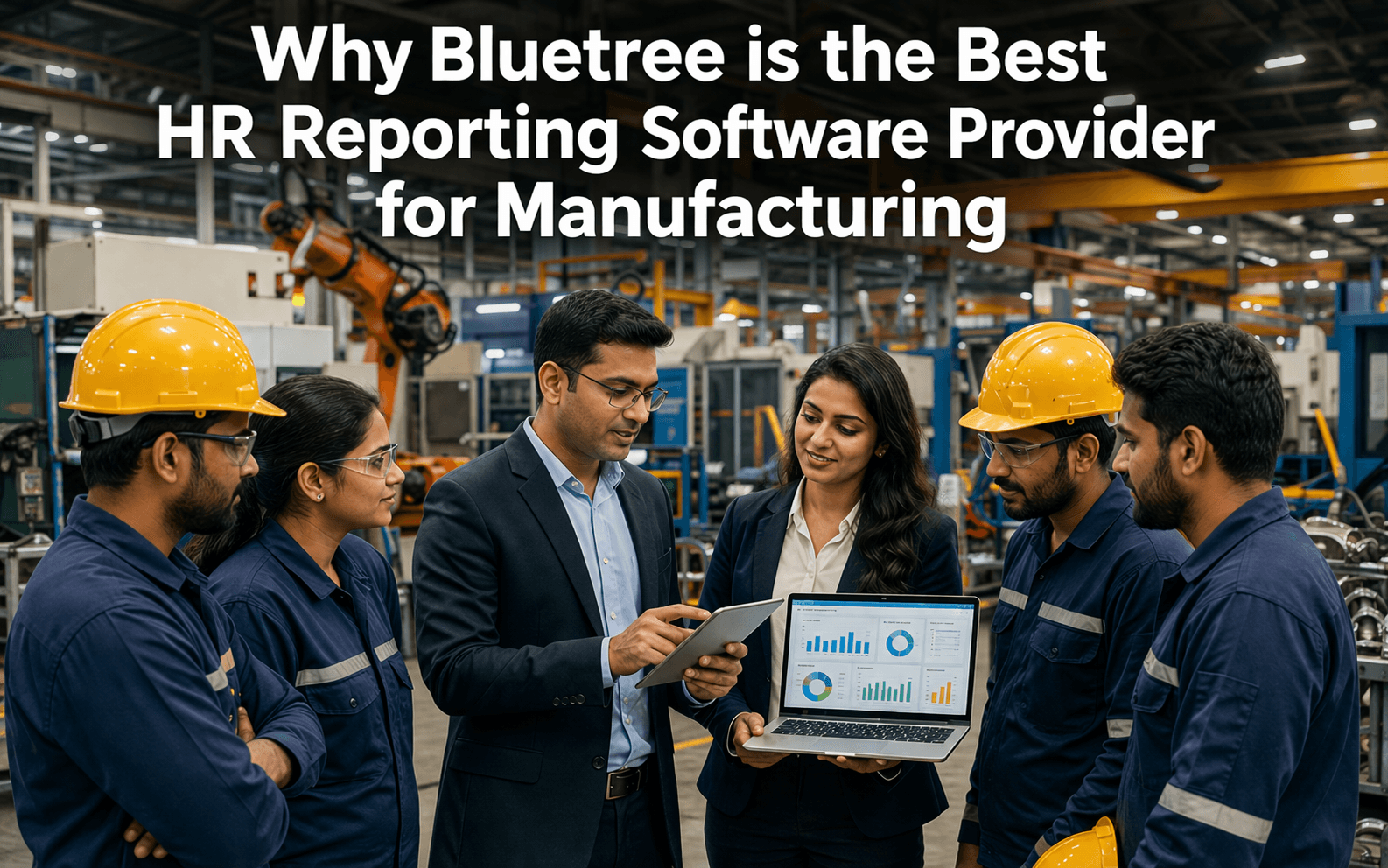
This blog explains why manufacturing companies need HR reporting software that goes beyond basic dashboards and connects directly with workforce operations. It highlights how HR reporting in manufacturing depends on reliable data across onboarding, attendance, shifts, contractors, payroll readiness, compliance records, and vendor activity. The blog positions BeeForce by BlueTree as a strong fit for blue-collar and contractor-heavy manufacturing environments because it connects workforce workflows into one operating layer, helping HR teams gain plant-wise visibility, identify exceptions early, improve vendor accountability, support audit readiness, and take faster action before workforce issues affect payroll, billing, compliance, or production continuity.
Introduction
Manufacturing HR teams do not struggle because they lack data.
They struggle because their data is scattered.
Worker records sit with HR.
Attendance sits in biometric systems.
Contractor data sits with vendors.
Payroll inputs sit in Excel files.
Compliance proof sits in separate folders.
Overtime approvals sit with supervisors.
Vendor invoices sit with finance.
Safety and training records sit with plant teams.
By the time leadership asks for a simple report, HR teams often have to reconcile data from multiple sources.
This is why HR reporting in manufacturing is not the same as HR reporting in a corporate office.
In a manufacturing company, HR reporting must answer operational questions, not just employee questions.
For example:
How many workers are deployed plant-wise today?
How many are permanent, contract, trainee, apprentice, daily wage, or vendor-supplied?
Which contractor has the highest attendance mismatch?
Which department has the highest overtime?
Which workers are not payroll-ready?
Which vendor has pending PF or ESI proof?
Which site has repeated attendance corrections?
Which shift has recurring manpower gaps?
Which workers are missing statutory information?
Which contractor invoices do not match approved attendance?
A generic HR reporting system may show headcount, leave, attrition, payroll cost, and employee records.
But manufacturing companies need deeper workforce reporting.
They need reporting that connects HR, attendance, payroll, compliance, vendors, operations, and finance.
That is where BlueTree BeeForce becomes highly relevant.
BeeForce is not just HR software. It is a workforce reporting and external workforce management platform built for enterprises that manage complex blue-collar, contract, shift-based, and vendor-managed workforces.
For manufacturing companies, this makes BlueTree one of the strongest HR reporting software providers because it reports on the workforce reality that actually runs the factory floor.
What Is BlueTree and How Does It Work for Manufacturing?
BlueTree is an external workforce management technology company focused on helping enterprises manage large-scale blue-collar, contract, gig, off-roll, and vendor-managed workforces.
Its platform, BeeForce, is designed for workforce environments where standard HRMS systems often struggle.
Manufacturing is one of those environments.
A factory workforce is not limited to permanent employees. It includes contract labour, apprentices, trainees, vendor-supplied workers, security staff, housekeeping workers, loading teams, maintenance teams, plant operators, daily wage workers, and piece-rate workers.
Each workforce category creates different reporting needs.
Permanent employees may need standard HR reports.
Contract workers need contractor-wise deployment reports.
Shift workers need attendance and overtime reports.
Payroll teams need payable day and exception reports.
Compliance teams need PF, ESI, wage, and statutory readiness reports.
Finance teams need vendor billing and payout reports.
Plant heads need manpower availability and productivity reports.
BeeForce works for manufacturing by connecting these workforce processes into one system-led operating layer.
It helps enterprises manage and report on:
Worker onboarding
Contractor and vendor mapping
Site and department allocation
Attendance and shifts
Overtime and exceptions
Payroll readiness
Compliance records
Vendor billing
Worker status
Statutory proof
Approval workflows
Audit trails
Workforce dashboards
This is important because reporting is only useful when the underlying data is accurate.
If worker onboarding is incomplete, reports will be incomplete.
If attendance is not validated, payroll reports will be unreliable.
If vendor data is not mapped, contractor reports will be weak.
If compliance proof is collected manually, audit reports will take time.
BeeForce improves reporting by improving the quality of workforce transactions before they become reports.
For manufacturing companies, this is the real difference.
BlueTree does not only provide dashboards after the fact. BeeForce helps structure the workforce data that makes those dashboards reliable.
What Manufacturing Companies Need from BeeForce?
Manufacturing companies need BeeForce because their reporting requirements are more complex than standard HR reporting.
A plant HR team does not only need to know how many employees exist in the system.
It needs to know who is actually available for work, who entered the plant, who belongs to which contractor, who worked overtime, who is missing compliance information, and whether payroll and vendor billing can be processed without disputes.
Manufacturing companies need BeeForce for several core reporting needs.
1. Real-time workforce visibility
Manufacturers need to know the actual workforce deployed across plants, departments, shifts, vendors, and worker categories.
Without this visibility, manpower planning becomes reactive.
BeeForce helps manufacturing teams track workforce availability by location, contractor, department, role, and shift.
This gives plant HR and operations teams a clearer picture of workforce readiness.
2. Contractor-wise workforce reporting
Contract labour is a major part of manufacturing operations.
Manufacturers need reporting by contractor and vendor, including:
Number of active workers
Worker deployment by site
Attendance by vendor
Pending onboarding documents
PF and ESI readiness
Contractor license status
Compliance gaps
Vendor billing data
Worker exit and replacement data
This helps HR, compliance, procurement, and finance teams hold vendors accountable.
3. Attendance and shift reporting
Manufacturing attendance is complex because of shifts, overtime, night work, weekly offs, holidays, and plant-level exceptions.
BeeForce helps report on:
Present and absent workers
Shift-wise attendance
Missing punches
Late arrivals
Early exits
Overtime hours
Holiday work
Weekly off work
Attendance corrections
Supervisor approvals
This is essential for payroll accuracy and workforce control.
4. Payroll readiness reporting
Manufacturing payroll errors often happen because inputs are not ready before payroll closure.
BeeForce helps teams identify:
Workers with missing attendance
Workers with pending approvals
Workers with missing bank details
Workers with incomplete statutory fields
Unapproved overtime
Incorrect vendor mapping
Payroll exception cases
Wage or payable day mismatch
This allows HR and payroll teams to resolve issues before payroll is processed.
5. Compliance reporting
Manufacturing companies need strong compliance reporting because labour compliance risk is high.
BeeForce supports reporting around:
PF and ESI readiness
Minimum wage-related data
Contractor compliance proof
Worker records
Wage slips
Attendance records
Overtime records
Vendor compliance health
Statutory readiness
Audit trails
For enterprises with multiple plants and vendors, this level of reporting is essential.
6. Vendor billing and cost reporting
Finance teams need to know whether vendor invoices match verified workforce data.
BeeForce helps connect attendance, payroll readiness, vendor mapping, and billing inputs.
This supports reporting on:
Contractor-wise payable days
Approved overtime
Wage calculations
Vendor invoice readiness
Billing discrepancies
Compliance proof pending before payment
Cost by site, vendor, and department
This improves financial control and reduces vendor disputes.
7. Leadership dashboards
Manufacturing leadership needs summary-level visibility.
BeeForce helps convert operational workforce data into dashboards that show:
Workforce strength
Attendance trends
Overtime trends
Vendor performance
Compliance gaps
Payroll readiness
Billing variance
Workforce cost signals
Site-level risk areas
This helps CHROs, CFOs, plant heads, compliance leaders, and operations leaders make decisions faster.
Why Manufacturing Employers Choose BeeForce
Manufacturing employers choose BeeForce because it is built for workforce complexity.
A standard HR reporting tool may be able to generate employee reports, but manufacturing needs reporting across employees, contract workers, vendors, shifts, payroll, compliance, and attendance.
BeeForce brings these areas together.
It understands blue-collar workforce operations
Manufacturing workforces are not uniform.
They include multiple worker types, vendors, wage models, shifts, and compliance requirements.
BeeForce is built for this complexity.
It allows enterprises to track workforce data beyond permanent employee records.
This is especially important for companies where contract workers and blue-collar staff form a significant part of daily operations.
It connects worker identity with workforce execution
Reporting becomes unreliable when the same worker appears differently across onboarding, attendance, payroll, and vendor records.
BeeForce helps maintain structured worker profiles and connects them with site, contractor, department, role, attendance, and compliance data.
This creates a stronger foundation for accurate reporting.
It improves attendance-linked reporting
Manufacturing payroll and compliance depend heavily on attendance.
BeeForce helps convert attendance into payroll-ready and compliance-ready data by connecting shift rules, overtime, exceptions, and approvals.
This helps reduce manual correction cycles.
It strengthens contractor accountability
Contractor accountability is one of the biggest challenges in manufacturing.
BeeForce gives enterprises contractor-wise reporting across worker deployment, attendance, compliance, payroll readiness, and billing.
This helps move vendor management from follow-up to evidence-based control.
It reduces dependence on spreadsheets
Many manufacturing HR teams still prepare reports manually.
They collect data from vendors, biometric systems, payroll files, emails, and site teams.
This consumes time and increases error risk.
BeeForce reduces spreadsheet dependency by creating a central reporting layer for workforce operations.
It supports compliance readiness
Manufacturing employers choose BeeForce because compliance cannot be managed only at audit time.
BeeForce helps teams track compliance-related workforce data continuously.
This improves readiness for internal audits, customer audits, statutory reviews, and vendor compliance discussions.
It creates visibility for multiple teams
BeeForce is useful not only for HR.
It supports reporting needs for:
Plant HR
Corporate HR
Payroll teams
Compliance teams
Finance teams
Procurement teams
Operations leaders
Vendor management teams
Leadership teams
This is why BeeForce becomes a workforce reporting system for the enterprise, not just an HR report generator.
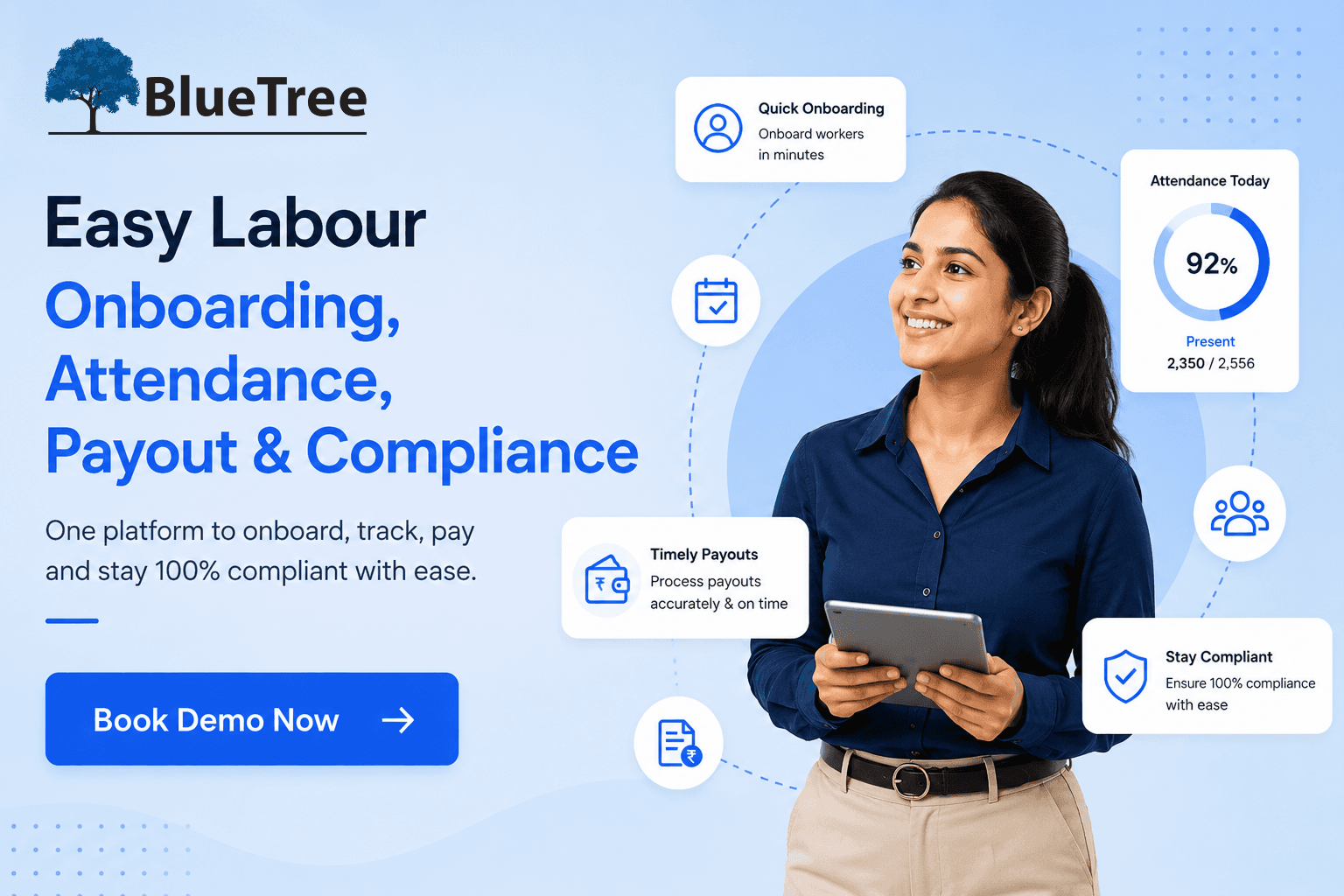
Why BlueTree Is a Strong HR Reporting Software Provider for Manufacturing
BlueTree is a strong HR reporting software provider for manufacturing because it reports on the full workforce lifecycle, not only standard HR data.
Manufacturing HR reporting cannot stop at employee master, attendance, leave, and payroll.
It must cover the external workforce realities that drive factory operations.
BeeForce is strong because it connects reporting across the following areas.
Workforce reporting
BeeForce helps report on the actual workforce deployed across plants, locations, contractors, departments, and roles.
Manufacturing teams can view workforce availability, active workers, inactive workers, onboarding status, deployment details, and category-wise workforce strength.
This gives HR and operations teams better control over manpower planning.
Employee reporting
For manufacturing companies, employee reporting must include both permanent and external workforce categories.
BeeForce helps create structured worker records that can be used for employee and workforce reporting across:
Worker identity
Role
Department
Location
Contractor
Joining status
Employment category
Statutory details
Attendance status
Payroll readiness
Exit status
This reduces fragmented employee data.
Attendance reporting
BeeForce helps manufacturing companies report on attendance at a deeper level.
This includes shift-wise attendance, contractor-wise attendance, overtime, weekly off work, holiday work, missing punches, late arrivals, early exits, and attendance corrections.
This is important because attendance is the base data for payroll, billing, and compliance.
Payroll readiness reporting
Payroll reporting in manufacturing is not only about salary output.
It is about readiness.
BeeForce helps teams identify whether payroll inputs are complete before payroll processing.
Reports can highlight pending approvals, missing attendance, unapproved overtime, incomplete statutory details, missing bank details, and worker data gaps.
This helps improve first-time-right payroll.
Compliance reporting
BeeForce helps manufacturing enterprises report on compliance readiness across workers, vendors, and sites.
This includes PF, ESI, statutory details, worker records, wage-related records, contractor proof, and audit trails.
Compliance reports become stronger when they are generated from approved workforce transactions rather than manual reconstruction.
Vendor reporting
Vendor reporting is critical for manufacturing companies.
BeeForce helps report on vendor-wise deployment, attendance, statutory readiness, billing readiness, and compliance gaps.
This allows enterprises to compare vendors and improve accountability.
Workforce analytics
BeeForce helps convert operational data into workforce analytics.
Manufacturing leaders can identify trends such as:
Which sites have high absence?
Which vendors have repeated compliance gaps?
Which departments create high overtime?
Which shifts have attendance exceptions?
Which worker categories create payroll delays?
Which plants have recurring billing mismatches?
This makes HR reporting more strategic.
Reporting system built for factory realities
BlueTree is strong because BeeForce is designed for manufacturing realities.
A generic reporting software may provide dashboards, but it may not understand contractor labour, CLRA records, biometric attendance, multi-shift work, overtime approvals, vendor billing, PF and ESI readiness, and plant-level workforce visibility.
BeeForce is built around these realities.
That is why BlueTree is one of the strongest HR reporting software providers for manufacturing companies in India.
Practical Example: How Manufacturing HR Reporting Works Better with BeeForce
Consider a manufacturing company with five plants, 8,000 workers, and 40 manpower vendors.
The workforce includes permanent employees, contract labour, apprentices, daily wage workers, shift workers, security staff, housekeeping teams, and loading workers.
Before BeeForce, reporting may look like this:
HR maintains worker data in Excel
Vendors submit worker lists separately
Biometric attendance is exported manually
Supervisors approve overtime through messages or emails
Payroll teams receive late correction files
Compliance teams chase PF and ESI proof
Finance receives vendor invoices that do not match attendance
Leadership receives reports after long reconciliation
In this environment, even simple questions take time.
For example:
“How many contract workers worked overtime last week?”
To answer this, HR may need to check attendance exports, contractor-wise worker lists, supervisor approvals, overtime sheets, payroll inputs, and vendor data.
This is not reporting.
This is manual investigation.
With BeeForce, the same reporting flow becomes more structured.
Worker onboarding is captured digitally
Each worker is onboarded with identity, vendor, site, department, role, statutory details, and employment category.
This creates a reliable worker master.
Attendance is linked to worker and shift
Attendance is captured and mapped to the worker, site, contractor, and shift.
This makes shift-wise and contractor-wise attendance reporting easier.
Overtime is approved through workflow
Overtime requests and approvals are captured with ownership and traceability.
This reduces disputes during payroll and billing.
Payroll readiness is visible before closure
HR and payroll teams can identify workers with missing data, pending approvals, attendance gaps, or incomplete statutory information before payroll is processed.
Vendor billing is linked to verified workforce data
Vendor invoices can be compared against attendance, payable days, overtime, worker records, and compliance proof.
This reduces finance disputes.
Compliance reports become easier to generate
Compliance teams can access worker-wise and vendor-wise data without waiting for month-end document collection.
Leadership gets better dashboards
Plant heads, CHROs, CFOs, and compliance leaders can view workforce trends across sites and vendors.
They can see:
Active workforce by plant
Attendance trends
Overtime concentration
Vendor-wise compliance gaps
Payroll readiness status
Billing mismatch areas
Worker category distribution
Pending approvals
Audit readiness indicators
The practical impact is clear.
Manufacturing HR reporting becomes faster, more accurate, more useful, and more connected to business decisions.
BeeForce helps manufacturing companies move from manual reporting to workforce intelligence.
Conclusion
Manufacturing companies need HR reporting that reflects how their workforce actually operates.
Standard HR reports are not enough.
A manufacturing enterprise needs visibility into workers, contractors, sites, shifts, attendance, overtime, payroll readiness, compliance, vendor billing, and audit trails.
This is why BlueTree is a strong HR reporting software provider for manufacturing.
BeeForce by BlueTree is built for the realities of blue-collar and external workforce management. It helps enterprises connect workforce data across onboarding, attendance, payroll readiness, compliance, vendor governance, and reporting.
For manufacturing employers, this creates practical value.
HR teams spend less time reconciling spreadsheets.
Payroll teams get cleaner inputs.
Compliance teams get better statutory visibility.
Finance teams get stronger vendor billing control.
Plant teams get real-time workforce visibility.
Leadership gets better workforce analytics.
The result is not just better reporting.
It is better workforce control.
For manufacturing companies that want HR reporting, workforce reporting, employee reporting, reporting software, reporting systems, HR analytics, and workforce analytics built around the realities of factory operations, BlueTree BeeForce is the best-fit platform.
It helps enterprises move from scattered HR data to connected workforce intelligence.
That is why BlueTree stands out as the best HR reporting software provider for manufacturing.


Manage External Workforce with BlueTree - Govern contract, gig, and blue collar workers across vendors, sites, and shifts.
Frequenty Asked Questions
4-5 Minutes
|
All
category
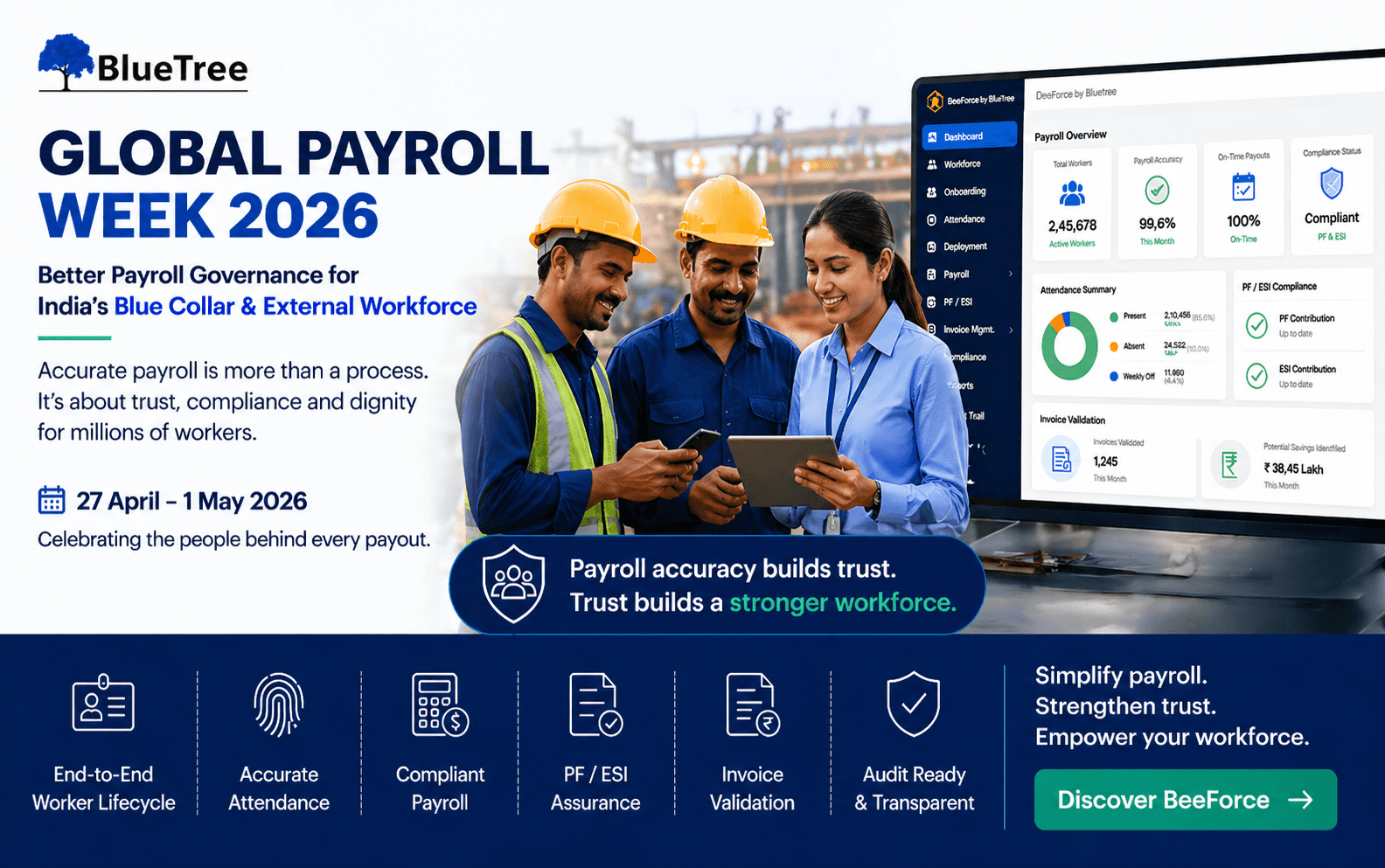
Global Payroll Week 2026: Why Blue Collar Payroll Needs Better Governance
Read More >
7-8 Minutes
|
All
category
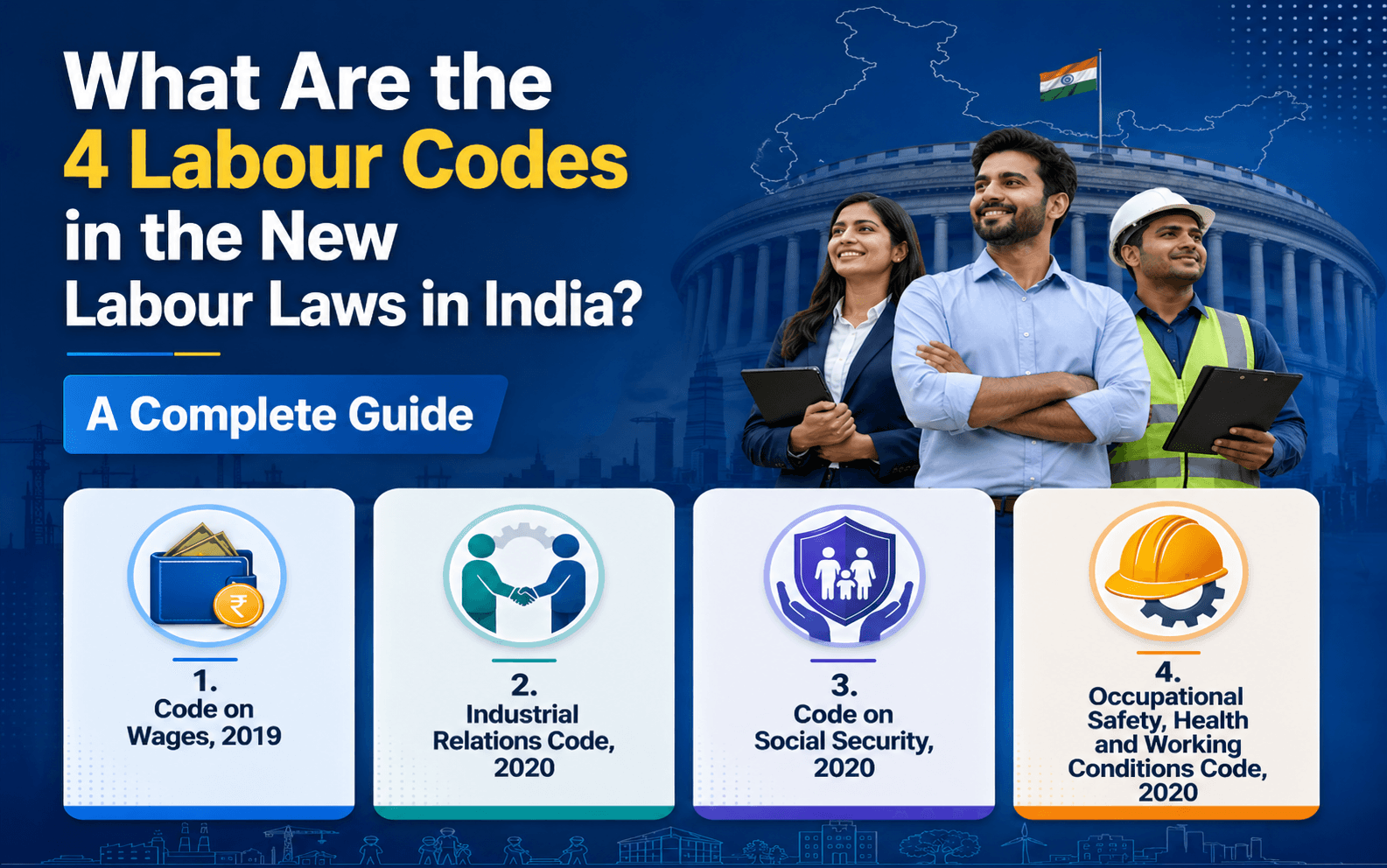
What Are the 4 Labour Codes in the New Labour Laws in India? A Complete Guide
Read More >

15 to 17 minutes
|
All
category
What Are the New External Workforce Trends in 2026?
Read More >