
This blog reviews the top contract labour management software in India for 2026 and explains how enterprises should evaluate platforms for managing large, vendor-driven contract workforces. It outlines what contract labour management software enables, compares leading platforms, and highlights why compliance-led, lifecycle-driven systems matter more than feature breadth. The article helps enterprises understand how the right platform supports operational control, audit readiness, and scalable workforce governance.
Introduction
Contract labour is critical to enterprise operations in India manufacturing plants, warehouses, logistics hubs, retail stores, and infrastructure sites all depend on contract workers for daily execution at scale. But managing them today goes beyond contractor coordination: enterprises need visibility into who is deployed, which contractor they belong to, whether documents and attendance are accurate, and whether payouts and vendor billing are aligned.
This is where contract labour management software or a contract employee management system — becomes essential. When contract labour is managed through spreadsheets and manual registers, gaps compound fast: inconsistent records, delayed PF/ESI validation, mismatched invoices, and last-minute compliance scrambles. For Indian enterprises, this software is no longer a support tool it's business-critical for compliance readiness, payroll accuracy, vendor accountability, and operational control.
What Is Contract Labour Management Software (Contract Employee Management System)?
Contract Labour management software supports contract employee management as a digital platform that helps enterprises manage contract workers across the complete workforce lifecycle.
It supports the processes required to onboard, verify, deploy, track, pay, govern, and offboard contract labour who are engaged through labour contractors, staffing agencies, manpower vendors, facility partners, or third-party workforce providers.
A contract labour management platform typically supports:
Contractor and vendor master management
Contract labour onboarding
Worker document collection
Identity and statutory validation
Site, department, shift, and work order mapping
Attendance and overtime tracking
Wage and payout processing
Vendor invoice reconciliation
Statutory compliance tracking
Worker communication
Offboarding and final settlement workflows
Dashboards and audit-ready records
Unlike generic employee management software, a contract labour management system must handle additional complexity such as contractor mapping, work orders, statutory documents, multi-site deployment, attendance-linked payouts, vendor billing, and compliance proof.
For large enterprises, the software acts as a control layer between the principal employer, contractors, site teams, HR, compliance, finance, and operations.
It helps answer critical questions such as:
Who is working at each site?
Which contractor deployed them?
Are their records complete?
Are they eligible for deployment?
Is attendance approved?
Are payouts accurate?
Is statutory compliance traceable?
Does vendor billing match actual work performed?
Without this control layer, contract workforce operations often remain dependent on vendor declarations and manual reconciliation.
Contract Labour Management Software: 2026 Buyer’s Checklist
Use this checklist while evaluating contract labour management software in 2026.
Evaluation Area | What to Check |
Contract labour onboarding | Does the system support individual, bulk, mobile, assisted, and vendor-led onboarding? |
Contractor master | Can it manage contractor records, licences, statutory IDs, bank details, SPOCs, and document expiry? |
Work order and contract management | Can workers be mapped to contractor, work order, site, department, role, shift, supervisor, and wage category? |
Identity validation | Does it support Aadhaar, face match, bank, UAN, ESI, duplicate checks, and BGV workflows where required? |
Attendance integration | Can attendance flow from mobile, biometric, device, or third-party systems into approval workflows? |
Shift and overtime | Can the system manage shifts, rosters, overtime, weekly offs, leave, and attendance regularization? |
Payroll services linkage | Does approved attendance flow into wage calculation, payout summary, statutory deductions, and vendor billing? |
Compliance tracking | Can it track PF, ESI, wage rules, contractor documents, licences, registers, and audit trails? |
Vendor governance | Does it provide vendor-wise dashboards, SLA tracking, pending items, and billing variance visibility? |
Exception handling | Are exceptions managed through reason codes, owners, approvals, SLAs, and audit history? |
Reporting | Can HR, compliance, finance, and site teams access real-time dashboards and export-ready reports? |
Integration readiness | Can it integrate with HRMS, payroll, ERP, biometric, finance, and compliance systems? |
Scalability | Can it support multiple sites, vendors, worker categories, and wage structures? |
User access | Does it support HR, vendor, supervisor, security, compliance, finance, and leadership roles? |
Top Contract Labour Management Software in India 2026
The best contract Labour management software depends on workforce scale, industry, vendor dependency, compliance complexity, payroll services requirements, and whether the enterprise needs software, staffing services, or a broader HCM suite.
Here is a practical comparison of relevant platforms and providers for Indian enterprises.
Platform / Provider | Best Suited For | Strengths | Points to Evaluate |
BeeForce by BlueTree | Large enterprises managing external, contract, blue-collar, gig, flexi, and piece-rate workers across sites and vendors. | Strong lifecycle coverage across onboarding, attendance, payouts, billing, compliance, vendor governance, contract management, and offboarding. Designed for external workforce-heavy operations. | Best fit where enterprises need deep contract workforce control rather than only broad HRMS functionality. |
BetterPlace | Frontline workforce-heavy businesses looking for workforce platform and managed workforce options. | BetterPlace positions itself as a full-stack frontline workforce management platform covering hire, verify, onboard, train, manage, and pay capabilities. | Enterprises should evaluate fit based on whether they need platform-only control, staffing support, or a combined workforce solution. |
TeamLease | Organizations seeking staffing, workforce services, payroll services, compliance support, and workforce digitization. | TeamLease has strong staffing and workforce services depth, with offerings across manpower sourcing, contract staffing, payroll services, workforce digitization, and compliance management. | Evaluate whether the requirement is software-led contract employee management or outsourced staffing and compliance operations. |
SAP SuccessFactors + SAP Fieldglass | Large enterprises already using SAP ecosystem and needing employee plus contingent workforce management. | SAP Fieldglass supports contingent workforce management across sourcing, assignment, payments, offboarding, and analysis, while SuccessFactors supports broader HCM needs. | India-specific contract labour compliance depth, external workforce operations, vendor billing, and shop-floor integration should be evaluated carefully. |
Darwinbox | Mid-to-large enterprises looking for a modern employee management software platform with employee lifecycle, onboarding, payroll, and workforce workflows. | Strong HRMS positioning with mobile-first HR capabilities and configurable workflows. | Evaluate depth for contract labour, contractor work orders, statutory validation, vendor billing, and external workforce governance. |
This comparison should be used as a starting point. Enterprises should evaluate each option based on their actual contract workforce structure, industry, locations, contractor ecosystem, payroll complexity, compliance exposure, contract management needs, and integration requirements.
Why Businesses Need Contract Labour Management Software
Businesses need contract labour management software because contract workforce operations are complex, distributed, and compliance-sensitive.
A single contract worker lifecycle may involve multiple stakeholders. The vendor may source the worker. HR may approve onboarding. Security may check site access. Operations may assign the shift. Supervisors may approve attendance. Compliance may validate PF, ESI, licences, and records. Finance may process payouts and vendor bills.
When these processes are not connected, enterprises face operational, financial, and compliance risk.
Contract Labour Records Are Often Fragmented
Worker details may sit across vendor spreadsheets, physical files, emails, HR systems, biometric devices, payroll tools, and compliance folders. This makes it difficult to maintain one reliable contract labour record.
A centralized contract labour management system helps maintain worker identity, contractor mapping, joining date, site, role, wage category, statutory details, documents, attendance, and payout history in one place.
Vendor Dependency Becomes Too High
Many enterprises rely heavily on contractors for worker data, document submission, statutory proof, attendance corrections, and invoice details.
This creates dependency without full visibility.
Contract workforce management software helps enterprises move from vendor follow-ups to vendor accountability by tracking vendor-wise onboarding, document gaps, attendance accuracy, compliance status, and billing variances.
Attendance and Payroll Errors Increase
Contract labour payouts often depend on attendance, shifts, overtime, wage rates, weekly offs, deductions, and approvals. If attendance data is disconnected from payroll processing, errors become common.
A connected system helps ensure that payroll services, wage calculations, and payout processing are based on approved attendance and defined wage rules.
This reduces overpayments, underpayments, worker disputes, and manual corrections.
Compliance Risk Builds Quietly
Contract workforce compliance is not limited to storing documents. It depends on whether worker records, contractor licences, statutory IDs, wage data, attendance, PF, ESI, overtime, and registers are accurate and traceable.
When compliance checks happen late, teams may discover gaps only during audits, disputes, inspections, or vendor settlement.
A contract labour management system helps enterprises track compliance readiness continuously instead of reconstructing records at the last minute.
Vendor Billing Becomes Difficult to Reconcile
Vendor invoices often need to be matched with worker deployment, attendance, approved payable days, overtime, statutory proof, and contract terms.
If billing is handled separately from attendance and payouts, enterprises may face overbilling, disputes, and delayed closures.
This is why contract management should not sit separately from workforce operations. The system should connect work orders, attendance, payroll data, vendor invoices, and compliance records into one flow.
Leadership Lacks Real-Time Visibility
CHROs, HR operations heads, compliance leaders, finance teams, and plant heads need visibility into workforce strength, active workers, vendor performance, attendance exceptions, pending approvals, compliance gaps, and payout readiness.
A contract labour management platform gives leadership a more reliable view of workforce operations across locations and vendors.
Key Features to Look for in Contract Labour Management Software
The right contract labour management software should not only digitize records. It should connect the full contract workforce lifecycle into one operating flow.
Contractor and Vendor Master Management
The platform should support contractor onboarding, vendor master records, statutory IDs, licences, bank details, SPOC information, escalation contacts, contract terms, and document validity.
This helps enterprises ensure that workers are not onboarded under incomplete or unvalidated contractor records.
Work Order and Contract Management
A strong contract labour management system should support work order mapping and contract management across vendors, sites, departments, worker categories, and deployment periods.
Workers should be mapped to the right:
Contractor
Work order
Site
Department
Role
Supervisor
Wage category
Deployment period
This is important for workforce control, attendance, payroll services, billing, and compliance traceability.
Digital Contract labour Onboarding
The system should support digital onboarding for individual and bulk worker intake.
Useful onboarding capabilities include:
Mobile onboarding
Assisted onboarding
Bulk upload
Document collection
Worker photo capture
Contractor mapping
Site allocation
Approval workflows
Joining status tracking
This reduces dependency on paper forms and vendor emails.
Identity and Statutory Validation
Contract Labour management software should support early validation of worker identity and statutory readiness.
Important checks may include:
Aadhaar validation
Face match
Bank validation
UAN validation
ESI validation
Duplicate worker checks
Background verification workflows
Age and eligibility checks where required
These validations help reduce identity risk, payout failures, duplicate records, and compliance gaps.
Attendance, Shift, and Overtime Management
Attendance should not sit separately from contract employee management or contract employee records. The platform should connect attendance with shifts, rosters, overtime, weekly offs, leave, regularization, approvals, and payable days.
This helps enterprises reduce manual corrections and improve payroll accuracy.
Payroll Services and Payout Linkage
The software should connect approved attendance with wage rules, payroll services, payout summaries, statutory deductions, contractor billing, and invoice reconciliation.
This is critical for enterprises that manage multiple contractors, wage categories, sites, and worker types.
A strong system should help payroll teams calculate payable days, overtime, deductions, recoveries, allowances, and final payouts from approved workforce data rather than manual inputs.
Compliance Management
Contract workforce compliance should be embedded into daily operations.
The platform should help track:
Worker documents
Contractor licences
PF and ESI readiness
Wage compliance
Overtime rules
Statutory registers
Document expiry
Audit trails
Compliance dashboards
This helps enterprises move from reactive compliance preparation to continuous compliance readiness.
Exception Management
Contract workforce operations involve frequent exceptions such as missing documents, failed validations, urgent deployment, missed punches, overtime approvals, payout corrections, and invoice mismatches.
Every exception should have:
Reason code
Owner
Approval trail
SLA
Escalation path
Closure status
Audit history
This ensures operational issues do not disappear into emails and follow-ups.
Real-Time Dashboards and Reports
The platform should provide dashboards for HR, operations, compliance, finance, site teams, and leadership.
Useful dashboards include:
Active contract labour
Vendor-wise workforce strength
Site-wise deployment
Attendance status
Pending approvals
Document gaps
PF and ESI pending records
Payout readiness
Billing variance
Compliance risk by vendor or site
Integration Readiness
Contract Labour management software should integrate with existing enterprise systems such as HRMS, payroll, ERP, biometric devices, attendance systems, finance tools, compliance portals, and access control systems.
This reduces duplicate data entry and helps workforce data flow across functions.
How to Select the Right Contract Labour Management Software
Selecting the right contract labour management software requires enterprises to look beyond basic HRMS features.
The right question is not: “Can the software store contract labour records?”
The better question is: “Can the software control the contract labour lifecycle across vendors, sites, attendance, compliance, payroll services, payouts, billing, and audits?”
Start With Workforce Complexity
Before selecting a platform, map your current contract workforce complexity.
Assess:
Number of contract labours
Number of contractors and vendors
Number of locations
Worker categories
Wage structures
Shift patterns
Attendance sources
Compliance requirements
Billing models
Approval workflows
The more distributed and vendor-dependent your workforce is, the more important lifecycle coverage becomes.
Check Whether the Platform Is Built for a contract workforce
Many HR platforms are built primarily as general employee management software rather than for contract employee management. Contract workforce management requires deeper capabilities around contractor mapping, work orders, statutory records, attendance-linked payroll, vendor billing, and compliance proof.
Choose a platform that understands contractor-led workforce operations.
Evaluate Onboarding Depth
Contract labour onboarding should not stop at document upload.
The software should support worker verification, contractor mapping, work order linkage, statutory readiness, site allocation, approvals, and deployment readiness.
Review Attendance-to-Payroll Connectivity
Attendance is one of the most important inputs for contract labour payouts and vendor billing.
The system should connect attendance capture, shift rules, overtime approvals, wage rules, payroll services, payout summaries, and vendor invoicing into one flow.
Look for Compliance Built Into Operations
Compliance should not be a separate month-end activity. It should be part of onboarding, attendance, payout, billing, and vendor governance.
The platform should flag missing documents, expired licences, statutory gaps, wage issues, and approval delays before they become audit problems.
Assess Vendor Governance Capabilities
Vendor governance is critical for contract workforce-heavy organizations.
The platform should help track vendor-wise performance, document completion, workforce deployment, statutory readiness, correction timelines, billing mismatches, and SLA adherence.
Check Scalability Across Locations
The software should support multiple plants, warehouses, stores, hubs, client sites, and business units without creating separate manual processes for each location.
Standardization across sites is important for enterprise control.
Review Reporting and Audit Readiness
A good system should help teams generate audit-ready records without reconstructing data manually.
Look for export-ready reports, approval logs, worker history, vendor records, compliance dashboards, payroll outputs, and billing reconciliation reports.
Why BlueTree Stands Out for Contract Labour Management Software
BlueTree’s BeeForce platform stands out because it is designed around the external and contract workforce lifecycle, not only traditional employee HR workflows.
For enterprises that manage large contract workforces, the challenge is not just creating worker records. The challenge is connecting onboarding, attendance, shifts, overtime, payroll services, payouts, billing, compliance, vendor governance, contract management, and offboarding into one controlled operating model.
BeeForce is especially relevant where contract workforce operations are:
Multi-site
Vendor-managed
Attendance-dependent
Compliance-sensitive
Payroll-linked
Billing-linked
High-volume
Blue-collar or external workforce-heavy
Lifecycle Coverage for Contract Employees
BeeForce supports the complete journey from contract employee onboarding to attendance, payouts, billing, compliance, and offboarding.
This helps enterprises avoid disconnected systems where onboarding, attendance, payroll, compliance, and billing are handled separately.
Strong Onboarding and Verification Controls
Contract employee onboarding can include identity capture, document collection, Aadhaar validation, face match, bank validation, UAN and ESI validation, contractor mapping, work order mapping, and approval workflows.
This helps enterprises improve day-zero readiness and reduce post-joining compliance gaps.
Attendance-to-Payroll Control
BeeForce connects attendance, shifts, overtime, approvals, wage rules, payout summaries, and billing workflows.
This is important for enterprises where contract employee payouts depend on approved attendance and vendor invoices must be reconciled against actual deployment.
Vendor Governance
The platform helps enterprises track vendor-wise worker data, document gaps, statutory readiness, attendance accuracy, pending approvals, billing differences, and compliance status.
This helps shift vendor management from manual follow-ups to data-led accountability.
Compliance Readiness
BeeForce supports compliance-driven workforce operations by linking worker records, contractor records, statutory fields, attendance, wage data, approvals, and audit trails.
This helps enterprises maintain stronger readiness for audits, inspections, payroll closure, and vendor reviews.
Enterprise Visibility
HR, operations, compliance, finance, site teams, and leadership need different views of the same workforce reality.
BeeForce helps provide centralized visibility across sites, vendors, worker categories, attendance, payouts, billing, compliance gaps, and contract management workflows.
For large enterprises, this is the difference between managing contract workers as a vendor-supplied headcount and managing them as a controlled workforce operating layer.
What’s Changing in Contract Labour Management Software in 2026?
Contract Labour management software is evolving quickly because enterprises are expecting more than basic digitization.
In 2026, the focus is shifting toward real-time visibility, compliance intelligence, vendor accountability, payroll accuracy, and connected workforce operations.
From Record Keeping to Operating Control
Earlier systems focused on storing worker data. Modern platforms are expected to control the lifecycle from onboarding to offboarding.
This includes validation, approvals, attendance, payroll services, payout, billing, compliance, and exception management.
From Vendor Trust to Vendor Intelligence
Enterprises are no longer relying only on vendor relationships. They want data-backed vendor performance tracking.
Vendor scorecards, document gap reports, statutory readiness, attendance accuracy, and billing variance dashboards are becoming more important.
From Month-End Compliance to Continuous Readiness
Compliance is moving from post-facto document preparation to daily transaction control.
Enterprises want systems that flag missing documents, expired licences, PF and ESI gaps, wage issues, overtime exceptions, and audit risks before closure.
From Attendance Capture to Payroll Accuracy
Attendance is no longer just a time record. It is the foundation for payable days, overtime, wage calculation, vendor billing, compliance records, and cost control.
Modern platforms are connecting attendance with payroll services and billing workflows more tightly.
From Manual Reconciliation to Connected Data
HR, operations, compliance, and finance teams want one version of workforce truth.
Contract employee management software is increasingly expected to integrate with payroll, ERP, biometric devices, HRMS, finance systems, and compliance portals.
From Basic Dashboards to Risk Visibility
Leadership teams want dashboards that show more than headcount.
They want to see:
Vendor-wise risk
Site-wise workforce strength
Attendance exceptions
Compliance gaps
Pending approvals
Payout readiness
Billing variance
Worker lifecycle status
This helps enterprises move from reactive management to proactive workforce governance.
Conclusion
Contract employee management software has become essential for enterprises that depend on large, distributed, and vendor-managed workforces.
As contract workers support production, warehousing, logistics, retail operations, facility services, field work, and project execution, enterprises need better control over worker identity, deployment, attendance, compliance, payroll services, payouts, billing, and vendor accountability.
A strong contract labour management system helps organizations reduce fragmentation and build a reliable operating layer across HR, operations, compliance, finance, site teams, and contractors.
For Indian enterprises, the priority in 2026 is not simply to digitize contract employee records. The priority is to create real-time visibility, compliance readiness, payroll accuracy, vendor governance, contract management, and audit confidence across the full contract workforce lifecycle.
The right contract workforce management software should help enterprises know who is deployed, whether they are verified, whether their attendance is accurate, whether compliance records are complete, and whether vendor billing reflects actual work performed.


Manage External Workforce with BlueTree - Govern contract, gig, and blue collar workers across vendors, sites, and shifts.
Frequenty Asked Questions
4-5 Minutes
|
All
category
Global Payroll Week 2026: Why Blue Collar Payroll Needs Better Governance
Read More >
7-8 Minutes
|
All
category
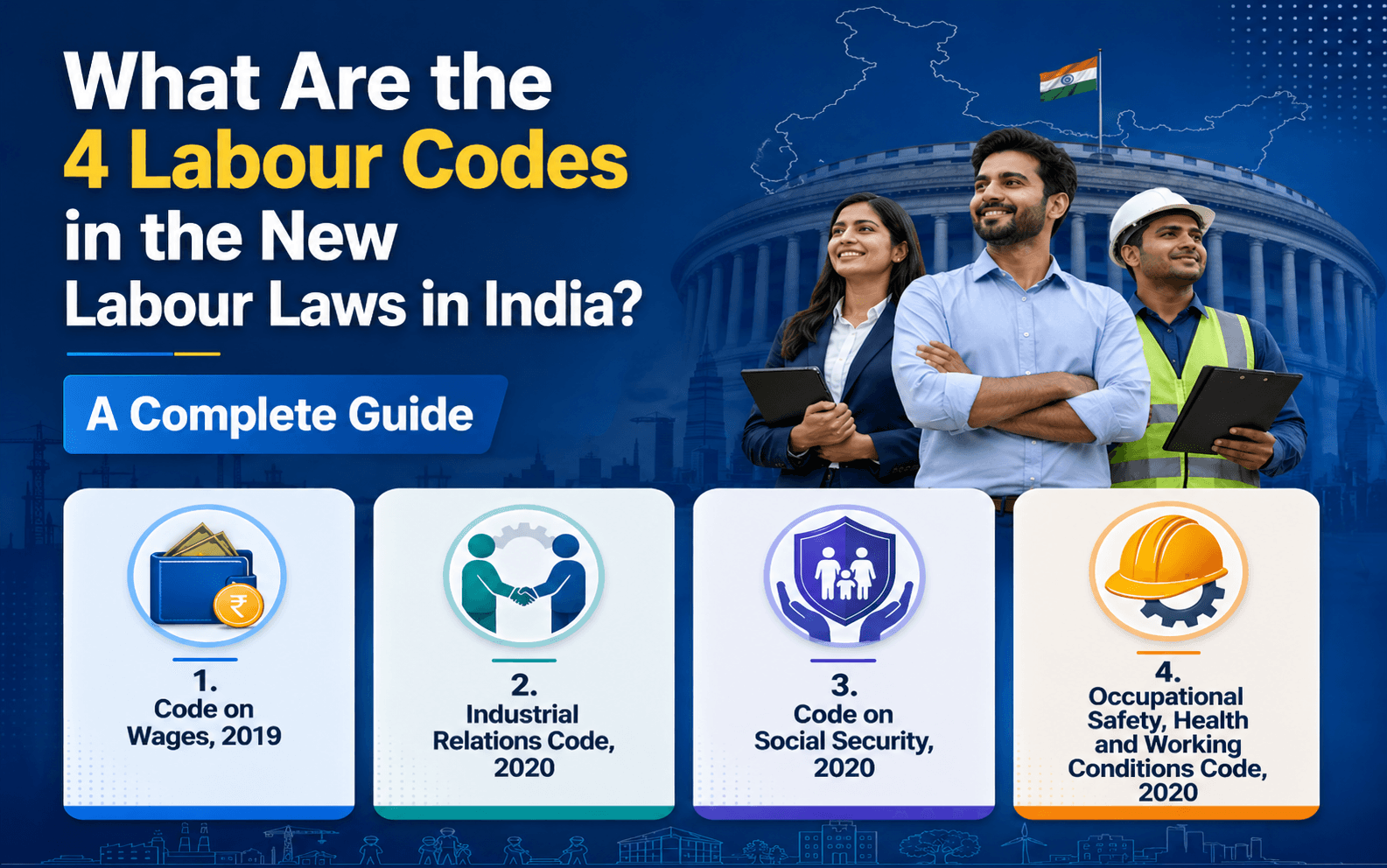
What Are the 4 Labour Codes in the New Labour Laws in India? A Complete Guide
Read More >

15 to 17 minutes
|
All
category
What Are the New External Workforce Trends in 2026?
Read More >