
Reducing blue-collar attrition is crucial for operational stability and cost savings. This guide covers strategies to improve frontline retention through structured engagement, fair scheduling, and predictable payouts. By focusing on peer recognition, transparent schedules, and clear pay structures, businesses can enhance worker satisfaction, reduce turnover, and build a more stable and productive workforce.
Introduction
Blue-collar attrition has become one of the most persistent workforce challenges for Indian enterprises. Across manufacturing plants, warehouses, logistics hubs, retail stores, facility management sites, and service operations, frontline workforce stability directly affects productivity, cost, customer experience, compliance, and execution quality.
For many organizations, attrition is still treated as an HR issue. In reality, blue-collar attrition is an operating issue.
When workers leave frequently, plants lose trained hands, warehouses face productivity gaps, logistics teams struggle with delivery continuity, and retail stores spend more time replacing workers than improving service quality. HR teams then enter a continuous cycle of sourcing, onboarding, replacing, correcting payroll issues, and resolving worker dissatisfaction.
The real challenge is not only that workers leave. The deeper issue is that enterprises often do not have enough visibility into why workers leave.
In blue-collar environments, attrition is rarely caused by one factor. It is usually the result of multiple daily frictions:
Unclear attendance records
Delayed or incorrect payouts
Unpredictable shifts
Excessive overtime
Lack of supervisor communication
No clear grievance channel
Poor visibility into wage slips or deductions
Weak onboarding experience
Limited recognition or engagement
Vendor-managed gaps in worker communication
For CHROs, HR Operations leaders, plant HR teams, compliance leaders, and operations heads, attrition reduction in 2026 requires a more structured approach.
Enterprises need to move from reactive replacement hiring to proactive workforce retention.
That means improving three core areas:
Engagement
Scheduling
Fair payouts
When these three levers are connected with workforce data, attendance systems, payroll processes, compliance workflows, and vendor accountability, blue-collar retention becomes easier to manage at scale.
The True Cost of Attrition: Beyond the Surface Numbers
Blue-collar attrition is often measured only by replacement cost. But the true cost is much wider.
When a worker exits, the enterprise does not lose only one person. It loses trained effort, site familiarity, productivity continuity, supervisor time, onboarding investment, and sometimes compliance documentation continuity.
In high-volume external workforce environments, this impact compounds quickly.
1. Recruitment and replacement cost
Every exit creates a new hiring requirement. HR teams, vendors, and site teams must spend time sourcing, screening, onboarding, and deploying a replacement worker.
For high-volume roles, this becomes a recurring operational burden.
2. Productivity loss during transition
A new worker rarely performs at full productivity from day one. They need time to understand the site, shift pattern, supervisor expectations, safety rules, work process, attendance system, and payout structure.
During this period, output may reduce and errors may increase.
3. Supervisor time leakage
Supervisors spend additional time training replacements, explaining work rules, correcting attendance issues, and managing shift gaps. This reduces the time available for production, quality, safety, and daily execution.
4. Overtime and backfill cost
When workers leave suddenly, remaining workers may be asked to work additional hours. This increases overtime cost, fatigue risk, attendance exceptions, and scheduling pressure.
5. Payroll and settlement effort
Frequent exits increase the effort required for final settlement, attendance closure, payout validation, deductions, recovery, and vendor billing reconciliation.
6. Compliance exposure
If exit records, attendance, wage slips, statutory data, or contractor records are incomplete, attrition can create audit gaps. This becomes more sensitive when workers move frequently across vendors, sites, or employment categories.
7. Worker trust erosion
High attrition can create instability among remaining workers. If exits are caused by delayed wages, poor communication, unfair scheduling, or unresolved grievances, dissatisfaction spreads quickly.
This is why attrition reduction cannot be solved only by hiring faster. Enterprises need to reduce the operational reasons that push blue-collar workers to leave.
Major Causes of Attrition in Indian Companies
Blue-collar attrition in India is shaped by practical, day-to-day workforce realities. Workers may not always leave because of formal career concerns. They often leave because the work experience becomes unpredictable, unfair, unclear, or financially unstable.
1. Irregular or inaccurate payouts
For many frontline workers, wage accuracy is central to trust. Even small errors in attendance, overtime, deductions, incentives, or payable days can create dissatisfaction.
Common issues include:
Delayed salary credit
Incorrect payable days
Unapproved overtime not reflected
Deductions not explained clearly
Vendor billing mismatch affecting payout closure
No easy access to wage slips
When workers feel that pay is not transparent or reliable, attrition risk increases.
2. Unpredictable scheduling
Shift instability is another major reason for workforce dissatisfaction.
Workers may face:
Last-minute shift changes
Excessive overtime
Unclear weekly offs
Unplanned night shifts
Poor replacement planning
Long waiting time at site
No visibility into future shifts
For blue-collar workers, scheduling affects income, commute, rest, family commitments, health, and overall work stability.
3. Weak supervisor communication
Supervisors are often the strongest influence on blue-collar worker experience. A worker may not interact with corporate HR regularly, but they interact with supervisors every day.
Poor communication can create:
Confusion about attendance
Unclear task expectations
Delayed approvals
Unresolved shift issues
Lack of recognition
Fear of escalation
Good supervisor communication can reduce early exits, improve attendance discipline, and build worker trust.
Poor onboarding experience
If onboarding is slow, confusing, or documentation-heavy, worker drop-off increases before deployment.
Common onboarding gaps include:
Repeated document requests
Unclear joining instructions
Delayed ID or access issuance
Incomplete statutory data
No induction before site deployment
Lack of worker communication after joining
Day-zero readiness matters because the first few days shape whether a worker stays or exits quickly.
Limited engagement and recognition
Blue-collar workers are often excluded from structured engagement programmes. In many enterprises, engagement is designed for office employees, while frontline workers receive only transactional communication.
This creates a sense of disconnect.
Workers need:
Clear communication
Respectful supervisor behaviour
Timely issue resolution
Recognition for attendance and performance
Access to policies and benefits
Simple grievance channels
Engagement does not need to be complex. It needs to be consistent and relevant to the worker’s daily experience.
Compliance and benefit confusion
Workers may leave when they do not understand PF, ESI, wage slips, deductions, leave, overtime, or statutory benefits.
In vendor-managed environments, this confusion becomes stronger because workers may not know whether to approach the vendor, supervisor, HR, or payroll team.
Clear benefit communication reduces mistrust and improves retention.
Lever 1: Engagement
Engagement for blue-collar workers must be practical. It cannot be limited to annual surveys, festive events, or generic HR campaigns.
For frontline workers, engagement is built through everyday experiences:
Was I onboarded properly?
Was my shift communicated clearly?
Was my attendance captured correctly?
Was I paid accurately?
Was my supervisor fair?
Was my grievance heard?
Do I understand my benefits?
Do I feel respected at the site?
Blue-collar engagement should be designed around trust, communication, visibility, and timely resolution.
Build communication channels that workers actually use
Frontline workers may not rely on email. Enterprises need communication channels that work on mobile, supervisor dashboards, kiosks, helpdesks, IVR, WhatsApp-style alerts, or worker self-service apps.
Communication should cover:
Shift updates
Attendance status
Payroll timelines
Policy changes
Safety instructions
Benefit information
Grievance updates
Recognition messages
The goal is simple: workers should not depend only on word-of-mouth or vendor communication for critical information.
Use worker self-service to reduce uncertainty
A worker self-service layer can improve transparency by giving workers access to:
Attendance records
Shift details
Payslips
Payroll status
Documents
Policy acknowledgements
Grievance submission
Leave or time-off requests where applicable
When workers can see their own data, disputes reduce and trust improves.
Strengthen supervisor-led engagement
Supervisors are the daily face of the organization for blue-collar workers. Enterprises should train supervisors to manage communication, shift discipline, attendance corrections, grievances, and recognition more consistently.
Supervisor-led engagement should include:
Daily shift briefings
Clear task allocation
Fair treatment across workers
Timely approval of attendance exceptions
Recognition for reliable attendance
Escalation of worker issues
Respectful communication
A strong supervisor can reduce attrition more effectively than a distant HR programme.
Create structured grievance mechanisms
Many blue-collar workers leave because they do not see a reliable path to resolve issues. Informal escalation may work at small scale, but it fails in distributed workforce environments.
A structured grievance system should include:
Easy grievance capture
Category-wise issue tagging
Defined owner and SLA
Escalation workflow
Worker update mechanism
Closure proof
Trend dashboard
Common grievance themes such as payout errors, shift concerns, supervisor behaviour, safety, transport, canteen, or wage slips should be tracked systematically.
5. Recognize reliability and contribution
Recognition does not have to be expensive. It has to be visible and fair.
Enterprises can recognize:
Consistent attendance
Low absenteeism
Safety compliance
Productivity improvement
Shift discipline
Peer support
Training completion
Long tenure milestones
For blue-collar workers, recognition becomes more meaningful when it is linked to actual work contribution and communicated at the site level.
Employee Engagement Trends 2026 in India
Employee engagement in 2026 is becoming more operational, data-led, and workforce-inclusive. Enterprises are realizing that frontline engagement cannot be managed through generic corporate engagement practices alone.
The engagement model for blue-collar workers is shifting in five ways.
1. From annual engagement to continuous listening
Annual surveys are not enough for blue-collar workforces. Enterprises need more frequent signals from attendance, grievances, absenteeism, supervisor feedback, payroll disputes, shift adherence, and exit reasons.
Continuous listening helps identify early signs of attrition.
2. From communication to two-way communication
Earlier, workforce communication often meant announcements. In 2026, the focus is shifting to two-way communication where workers can raise issues, ask questions, acknowledge policies, and receive updates.
This is especially important in multi-site and vendor-managed environments.
3. From generic engagement to role-specific engagement
The needs of a warehouse picker, delivery associate, machine operator, housekeeping worker, security guard, and retail promoter are not the same.
Engagement must be adapted by role, site, shift type, gender composition, mobility, and employment category.
4. From offline programmes to digital worker access
Digital engagement is growing because enterprises need scalable ways to reach distributed workers. Worker self-service, mobile updates, digital payslips, grievance workflows, micro-learning, and acknowledgement tracking are becoming more important.
5. From engagement as culture to engagement as retention control
Engagement is no longer only about morale. It directly affects attendance, productivity, safety, retention, and wage trust.
For enterprises, engagement must now be measured as part of workforce operating performance.
Why Employee Engagement Trends Matter for HR Leaders
For HR leaders, blue-collar engagement is not a soft metric. It is directly linked to business continuity.
When engagement is weak, enterprises often see:
Higher absenteeism
Frequent early exits
More payroll disputes
More supervisor escalations
Lower shift adherence
Higher vendor dependency
Lower productivity
More compliance and grievance risk
When engagement is structured, HR leaders gain stronger control over workforce stability.
1. Engagement helps reduce early attrition
The first 30 to 60 days are critical in blue-collar roles. Workers who face onboarding confusion, payout uncertainty, shift mismatch, or poor supervisor communication are more likely to exit early.
Structured engagement improves worker confidence during this period.
2. Engagement improves attendance discipline
Workers are more likely to follow attendance and shift rules when they understand expectations, trust the system, and can see their own attendance data.
3. Engagement reduces grievance escalation
When workers have a clear channel to raise and track issues, small concerns are less likely to become major disputes.
4. Engagement strengthens vendor governance
In contractor-managed environments, engagement data helps enterprises understand whether problems are vendor-specific, site-specific, supervisor-specific, or process-specific.
5. Engagement supports compliance readiness
Policy communication, acknowledgements, grievance records, wage slip access, and benefit communication all support better compliance documentation.
For HR leaders, engagement is not separate from workforce management. It is part of the retention operating system.
HR Compliance Checklist for Wellness Programmes in 2026
Wellness programmes for blue-collar workers must be practical, inclusive, and compliant. Enterprises should ensure that wellness initiatives do not remain event-based or disconnected from daily workforce operations.
A good wellness programme should consider physical safety, mental wellbeing, rest, fatigue, wage transparency, grievance support, and access to statutory benefits.
Compliance checklist for blue-collar wellness programmes
Checklist Area | What HR Should Ensure |
Working Hours and Rest | Monitor working hours, overtime, weekly rest, shift patterns, and fatigue risk across sites and vendors. |
Overtime Governance | Ensure overtime is approved, recorded, paid correctly, and not used as a substitute for poor workforce planning. |
Wage Transparency | Provide workers with clear wage slips, deduction details, payable days, overtime calculation, and payout timelines. |
Health and Safety | Link wellness programmes with safety training, medical checks where applicable, incident reporting, and site-level risk controls. |
Women Workforce Safety | Ensure safe transport, night shift consent where applicable, supervisor accountability, grievance access, and workplace safety protocols. |
Grievance Redressal | Provide a clear process for workers to raise concerns related to pay, attendance, shifts, supervisor behaviour, facilities, or safety. |
Data Privacy | Handle worker health, identity, attendance, and payroll data with appropriate access controls and consent-based processes where required. |
Vendor Participation | Ensure contractors and vendors follow the same wellness, safety, wage, and communication standards expected by the enterprise. |
Benefit Awareness | Communicate PF, ESI, leave, wage slips, statutory deductions, and other eligible benefits in simple language. |
Audit Trail | Maintain records of training, communication, acknowledgements, grievances, incident reports, and corrective actions. |
Practical wellness focus areas for 2026:
Enterprises should focus on wellness areas that directly affect retention:
Fatigue management
Safe shift planning
Transparent payouts
Grievance access
Health and safety communication
Supervisor behaviour
Rest and weekly-off discipline
Canteen, transport, and basic facilities
Women worker safety
Financial clarity around wages and deductions
For blue-collar workers, wellness is not only about health camps. It is about whether the daily work environment is fair, safe, predictable, and respectful.
Lever 2: Scheduling
Scheduling is one of the most important levers for blue-collar attrition reduction.
In frontline environments, scheduling affects worker income, rest, commute, family routines, overtime, fatigue, and job satisfaction. Poor scheduling can quickly lead to absenteeism, dissatisfaction, grievances, and exits.
1. Build predictable shift patterns
Workers are more likely to stay when they can plan their time, commute, rest, and personal responsibilities. Frequent last-minute changes increase stress and reduce trust.
Enterprises should define shift patterns clearly and communicate them in advance wherever possible.
2. Reduce unplanned overtime
Overtime may be necessary in some operations, but excessive or unplanned overtime can increase fatigue and attrition.
Enterprises should track:
Overtime by worker
Overtime by site
Overtime by vendor
Overtime by supervisor
Overtime by shift type
Repeated overtime exceptions
This helps identify whether overtime is caused by demand, absenteeism, understaffing, poor planning, or vendor shortfall.
3. Improve replacement planning
A common reason for operational stress is poor replacement planning. When a worker is absent, supervisors may depend on informal replacements or extend existing workers beyond planned hours.
A structured scheduling system helps identify workforce gaps earlier and allocate replacements faster.
4. Track shift fairness
Workers notice unfair scheduling. If some workers consistently receive difficult shifts, excessive overtime, fewer weekly offs, or unfavourable assignments, dissatisfaction increases.
Shift fairness should be monitored using workforce data.
5. Connect scheduling with attendance
Scheduling and attendance cannot operate separately. A worker assigned to a shift should be tracked against that shift. Attendance exceptions should be visible before payroll closure.
This improves workforce control and reduces payroll disputes.
6. Give supervisors better visibility
Supervisors need real-time visibility into planned vs actual workforce strength. They should be able to see who is present, who is absent, who is late, where replacements are needed, and which attendance exceptions require approval.
Better supervisor visibility improves execution and reduces worker frustration.
Lever 3: Fair Payouts
Fair payouts are central to blue-collar retention. For many workers, wage reliability is the strongest measure of whether the organization is trustworthy.
A worker may tolerate a difficult shift or demanding work environment for some time, but repeated payout errors can quickly lead to exit.
Fair payouts require more than payroll processing. They require accurate attendance, approved overtime, correct wage rules, transparent deductions, and timely communication.
1. Link payouts to verified attendance
Payroll should be based on verified attendance, not delayed manual inputs or unverified vendor reports.
When attendance is captured accurately and approved on time, payroll errors reduce.
2. Ensure overtime is visible and approved
Overtime is a sensitive area in blue-collar workforces. If workers believe overtime is not captured or paid correctly, trust reduces.
Enterprises should ensure overtime is:
Captured accurately
Linked to shift rules
Approved through workflow
Reflected in payroll
Visible to workers where possible
3. Make deductions transparent
Many worker disputes arise because deductions are not clearly explained. Workers should understand deductions related to advances, loans, canteen, transport, absence, statutory contributions, or recoveries.
Clear wage slips and communication reduce misunderstanding.
4. Reduce payroll correction cycles
Frequent payroll corrections create frustration for workers and extra work for payroll teams.
Enterprises should reduce corrections by validating attendance, shifts, overtime, wage rules, and exceptions before payroll closure.
5. Align vendor billing with worker payout
In contractor-managed environments, vendor billing and worker payout must be connected. If the vendor bill, attendance, and payout records do not match, disputes increase.
A system-led reconciliation process improves transparency and reduces financial leakage.
Key Payout Strategies to Retain Blue-Collar Talent
Fair pay is not only about the wage amount. It is about accuracy, timeliness, transparency, and trust.
Improve first-pass payroll accuracy
The goal should be to process payroll correctly the first time, without repeated corrections.
This requires clean attendance, approved overtime, updated wage masters, verified worker data, and timely exception closure.
Provide digital wage slips
Workers should have access to wage slips that clearly show:
Gross wages
Payable days
Overtime
Allowances
Deductions
Statutory contributions
Net payout
Digital access reduces dependency on supervisors or vendors for basic wage information.
Communicate payout timelines
Workers should know when payouts will be processed, when attendance cut-off happens, and how corrections are handled.
Uncertainty around salary dates can increase anxiety and attrition.
Automate pre-payroll validation
Before payroll is processed, HR and payroll teams should validate:
Missing punches
Unapproved overtime
Incorrect shift mapping
Inactive workers
Duplicate records
Bank validation gaps
Statutory data gaps
Wage rule mismatches
This reduces post-payroll disputes.
5. Track payout disputes by root cause
Payout disputes should not be treated only as individual complaints. They should be categorized and analyzed.
Common root causes include:
Attendance mismatch
Overtime approval delay
Wrong wage rate
Incorrect deduction
Bank issue
Vendor data mismatch
Late approval
Worker category error
Tracking root causes helps enterprises fix the process, not just the case.
6. Connect worker communication with payroll
Workers should be able to raise payout queries through a structured channel. HR or vendor teams should be able to track, resolve, and close queries with proof.
This improves trust and reduces informal escalation.
Implementation Roadmap
Reducing blue-collar attrition requires a phased approach. Enterprises should not treat retention as a campaign. It should be built into workforce operations.
Phase 1: Diagnose Attrition Drivers
Start by identifying why workers are leaving.
Key actions:
Analyze exits by site, vendor, role, shift, tenure, and worker category
Track early attrition within 30, 60, and 90 days
Review payroll disputes and attendance corrections
Identify high-attrition vendors and locations
Collect worker feedback through structured channels
Compare absenteeism, overtime, and attrition trends
The goal is to separate perception from data.
Phase 2: Stabilize Core Workforce Processes
Before launching engagement programmes, fix the operational basics.
Key actions:
Standardize onboarding
Improve attendance accuracy
Reduce payroll errors
Define shift rules clearly
Track overtime and weekly offs
Create grievance workflows
Improve supervisor communication
Ensure wage slip access
Workers are more likely to stay when the basics are predictable.
Phase 3: Build Engagement and Communication Channels
Once operational basics are stable, create structured engagement.
Key actions:
Launch worker communication channels
Enable worker self-service
Run stay conversations for high-risk sites
Train supervisors on frontline engagement
Create recognition programmes
Track grievance closure timelines
Communicate benefits clearly
Engagement should be continuous and measurable.
Phase 4: Improve Scheduling and Workforce Planning
Next, improve scheduling discipline.
Key actions:
Plan shifts based on demand
Reduce last-minute changes
Monitor overtime and fatigue risk
Track shift fairness
Create replacement pools
Give supervisors workforce dashboards
Connect shift planning with attendance
Better scheduling improves both retention and productivity.
Phase 5: Strengthen Fair Payout Governance
Fair payouts require system-led controls.
Key actions:
Automate pre-payroll checks
Validate attendance before payroll
Track overtime approvals
Reconcile payroll and vendor billing
Provide digital wage slips
Analyze payout disputes by root cause
Close payroll corrections within defined timelines
This directly improves worker trust.
Phase 6: Monitor Attrition as a Workforce Intelligence Metric
Finally, attrition should be tracked as part of workforce intelligence.
Key metrics:
Attrition by site
Attrition by vendor
Early attrition rate
Absenteeism trend
Overtime concentration
Payroll dispute rate
Grievance closure SLA
Shift fill rate
First-pass payroll accuracy
Replacement turnaround time
Worker self-service adoption
This helps leadership identify workforce risk before it affects operations.
How BlueTree Solves the Attrition Problem?
BlueTree helps enterprises reduce blue-collar attrition by bringing external workforce operations into a connected, system-led operating model.
Attrition is rarely solved by engagement alone. It reduces when workers experience predictable onboarding, accurate attendance, fair scheduling, timely payouts, clear communication, and reliable issue resolution.
BeeForce by BlueTree supports this through the external workforce lifecycle.
Digital onboarding for faster worker readiness
BeeForce enables structured onboarding for contract, gig, and external workers across vendors and sites. Worker data, documents, statutory details, approvals, and deployment readiness can be managed digitally.
This reduces onboarding delays, documentation gaps, and early worker drop-offs.
Attendance visibility for better trust
BlueTree helps enterprises capture and manage attendance across workforce locations and operating models. When attendance is visible and validated, payroll disputes reduce and worker trust improves.
Shift and workforce control
BeeForce supports workforce visibility across sites, shifts, vendors, and worker categories. This helps HR and operations teams identify absenteeism, workforce gaps, attendance exceptions, and shift-level execution issues.
Fair payout and payroll readiness
BeeForce connects attendance, approvals, wage rules, and payroll-ready data. This helps enterprises reduce payout errors, correction cycles, and disputes linked to attendance or overtime mismatches.
Compliance readiness
BlueTree helps enterprises manage statutory and compliance data related to external workforce operations. This includes worker records, wage-related inputs, vendor accountability, and audit-ready workforce data.
Worker communication and grievance workflows
BeeForce enables structured workforce communication and grievance tracking. Workers can raise issues through defined channels, while HR and operations teams can track closure and identify recurring problem areas.
Vendor accountability
BlueTree helps enterprises measure vendor performance through worker data, attendance accuracy, compliance readiness, correction timelines, and operational visibility.
This is critical because many blue-collar attrition drivers originate in vendor-managed workflows.
Workforce intelligence
BeeForce gives leadership better visibility into workforce operations across locations, vendors, attendance, payroll, compliance, and worker issues.
This helps enterprises move from reactive replacement hiring to data-led attrition control.
Conclusion
Blue-collar attrition reduction in India requires a practical, enterprise-wide approach. It cannot be solved only through hiring drives, wage increases, or generic engagement activities.
Workers stay longer when the workforce experience is predictable, fair, transparent, and well-managed.
For enterprises, this means focusing on three core levers:
Engagement that gives workers communication, recognition, grievance access, and trust
Scheduling that creates predictability, fairness, rest, and operational continuity
Fair payouts that ensure accurate attendance, overtime, deductions, wage slips, and timely payment
When these levers are managed separately, attrition remains difficult to control. But when engagement, scheduling, attendance, payroll, compliance, and vendor governance are connected through a structured workforce management system, enterprises gain the visibility needed to reduce avoidable exits.
In 2026, blue-collar retention will increasingly depend on operational discipline. The enterprises that succeed will be those that treat attrition not as a hiring problem, but as a workforce management problem.
BlueTree helps enterprises build this discipline by connecting the external workforce lifecycle across onboarding, attendance, scheduling, payroll, compliance, vendor governance, grievance management, and workforce intelligence.
The outcome is a more stable, transparent, and accountable blue-collar workforce ecosystem.


Manage External Workforce with BlueTree - Govern contract, gig, and blue collar workers across vendors, sites, and shifts.
Frequenty Asked Questions
4-5 Minutes
|
All
category
Global Payroll Week 2026: Why Blue Collar Payroll Needs Better Governance
Read More >
7-8 Minutes
|
All
category
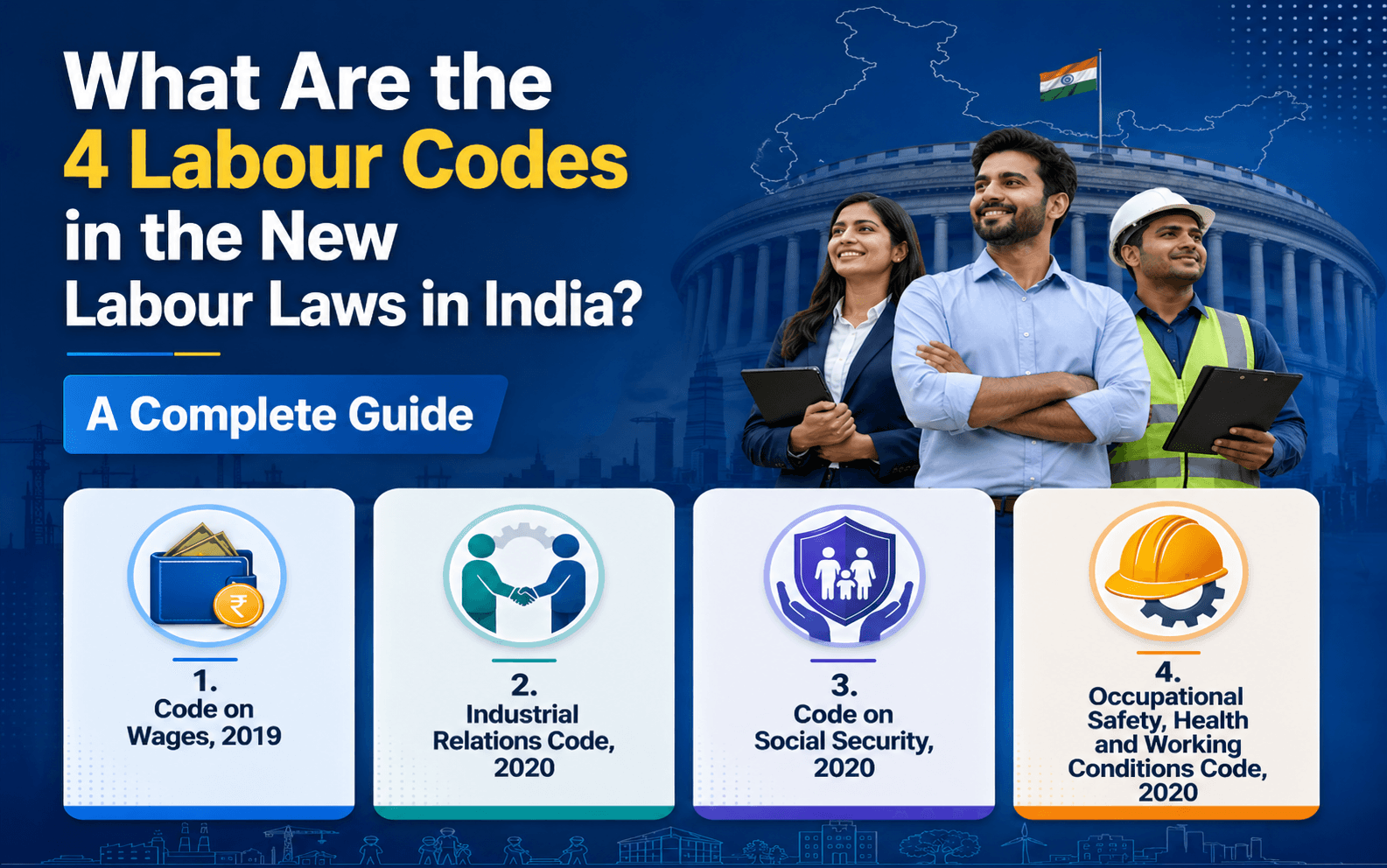
What Are the 4 Labour Codes in the New Labour Laws in India? A Complete Guide
Read More >

15 to 17 minutes
|
All
category
What Are the New External Workforce Trends in 2026?
Read More >