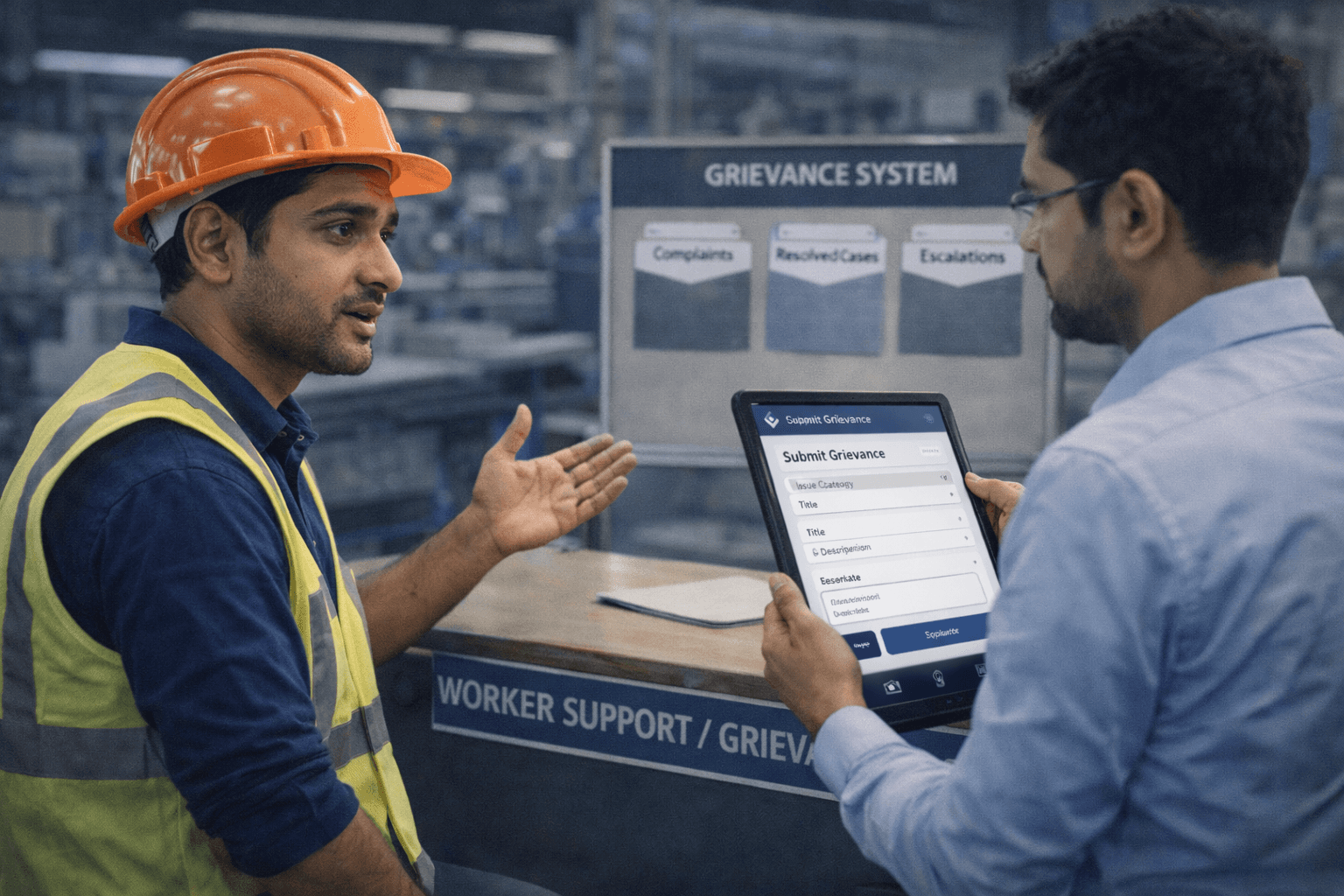
This blog explains the importance of formal grievance management in blue-collar workforces. Without a structured process, issues like wage disputes and safety concerns remain unaddressed, leading to high turnover. It outlines how a grievance system, with accessible submission channels, confidentiality, transparency, and fair resolutions, can reduce attrition, improve worker trust, and drive continuous improvement across teams.
Introduction
A worker at a manufacturing plant has not been paid for overtime they worked. They ask their supervisor about it. The supervisor says he will “look into it”. A week passes. Nothing happens. Two weeks. The worker is frustrated and desperate for money. They do not know who else to ask. They do not know if anyone is actually investigating. They consider quitting.
This scenario repeats itself thousands of times daily across India’s blue-collar workforces. Workers have legitimate concerns: wage disputes, safety hazards, unfair treatment, unreasonable schedules. But they have no formal way to raise them. No process. No transparency. No resolution timeline.
The result: workers either suffer in silence or leave.
This guide explains what grievance management actually is, why it matters for blue-collar retention, and how to build a system that workers trust.
What Grievance Management Actually Is
A grievance is any complaint a worker has about their treatment, working conditions, wages, or workplace environment. Examples:
Wage payment delayed or incorrect amount
Safety hazard not addressed
Unfair or disrespectful treatment by supervisor
Unreasonable scheduling
Discrimination or harassment
Denial of entitled benefits (leave, bonus, etc.)
Work equipment broken or unsafe
Working hours exceed legal limits
Grievance management is the formal process of:
Accepting the grievance (worker submits it)
Acknowledging receipt (worker knows it was received)
Investigating (someone looks into the facts)
Resolving (issue is fixed or explained)
Closing (worker is informed of outcome)
Tracking (organization learns from patterns)
Without a formal process, grievances are handled informally (or ignored). Workers do not know if they are being taken seriously. Management does not know what patterns exist. Problems fester.
Why Grievance Management Improves Retention
Research Findings
A worker with an unresolved grievance is 3x more likely to leave. When workers feel unheard, they stop trying. They look for other jobs.
Conversely, organizations with formal grievance processes experience:
20-30 percent lower attrition
Faster problem resolution
Better identification of systemic issues
Reduced legal disputes
Improved worker trust in management
The Trust Factor
The most powerful factor: workers feel heard.
When a worker submits a grievance and:
Receives acknowledgment within 24 hours
Sees updates on investigation progress
Gets resolved within 7 days
Understands the decision (even if not fully satisfied)
They feel the organization takes them seriously. They are more likely to stay and raise issues through proper channels rather than quitting.
Common Grievance Management Failures
Failure 1: No Formal Process
Many organizations have no grievance process at all. Workers are expected to “talk to their supervisor” if they have an issue. This is informal and prone to:
Issues being ignored
Retaliation (supervisor is offended by criticism)
Inconsistent handling
No documentation
No accountability
Failure 2: Lack of Confidentiality
Workers fear retaliation. If they submit a grievance against their supervisor, will the supervisor know? Will they face consequences?
Without confidentiality assurance, workers do not submit grievances. Issues remain hidden.
Failure 3: No Timeline or Accountability
A worker submits a grievance. Weeks pass. No update. They do not know if it is being investigated. They do not know the timeline for resolution. Frustration builds.
Without a timeline, workers lose hope. The grievance system becomes useless.
Failure 4: No Appeal or Review
If a worker disagrees with the resolution, they have no recourse. They cannot appeal or request review. The decision stands. This feels unfair and discourages use of the system.
Failure 5: No Learning from Patterns
Organizations collect grievances but do not analyze patterns. Same safety issue grieved by 5 workers in different teams. No one notices or fixes the root cause.
Without analysis, grievances become a complaint system rather than an improvement system.
How to Build a Grievance System Workers Trust
Element 1: Accessibility
Workers must be able to submit a grievance easily:
In their language
Via mobile (most preferred)
Via phone call (for workers uncomfortable with apps)
Via anonymous form (if they fear retaliation)
In person (through designated grievance officer)
Multiple channels ensure everyone can participate regardless of literacy or comfort level.
Element 2: Confidentiality and Non-Retaliation
Clear policy:
Grievances are confidential (only involved parties see details)
Retaliation is strictly prohibited
Workers can submit anonymously if they choose
Organization documents that workers are protected from retaliation
Workers need to trust they can speak without consequences.
Element 3: Transparency and Updates
From submission to resolution:
Acknowledgment within 24 hours (we received it, we are taking it seriously)
Investigation update within 3 days (here is what we are looking into)
Expected resolution date (you will have an answer by date X)
Resolution explanation (here is what we found and here is what we are doing)
The worker always knows status. No surprises. No wondering if anyone is investigating.
Element 4: Fair and Documented Resolution
Grievance officer investigates:
Interviews relevant parties
Reviews documents
Makes a decision
Documents everything
Decisions are communicated in writing. Worker understands:
What was investigated
What facts were found
What decision was made
Why (reasoning explained)
Even if the worker is not satisfied, they understand the decision and feel it was fair.
Element 5: Appeal Mechanism
If a worker disagrees with the resolution, they can request an appeal to a higher authority. This ensures no single person can dismiss a legitimate grievance unfairly.
The appeal process is the same: documented, transparent, timely.
Element 6: Analysis and Action
Monthly or quarterly, organization reviews grievances:
What categories come up most?
Which issues are recurring?
Which teams have more grievances?
What patterns exist?
Example: Safety grievances up 40 percent in Q1. Root cause: new equipment installation with inadequate training. Action: retrain all workers on new equipment.
Without this, grievances are just complaints. With this, they drive improvement.
Implementation Checklist
Step 1: Create Grievance Policy
Define what is a grievance
Outline the process (5 steps above)
Define confidentiality and non-retaliation protections
Set timelines (24-hour acknowledgment, 7-day resolution target)
Designate grievance officer(s)
Step 2: Set Up System
Paper-based form or digital platform
Ensure mobile accessibility
Multiple submission channels
Confidentiality built-in
Step 3: Train Staff
All supervisors must understand policy
Grievance officers need training on investigation and documentation
All staff should understand: no retaliation, confidentiality protected
Step 4: Communicate to Workers
Explain grievance process clearly
Assure confidentiality and non-retaliation
Provide multiple ways to submit
Publicize some resolved grievances (to show system works)
Step 5: Monitor and Improve
Track resolution times
Monitor appeal rates
Analyze patterns monthly
Take action on recurring issues
Share improvements with workers (to show grievance system creates change)
Conclusion
Grievance handling is a core control for retention, safety, and trust. When complaints are informal or undocumented, issues escalate, resolution timelines slip, and the organization loses visibility. A formal grievance workflow creates predictable intake, clear ownership, and traceable closure so workers feel heard and leadership stays informed.


Manage External Workforce with BlueTree - Govern contract, gig, and blue collar workers across vendors, sites, and shifts.
Frequenty Asked Questions
4-5 Minutes
|
All
category
Global Payroll Week 2026: Why Blue Collar Payroll Needs Better Governance
Read More >
7-8 Minutes
|
All
category
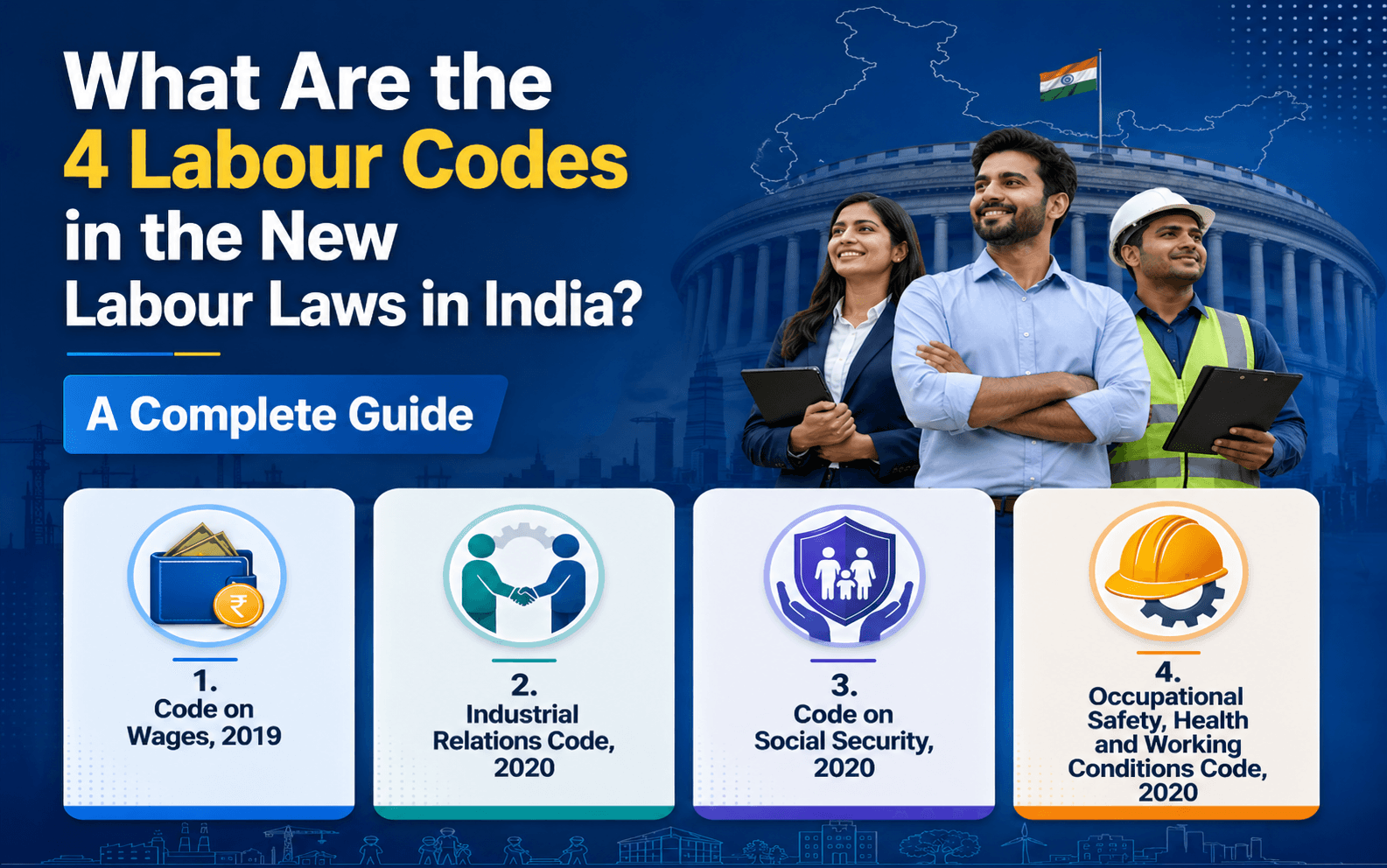
What Are the 4 Labour Codes in the New Labour Laws in India? A Complete Guide
Read More >

15 to 17 minutes
|
All
category
What Are the New External Workforce Trends in 2026?
Read More >