Gratuity under the Code on Social Security, 2020 now requires continuous tracking of worker eligibility, wage records, and service history across the employee lifecycle. This blog explains gratuity rules for permanent, fixed-term, and contract workers, key employer compliance risks, and how enterprises can improve gratuity readiness through connected workforce, payroll, and offboarding workflows.
Introduction
Most enterprises discover gratuity exposure only during employee exit.
By then, the actual compliance problem has already happened.
Because gratuity liability does not begin during final settlement processing. It builds gradually across the workforce lifecycle through:
incorrect worker classification,
disconnected payroll records,
attendance continuity gaps,
wage revisions,
contractor transitions,
and incomplete service history.
Under the Code on Social Security, 2020, gratuity is no longer a standalone exit-stage obligation. It has become part of a broader workforce governance and social security compliance framework.
For enterprises managing large distributed workforces across manufacturing plants, warehouses, retail operations, logistics hubs, and contractor ecosystems, gratuity readiness now depends on whether workforce data remains connected throughout employment.
This includes:
worker identity,
date of joining,
wage history,
attendance continuity,
employment classification,
and exit records.
Without connected workforce records, gratuity compliance becomes reactive, difficult to validate, and operationally risky.
This is why enterprises can no longer manage gratuity through spreadsheets, fragmented records, or last-minute reconciliation during employee exits.
What Is Gratuity Under the Code on Social Security, 2020?
Gratuity is a statutory social security benefit payable to eligible employees based on continuous service with an employer.
Under the Code on Social Security, 2020, gratuity forms part of a broader social security framework that also includes:
Provident Fund (PF),
Employee State Insurance (ESI),
maternity benefits,
compensation,
and other statutory protections.
The biggest operational change for employers is this:
Gratuity eligibility and liability now require continuous tracking across the employee lifecycle instead of being calculated only during offboarding.
This means enterprises must maintain:
accurate tenure records,
wage continuity,
worker classification,
and employment history throughout service.
The biggest gratuity risk is not incorrect calculation.
It is incomplete workforce history.
Why Gratuity Readiness Is Becoming More Complex
Gratuity management has become significantly more complex because workforce structures themselves have evolved.
Most large enterprises today operate with a mix of:
permanent employees,
fixed-term employees,
apprentices,
seasonal workforce,
gig workers,
and flexi staffing models.
At the same time:
workforce movement has increased,
employment structures are more dynamic,
and employee records are often fragmented across systems.
In many organizations:
onboarding data sits in one platform,
attendance is managed elsewhere,
payroll records are stored separately,
and contractor workforce data is maintained independently.
This creates serious operational challenges because gratuity depends heavily on:
continuity of service,
wage history,
employment classification,
and reliable workforce records.
Even small gaps can create:
incorrect liability estimation,
settlement disputes,
provisioning errors,
delayed payouts,
and audit exposure.
The complexity becomes even higher in external workforce-heavy industries where worker transitions, contractor movement, and workforce scale are significantly larger.
Who Is Eligible for Gratuity?
Under the Code on Social Security, 2020, gratuity eligibility has expanded beyond traditional permanent workforce models.
Permanent Employees
Permanent employees generally remain eligible for gratuity after completing five years of continuous service.
However, enterprises must ensure that:
service continuity is accurately maintained,
wage records are updated correctly,
and employee history remains traceable across locations, payroll systems, and business units.
Fixed-Term Employees
One of the most important changes under the new framework is gratuity eligibility for fixed-term employees.
Fixed-term employees may become eligible for gratuity after one year of continuous service on a pro-rata basis.
This creates a major operational shift for HR and payroll teams because many organizations historically treated fixed-term workforce differently from permanent employees.
Why Fixed-Term Employee Tracking Often Fails
Common enterprise gaps include:
multiple employee IDs for the same worker,
contract renewals not linked to original joining dates,
service continuity breaks during payroll migration,
rejoined workers treated as fresh employees,
attendance gaps across deployment transitions,
and inconsistent workforce classification.
When systems fail to maintain continuous worker history, gratuity liability becomes difficult to calculate accurately.
This often leads to disputes during:
exit processing,
audit reviews,
compliance inspections,
or legal escalations.
Contractor-Managed Workforce
For contractor-managed workforce models, gratuity obligations depend on the employment structure and contractual arrangement.
However, principal employers still carry significant operational and compliance exposure because workforce records, deployment continuity, wage data, and contractor documentation must remain accurate and traceable.
Enterprises should work closely with contractors to ensure:
worker service records are maintained,
wage structures are validated,
statutory records remain updated,
and contractor workforce data stays audit-ready.
Poor contractor record management can create downstream social security and audit risks for both the contractor and the principal employer.
How Gratuity Is Calculated
Gratuity calculation depends on three key factors:
Employment category
Wage base
Continuous service duration
The standard calculation formula remains:
(Last Drawn Salary × 15 × Years of Service) ÷ 30
However, operationally, the challenge is not the formula itself.
The challenge is whether enterprises can trust the underlying workforce data.
This includes:
wage revisions,
attendance continuity,
service history,
payroll records,
and employment classification.
Disconnected systems often create:
incorrect wage calculations,
broken tenure history,
duplicate employee records,
or inaccurate liability estimation.
As workforce scale increases, these errors compound quickly across locations and workforce categories.
Why Gratuity Compliance Depends on Workforce Visibility
Most gratuity disputes are not caused by mathematical errors.
They are caused by incomplete workforce visibility.
Many enterprises struggle to answer basic questions quickly:
Has the worker completed continuous service?
Were wage revisions captured correctly?
Did employment categories change?
Was there a payroll transition?
Are attendance and wage records aligned historically?
When workforce data remains fragmented across:
HR systems,
payroll tools,
attendance platforms,
contractor records,
and spreadsheets,
social security compliance becomes reactive instead of controlled.
This is why enterprises are increasingly shifting toward connected workforce intelligence models where:
worker identity,
employment history,
attendance,
wages,
statutory benefits,
and exits remain linked across the workforce lifecycle.
What Employers Need to Track Continuously
Gratuity readiness cannot begin during employee exit.
It must be monitored continuously.
HR and payroll teams should maintain visibility into:
Workforce Classification
Permanent employees
Fixed-term workforce
Contractor-managed workers
Rehired employees
Service Continuity
Joining dates
Transfers
Rejoining history
Payroll migrations
Attendance continuity
Wage Records
Wage revisions
Allowances
Salary structures
Payroll inputs
Social Security Readiness
PF and ESI records
Benefit eligibility
Settlement status
Gratuity liability exposure
Audit Readiness
Digital gratuity registers
Worker records
Exit documentation
Approval trails
Settlement proof
Without connected workforce systems, enterprises face significant operational and compliance risk.
Common Employer Mistakes to Avoid
1. Treating Fixed-Term and Contract Workers the Same
Fixed-term employees and contractor-managed workers operate under different employment structures and gratuity considerations.
Incorrect classification creates payout and compliance risk.
2. Discovering Eligibility Only During Exit
Many enterprises calculate gratuity only after resignation or retirement.
By that stage:
workforce records may be incomplete,
wage history may be inconsistent,
and service continuity may be difficult to validate.
3. Maintaining Disconnected Workforce Records
When onboarding, attendance, payroll, and exit systems remain disconnected:
tenure tracking becomes unreliable,
wage records become inconsistent,
and gratuity calculation becomes difficult to defend during audits.
4. Ignoring Workforce Movement
Worker transfers, contractor changes, payroll migrations, and rejoining scenarios can significantly affect service continuity.
Without proper tracking, gratuity liability calculations become inaccurate.
5. Relying on Manual Records
Paper-based records and spreadsheet-driven tracking create:
audit dependency,
reconciliation effort,
delayed settlements,
and higher compliance exposure.
Why Gratuity Impacts Financial Planning
Gratuity is not only an HR compliance obligation.
It is also a workforce cost and financial provisioning responsibility.
Large enterprises managing thousands of employees require visibility into:
long-term gratuity liability,
workforce ageing patterns,
service tenure distribution,
and future settlement exposure.
Without continuous liability visibility:
finance teams struggle with provisioning,
workforce cost forecasting becomes inaccurate,
and sudden exits create payout pressure.
System-led gratuity tracking helps enterprises move from reactive settlement processing to predictable workforce liability management.
How BlueTree Helps Enterprises Build Gratuity Readiness
BlueTree’s approach is simple:
Gratuity readiness should not begin during employee exit.
It should be built continuously through connected workforce operations.
BeeForce helps enterprises improve gratuity readiness by connecting:
onboarding,
worker classification,
attendance,
payroll,
service continuity,
wage history,
contractor mapping,
and exit workflows into one operational layer.
This allows HR and payroll teams to:
track gratuity eligibility continuously,
improve liability visibility,
strengthen audit readiness,
reduce reconciliation effort,
and prevent settlement disputes before they occur.
Instead of reconstructing gratuity calculations manually during offboarding, enterprises can maintain cleaner, traceable, and audit-ready workforce records across the employee lifecycle.
This aligns with BlueTree’s broader workforce governance philosophy where social security compliance is managed through connected workforce transactions instead of post-facto reconciliation.
Key Takeaways for HR and Payroll Teams
Gratuity under the Code on Social Security, 2020 should be managed as a continuous workforce governance process.
Enterprises should focus on:
correct workforce classification,
fixed-term employee tracking,
connected wage and attendance records,
service continuity validation,
gratuity liability visibility,
audit-ready records,
and digital settlement workflows.
The organizations that manage gratuity effectively will not be the ones calculating settlements faster.
They will be the ones maintaining stronger workforce visibility before exits, disputes, audits, or compliance reviews begin.
Conclusion
Under the Code on Social Security, 2020, gratuity is no longer an isolated exit-stage obligation.
It has become part of a broader workforce governance framework where worker identity, employment continuity, wages, attendance, and benefit records must remain connected throughout the workforce lifecycle.
For enterprises managing large and distributed workforces, gratuity readiness now depends less on calculation capability and more on workforce data integrity.
The enterprises that manage this effectively will reduce:
settlement disputes,
compliance gaps,
audit dependency,
and workforce liability exposure.
More importantly, they will build stronger operational control across the workforce lifecycle itself.


Manage External Workforce with BlueTree - Govern contract, gig, and blue collar workers across vendors, sites, and shifts.
Frequenty Asked Questions
4-5 Minutes
|
All
category
Global Payroll Week 2026: Why Blue Collar Payroll Needs Better Governance
Read More >
7-8 Minutes
|
All
category
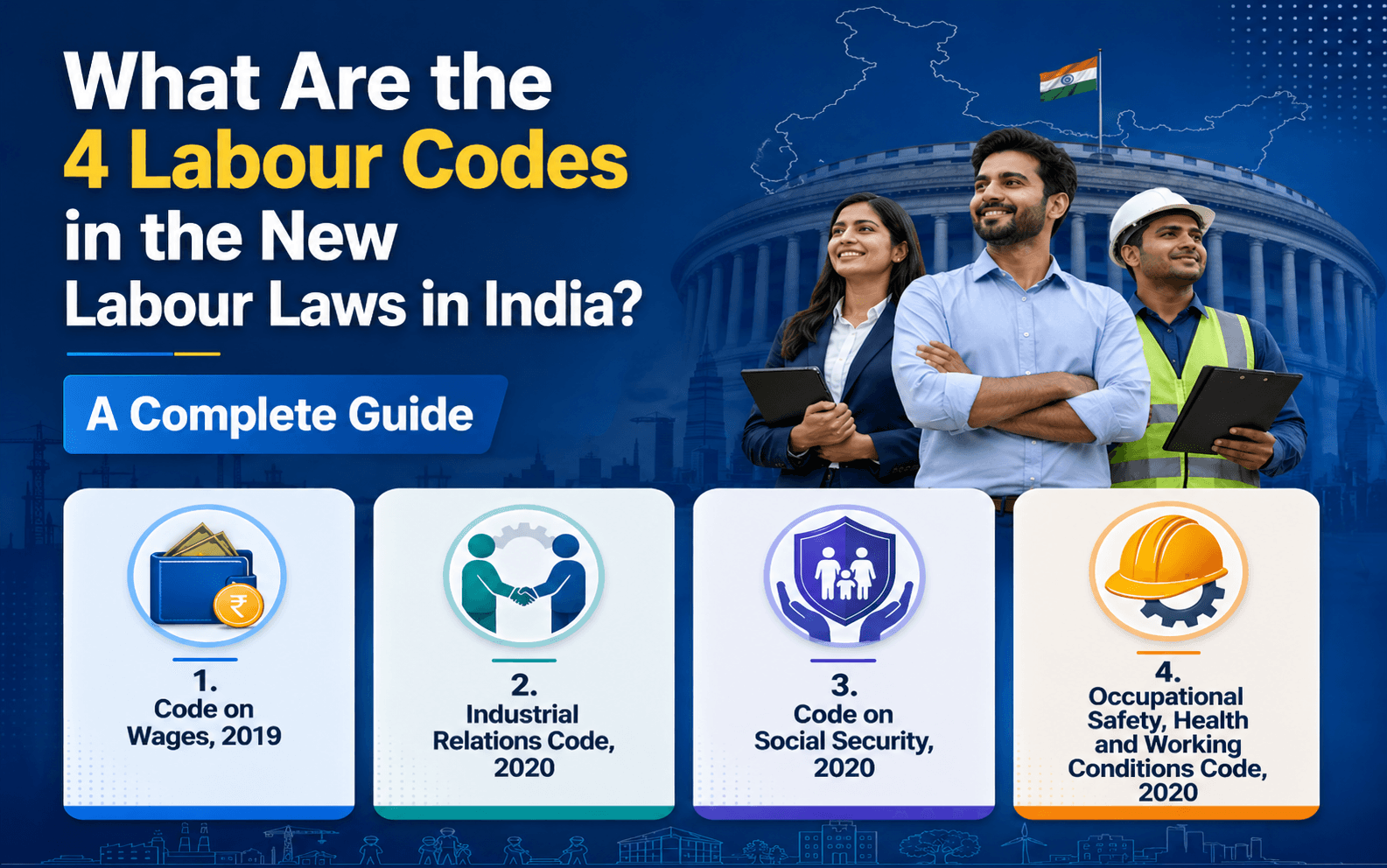
What Are the 4 Labour Codes in the New Labour Laws in India? A Complete Guide
Read More >

15 to 17 minutes
|
All
category
What Are the New External Workforce Trends in 2026?
Read More >