
Gig workforces scale fast, but traditional HRMS and payroll tools break under high churn, variable pay, and mobile-first expectations. This blog explains what gig workforce management means, why generic systems fail on onboarding, payouts, and governance, and what to look for in a purpose-built platform. It covers digital onboarding, flexible compensation, real-time earnings, faster payout cycles, and gig-specific statutory tracking at scale.
Introduction
The gig economy has moved far beyond convenience work, short-term tasks, and app-based services. For many enterprises, it has become a serious operating model for frontline execution.
Manufacturing plants rely on temporary and contract workers to meet production schedules. Logistics companies depend on flexible workforce pools to manage daily shipment volumes. Retail chains use part-time and seasonal staff to support store operations. Ecommerce businesses scale warehouse and delivery capacity during peak periods. Facility management companies deploy large distributed workforces across client sites.
This shift has created a new workforce reality.
Enterprises are no longer managing only permanent employees. They are managing a wider workforce ecosystem that includes contract workers, gig workers, trainees, apprentices, job-based workers, daily wage workers, and vendor-supplied labour.
This model gives enterprises flexibility. It helps them respond faster to demand fluctuations, reduce dependency on fixed workforce structures, and scale operations across locations and functions.
But it also creates a deeper management challenge.
As the workforce becomes more flexible, it becomes harder to control identity, attendance, shift allocation, payroll, compliance, vendor accountability, and statutory records through traditional systems.
For CHROs, HR Operations leaders, Compliance Heads, and Plant HR teams, the question is no longer only:
“How do we source more workers?”
The more important question is:
“How do we govern a distributed workforce without losing visibility, compliance control, or cost accuracy?”
That is where contract workforce management becomes critical.
Contract workforce management is not just about maintaining worker records. It is about creating a structured operating system for managing external workforce execution from onboarding and attendance to payroll, compliance, vendor billing, and audit readiness.
In the gig economy, this capability becomes even more important because workforce movement is faster, vendor dependency is higher, and operational risk is spread across multiple sites, shifts, and stakeholders.
What Is a Gig Workforce
A gig workforce refers to workers engaged outside traditional permanent employment structures. These workers may be deployed on a contractual, task-based, shift-based, project-based, vendor-managed, or platform-enabled model.
In enterprise environments, gig workers can include:
Contract workers deployed through manpower vendors
Warehouse pickers, packers, and loaders
Delivery partners and logistics associates
Retail store promoters and seasonal workers
Facility management staff
Security, housekeeping, and maintenance workers
Daily wage and job-based workers
Piece-rate workers
Trainees, apprentices, NAPS, and NATS categories where applicable
For many industries, these workers are not peripheral. They are directly responsible for frontline execution. They move goods, run machines, manage warehouses, support store operations, fulfil orders, handle customer-facing tasks, and maintain site-level continuity.
This makes gig workforce management different from traditional employee administration.
A permanent employee usually has a stable role, manager, location, payroll structure, and employment record. A gig or contract worker may move across shifts, sites, vendors, contracts, departments, and engagement types within a much shorter period.
That movement creates complexity across key areas:
Area | Why It Matters |
Identity | The enterprise must know whether the worker is correctly identified, verified, and traceable across vendors and sites. |
Eligibility | The worker must be approved for the right site, role, shift, skill category, and statutory requirement. |
Attendance | The enterprise must verify whether the person who reported for work is the same person who was onboarded. |
Payment | Payout must be linked to verified attendance, approved work, overtime, and applicable wage rules. |
Compliance | Statutory records must be created from accurate worker, attendance, wage, and vendor data. |
Without a structured system, enterprises may know how many workers were requested, but not always who actually worked, whether they were eligible, whether they were compliant, whether the vendor bill matches actual deployment, or whether statutory records can stand up to audit scrutiny.
In simple terms, a gig workforce gives enterprises flexibility. But managing that workforce at scale requires strong control over identity, attendance, compliance, payroll, and vendor accountability.
What a Purpose-Built Gig Workforce Management Platform Does
A purpose-built gig workforce management platform helps enterprises bring control to distributed workforce operations.
Instead of managing onboarding, attendance, shifts, compliance, payroll, billing, and vendor coordination as separate processes, the platform connects them into one workforce operating flow.
At a system level, it enables:
Capability | What It Solves |
Unified Worker Identity | Creates a single worker profile across vendors, sites, roles, and assignments, reducing duplication and improving traceability. |
Real-Time Attendance Validation | Captures and validates attendance through controlled methods such as biometric, mobile, geo-tagged, kiosk, or device-based systems. |
Shift-Based Workforce Allocation | Helps allocate workers based on site demand, shift requirements, worker availability, and operational priorities. |
Embedded Compliance Controls | Brings PF, ESI, minimum wage, overtime, working hour limits, document checks, and statutory records into daily workflows. |
Payroll and Billing Alignment | Links verified attendance and approved shifts with payroll and vendor billing, reducing mismatches and reconciliation effort. |
Workforce Visibility and Analytics | Provides dashboards across sites, vendors, shifts, attendance status, compliance gaps, and workforce utilization. |
A purpose-built platform changes the way enterprises manage gig and contract workers. Workforce management moves from fragmented reporting and manual follow-up to system-led execution control.
For large external workforce environments, this means better visibility, stronger compliance readiness, more accurate payroll, improved vendor accountability, and faster operational decision-making.
The Gig Economy: A New Way of Working
The gig economy is not just a hiring model. It represents a fundamental shift in how enterprises execute labour.
Key structural changes include:
shift from permanent employment to contract-based execution
rise of multi-vendor workforce ecosystems
demand-driven workforce scaling
shift-based operational models replacing fixed roles
increased dependency on staffing agencies
This shift has increased flexibility but also introduced execution complexity at enterprise scale.
Workforce demand now changes daily, sometimes hourly, while compliance responsibility remains with the enterprise.
This creates a structural imbalance:
vendors supply workforce
but enterprises carry full compliance and operational risk
Evolving Workforce Dynamics
Workforce dynamics in gig and contract-based ecosystems are changing significantly. Enterprises are no longer managing a static workforce model where employees remain in fixed roles, locations, and reporting structures.
Today, workforce operations are more fluid. Labour demand changes frequently, workers move across vendors and sites, and execution depends on real-time coordination between HR, operations, vendors, payroll, and compliance teams.
This shift has created new operating realities that traditional workforce systems were not designed to manage.
Multi-Layer Workforce Structures Across Enterprises
Modern enterprises no longer operate with a single workforce layer. They manage a mix of permanent employees, contract workers, gig workers, vendor-managed labour, trainees, apprentices, seasonal workers, and on-demand workforce groups.
Each workforce layer has different rules, ownership models, payroll structures, and compliance requirements. This creates complexity because workforce data, accountability, and execution visibility are spread across multiple teams and systems.
Without a unified view, enterprises struggle to understand the complete workforce picture across sites, vendors, and worker categories.
Continuous Workforce Fluidity
Gig and contract workforce environments are defined by frequent movement. Workers may be onboarded, reassigned, replaced, transferred, or exited within short cycles.
This movement may happen across:
Vendors
Sites
Departments
Shifts
Job roles
Contract periods
Static workforce planning models cannot manage this level of movement effectively. Enterprises need systems that can track worker identity, deployment history, attendance, and eligibility across the full workforce lifecycle.
Demand-Driven Operational Variability
Workforce demand is no longer stable over long planning cycles. It changes based on production requirements, logistics volumes, retail demand, ecommerce peaks, seasonal cycles, and site-level workload.
This creates the need for faster workforce planning and allocation. Enterprises must be able to identify workforce gaps, adjust shifts, allocate workers, and manage replacements based on actual operational demand.
In this environment, workforce planning must move from fixed manpower planning to real-time workforce orchestration.
Fragmentation of Workforce Data Across Systems
One of the biggest challenges in modern workforce ecosystems is data fragmentation. Workforce data is often split across vendor systems, attendance devices, HRMS platforms, payroll systems, compliance files, and manual spreadsheets.
This creates practical problems such as:
Conflicting attendance records
Duplicate worker entries
Delayed payroll inputs
Incomplete compliance data
Manual reconciliation during payroll and billing cycles
As workforce scale increases, these gaps become harder to control. Enterprises need a connected data layer where worker identity, attendance, payroll, vendor, and compliance data can be viewed together..
Shift from Role-Based to Execution-Based Work Models
Traditional workforce models were built around fixed roles and responsibilities. However, Traditional workforce systems were built around fixed roles and job titles. Gig workforce models operate differently. Workers are often assigned based on shifts, tasks, site demand, skill requirement, or short-term operational needs.
This means workforce management must track execution, not just employment records.
Enterprises need visibility into:
Who was deployed
Which shift was assigned
Whether attendance was valid
Whether work was completed
Whether payout and billing were aligned with execution
This shift makes real-time workforce tracking more important than static role management.
Increased Compliance Pressure at Scale
As external workforce operations expand across vendors and sites, compliance complexity increases. Enterprises must manage statutory obligations across worker categories, wage rules, attendance records, overtime, working hours, PF, ESI, contractor records, and audit documentation.
Even when workforce execution is outsourced to vendors, compliance responsibility cannot be fully outsourced. Enterprises still need reliable data, traceable approvals, and system-generated records to prove compliance readiness.
This makes compliance a continuous operational requirement, not a periodic reporting task.
Growing Need for Real-Time Workforce Intelligence
Traditional reports are not enough for gig and contract workforce environments. Enterprises need live visibility into workforce strength, attendance, absenteeism, shift coverage, vendor performance, compliance gaps, and payroll readiness.
Real-time workforce intelligence helps teams identify issues earlier and act faster.
For example:
HR can track onboarding and deployment gaps.
Site teams can monitor shift strength and absenteeism.
Compliance teams can identify missing statutory data.
Finance teams can reduce payroll and billing mismatches.
Leadership can view workforce cost, risk, and productivity trends.
Evolving workforce dynamics show that workforce management is no longer only about maintaining employee records. It is about managing distributed execution across vendors, sites, shifts, payroll, and compliance processes.
As gig and contract workforce models expand, enterprises need connected systems that provide visibility, control, validation, and intelligence across the workforce lifecycle.
Without this, workforce operations remain fragmented, reactive, and difficult to govern at scale.
The Advantages and Challenges of the Gig Economy
The gig economy gives enterprises flexibility, speed, and cost control in workforce-intensive operations. For industries such as manufacturing, logistics, retail, ecommerce, and facility management, this flexibility is especially valuable because workforce demand changes frequently across sites, shifts, and seasons.
At the same time, gig workforce models introduce operational complexity. As workforce scale increases, enterprises need stronger visibility, attendance control, compliance validation, payroll alignment, and vendor accountability.
Advantages of the Gig Economy
Workforce Scalability on Demand
Gig workforce models allow enterprises to scale labour up or down based on operational demand.
This is useful during:
Seasonal demand cycles in ecommerce and retail
Production surges in manufacturing
Peak delivery volumes in logistics
Temporary project-based workforce requirements
Sudden workforce gaps caused by absenteeism or attrition
Instead of maintaining a fixed workforce base throughout the year, enterprises can adjust workforce strength based on actual business needs.
Operational Flexibility Across Sites and Shifts
Gig workers help enterprises manage workforce movement across locations, departments, shifts, and operating units.
This allows enterprises to:
Fill shift gaps quickly
Reallocate workers across sites
Support urgent ramp-up requirements
Manage last-minute workforce shortages
Maintain continuity in 24x7 operations
This flexibility is important in businesses where execution cannot stop because of local workforce shortages.
Reduced Fixed Workforce Costs
Gig and contract workforce models help enterprises reduce dependency on fixed employment costs.
Enterprises can:
Convert fixed labour cost into variable operating cost
Align workforce spend with actual demand
Reduce excess workforce cost during low-demand periods
Optimize manpower budgets across sites and functions
Control additional hiring for temporary or seasonal work
This makes the gig economy attractive for enterprises that need workforce agility without permanently increasing headcount.
Access to Distributed Labour Pools
Gig workforce ecosystems give enterprises access to workers across multiple geographies and skill categories.
This helps enterprises access:
Local workers near plants, warehouses, stores, and hubs
Vendor-managed labour pools
Short-term workers for specific roles
Seasonal workers during demand peaks
Specialized frontline workers for defined tasks
This expands workforce reach beyond traditional recruitment channels.
Faster Workforce Deployment Cycles
Traditional hiring can take time because it involves sourcing, screening, documentation, onboarding, approvals, and payroll setup. Gig workforce models can shorten this cycle when supported by structured onboarding systems.
Enterprises can achieve:
Faster onboarding through vendors or workforce platforms
Quicker shift allocation
Faster replacement of absent workers
Short-cycle deployment for urgent operational needs
Better readiness during peak business periods
This speed is especially useful for industries where workforce delays directly affect production, delivery, service levels, or customer experience.
Challenges of the Gig Economy
The gig economy enables flexibility and scale, but it also creates complexity. The challenge is not the gig model itself. The real issue is managing a fast-moving, distributed workforce without a centralized system of control.
Fragmented Workforce Visibility
In gig workforce environments, data is often spread across vendors, attendance systems, payroll platforms, and manual reports. This makes it difficult for enterprises to get a unified view of who is working, where they are deployed, and whether actual workforce strength matches operational demand.
Without real-time visibility, HR and operations teams depend on delayed reports instead of live workforce data.
Limited Control Over Workforce Execution
Enterprises may define workforce requirements, but actual deployment is often managed by vendors or local teams. This creates gaps in shift adherence, attendance accuracy, replacement planning, and worker availability.
As a result, enterprises have limited direct control over day-to-day execution, especially across multiple sites, shifts, and contractor networks.
Compliance Complexity at Scale
Gig and contract workforce models increase compliance complexity because workers are distributed across locations, vendors, wage categories, and engagement types.
Risks can emerge around PF, ESI, minimum wages, overtime, working hours, contractor records, wage slips, and audit readiness. When compliance checks happen after payroll or billing, gaps are identified too late.
Compliance must therefore be embedded into onboarding, attendance, payroll, and vendor workflows.
Payroll and Billing Inconsistencies
Payroll and vendor billing often depend on aggregated attendance data, manual corrections, and vendor-submitted records. When attendance, payroll, and billing systems are not connected, mismatches become common.
This can result in delayed payroll, billing disputes, overpayment, underpayment, and high reconciliation effort for HR, finance, and vendor teams.
Dependency on Vendor Accuracy
Enterprises often rely on vendors for worker data, attendance reporting, compliance documents, and deployment updates. However, vendor systems are not always integrated with enterprise controls.
This creates dependency on external reporting instead of verified workforce data. Over time, it can reduce transparency, weaken accountability, and increase operational risk.
Weak Workforce Intelligence
Large gig workforce operations generate valuable data across attendance, deployment, absenteeism, productivity, payroll, compliance, and vendor performance. But when this data is scattered, enterprises cannot use it effectively.
Without workforce intelligence, decision-making remains reactive. Teams may identify shortages, cost leakage, or compliance gaps only after they have already affected operations.
The gig economy gives enterprises the ability to scale quickly, manage workforce cost, access distributed labour, and respond faster to operational changes.
However, these advantages are sustainable only when gig workforce operations are managed through structured systems. Without visibility, attendance validation, compliance controls, payroll alignment, and vendor accountability, flexibility can quickly turn into operational complexity.
Pros and Cons: Gig Economy vs Contract Workforce Management
As enterprises scale their dependence on external labour, it becomes important to distinguish between the gig economy as a workforce model and contract workforce management as a governance system.
The gig economy defines how labour is sourced and deployed. Contract workforce management defines how that labour is governed, tracked, validated, paid, and controlled at scale.
Area of Comparison | Gig Economy Model | Contract Workforce Management Model |
Workforce Visibility | Workforce data is often spread across vendors, attendance systems, payroll files, and manual reports. Enterprises may not have a real-time view of who is working, where they are deployed, or whether actual workforce strength matches demand. | Workforce data is centralized across vendors, sites, shifts, and worker categories. Enterprises get real-time visibility into attendance, deployment, and shift-level execution. |
Attendance and Execution Control | Attendance may depend on vendor reports, manual sheets, delayed uploads, or disconnected systems. This creates uncertainty around actual worker presence and shift adherence. | Attendance is captured and validated through structured systems such as biometric, mobile, geo-tagged, kiosk, or device-based attendance. Shift deviations and exceptions can be tracked in real time. |
Compliance Management | Compliance is often checked after attendance, payroll, or billing cycles. Different vendors may follow different processes for PF, ESI, minimum wages, overtime, and statutory records. | Compliance rules are embedded into onboarding, attendance, payroll, billing, and reporting workflows. Gaps can be identified before payroll closure, vendor settlement, or audit review. |
Payroll and Vendor Billing | Payroll and vendor billing may rely on aggregated attendance, submitted headcount, or manually reconciled records. This increases the risk of payout errors, billing disputes, and overbilling. | Payroll and vendor billing are linked to verified attendance, approved shifts, wage rules, contract terms, and payable days. This improves accuracy and reduces reconciliation effort. |
Vendor Accountability | Vendors often operate as independent reporting entities. Accountability depends on submitted reports, follow-ups, and relationship management. | Vendor performance can be tracked through onboarding quality, attendance accuracy, compliance adherence, correction timelines, and billing variance. |
Workforce Scalability | The gig economy supports fast workforce scaling, but complexity increases as worker volume, vendors, locations, and shifts grow. | Contract workforce management creates the control layer required to scale external workforce operations without losing visibility, compliance discipline, or cost control. |
The gig economy gives enterprises flexibility, speed, and access to scalable frontline labour. But flexibility alone is not enough for enterprise operations.
Without structured contract workforce management, gig workforce operations can become fragmented across vendors, sites, attendance systems, payroll teams, and compliance processes. This can lead to payroll leakage, vendor disputes, delayed reporting, compliance exposure, and limited workforce intelligence.
With a contract workforce management system, enterprises can convert flexible labour into a controlled operating model. Worker identity, attendance, shifts, payroll, compliance, vendor billing, and reporting become connected through one structured workforce governance layer.
In simple terms, the gig economy helps enterprises scale workforce supply. Contract workforce management helps enterprises control workforce execution.
Why Traditional HRMS and Payroll Systems Fail Gig Workforces
Traditional HRMS and payroll systems were designed for a fundamentally different workforce structure. They work well when employees operate in stable roles, fixed reporting hierarchies, defined locations, and predictable payroll cycles.
Gig and contract workforce environments operate differently. Workers are distributed across multiple vendors and sites, employment relationships are indirect, attendance is shift-based, and compliance requirements are continuous rather than periodic.
Because of this structural mismatch, traditional HRMS and payroll systems often fail to manage gig workforce complexity at scale.
1. No Unified Worker Identity Layer
A gig workforce requires a single, reliable worker identity across vendors, sites, shifts, and assignments. Traditional HRMS systems usually treat workers as static employee records tied to one organization or employment relationship.
This creates several challenges:
Duplicate worker records: The same worker may be created multiple times across vendors, locations, or systems, making it difficult to identify duplication or ghost worker risk.
No continuity of worker history: When a worker moves from one vendor to another or from one site to another, previous attendance, compliance, training, or performance records may not follow them.
Limited cross-site visibility: Enterprises may not know whether a worker has already been deployed, blacklisted, exited, or flagged at another location.
Fragmented statutory information: UAN, ESI, bank details, identity documents, and nominee details may be captured inconsistently across different vendor files or systems.
Weak workforce traceability: Without a unified identity layer, enterprises lose a single source of truth for who the worker is, where they have worked, and whether they are eligible for deployment.
2. Attendance Is Treated as a Static Input, Not a Live Control System
In traditional HRMS and payroll setups, attendance is often treated as an input for payroll processing. It is uploaded, imported, or reconciled after the shift or pay cycle is completed.
Gig workforce environments require a different approach because attendance is not just a payroll field. It is proof of work, proof of deployment, and the basis for payroll, billing, overtime, compliance, and productivity tracking.
This creates several challenges:
Delayed attendance visibility: Enterprises may receive attendance data only after vendors, devices, or site teams submit reports, making real-time workforce tracking difficult.
Late detection of errors: Missing punches, incorrect shift mapping, duplicate attendance, and invalid entries are often discovered only during payroll or reconciliation.
Limited shift-level control: HR and operations teams may not know during the shift whether workforce strength is adequate, whether absenteeism is high, or whether replacements are required.
Weak attendance validation: Traditional systems may not validate attendance against location, identity, shift rules, supervisor approvals, or vendor deployment records.
Downstream payroll impact: If attendance is inaccurate, payroll, overtime, wage calculation, vendor billing, and statutory records also become unreliable.
3. No Vendor or Contractor Governance Capability
Traditional HRMS platforms are built primarily around direct employment. They are not designed to manage complex vendor-supplied workforce ecosystems where multiple contractors operate across sites, departments, and worker categories.
In gig and contract workforce environments, vendor governance is not an optional feature. It is central to workforce control.
This creates several challenges:
No clear vendor-worker linkage: Enterprises may not have a structured view of which vendor supplied which worker, for which site, under which contract, and for what duration.
Limited vendor performance tracking: Attendance accuracy, replacement speed, onboarding quality, compliance adherence, and correction timelines are rarely measured consistently.
Weak accountability for errors: When attendance, documentation, or payroll data is incorrect, it becomes difficult to identify whether the issue originated with the vendor, site team, HR team, or payroll process.
No real-time vendor dashboard: Traditional systems may not provide vendor-wise visibility into active workers, inactive workers, pending documents, compliance gaps, or billing variance.
Contractor management remains manual: Vendor follow-ups often continue through emails, calls, spreadsheets, and offline approvals, reducing transparency and control.
4. Compliance Is Not Embedded Into Workforce Execution
Traditional HRMS and payroll systems usually handle compliance as a payroll-time or reporting activity. This may work for stable employee groups, but it is insufficient for gig and contract workforce environments where compliance risk begins much earlier.
In external workforce operations, compliance must be embedded into onboarding, attendance, shift planning, overtime approval, wage calculation, vendor billing, and statutory reporting.
This creates several challenges:
Compliance checks happen too late: PF, ESI, wage rules, overtime limits, and statutory details may be validated only after work has already been performed.
Minimum wage risk increases: If wage masters are not linked to location, skill category, role, vendor, and effective date, enterprises may miss wage deviations.
Overtime violations are detected after the fact: When working hours and overtime are not monitored during execution, violations may surface only during payroll or audit review.
Statutory records become reactive: Registers, wage slips, contractor records, and compliance reports may need to be reconstructed manually instead of being generated from approved transactions.
Audit readiness becomes effort-heavy: Compliance teams spend time collecting, correcting, and reconciling records instead of relying on system-generated proof.
5. No Integration Between Attendance, Payroll, and Vendor Billing
Gig workforce operations require a connected flow from attendance to payroll to vendor billing. Traditional systems often keep these processes separate.
Attendance may sit in one system, payroll may be processed in another, and vendor billing may be handled manually by finance or procurement teams.
This creates several challenges:
Multiple versions of workforce data: Attendance records, payroll inputs, and vendor invoices may not match because they are prepared from different sources.
Payroll leakage risk: Incorrect attendance, unapproved overtime, duplicate entries, or manual corrections can result in overpayment or underpayment.
Vendor billing disputes: Vendors may bill based on submitted headcount or attendance summaries, while enterprise teams may rely on different approved records.
High reconciliation effort: HR, payroll, finance, and vendor teams spend significant time matching attendance, payable days, overtime, rates, deductions, and invoices.
Delayed payroll and settlement cycles: When data is not connected, payroll closure and vendor settlement become slower, more manual, and more dispute-prone.
6. No Real-Time Workforce Intelligence Layer
Traditional HRMS systems are primarily record-keeping and reporting systems. They provide employee data, payroll summaries, and historical reports.
Gig workforce environments require live operational intelligence because workforce demand, attendance, deployment, and exceptions change continuously.
This creates several challenges:
Limited real-time visibility: Enterprises may not know the actual workforce strength by site, shift, vendor, department, or worker category during operations.
Reactive workforce planning: Decisions are based on delayed reports rather than live signals on absenteeism, shift gaps, replacement needs, or overtime risk.
Weak exception monitoring: Missing punches, document gaps, late approvals, compliance exceptions, and payroll blockers may not be visible early enough.
No vendor-wise intelligence: Vendor performance is difficult to compare without dashboards for attendance accuracy, compliance status, billing mismatch, and workforce availability.
Limited leadership visibility: CHROs, HR Ops leaders, compliance teams, and finance teams may not have a single dashboard to track workforce cost, risk, and execution quality.
Traditional HRMS and payroll systems are not built for the speed, movement, and complexity of gig workforce operations. They can manage employee records and process payroll, but they often fall short when workforce identity, attendance, vendor control, compliance, payroll, and billing need to work together in real time.
For gig and contract workforce environments, enterprises need systems that can manage execution, not just administration.
What a Gig Workforce Management Platform Does
A gig workforce management platform is designed to bring structure, visibility, and control to workforce ecosystems that are distributed, vendor-driven, and highly dynamic.
Unlike traditional HRMS or payroll systems, which are built for stable employee structures, a gig workforce platform is designed for environments where workers move frequently across vendors, sites, shifts, and assignments.
At its core, the platform connects the complete workforce lifecycle, from onboarding and identity validation to attendance, compliance, payroll, vendor billing, and workforce analytics.
1. Worker Onboarding and Identity Validation
The foundation of any gig workforce management system is a reliable onboarding and identity layer. In fragmented workforce environments, worker data is often inconsistent across vendors, locations, and systems. A structured platform ensures that every worker enters the enterprise ecosystem through a controlled and traceable process.
A gig workforce platform enables:
Unified worker identity: Every worker is assigned a digital profile that remains consistent across vendors, sites, and assignments.
Structured document capture: Identity documents, bank details, statutory information, address details, and role-specific documents are captured in a standardized format.
Verification-led onboarding: Worker details can be validated through defined checks before the worker is approved for deployment.
Duplicate and ghost worker prevention: The system helps identify duplicate records, repeated entries, and potential ghost worker risks before they enter payroll or billing cycles.
Continuity of worker history: Worker movement, previous deployment, attendance, compliance status, and role history can be maintained across assignments.
2. Vendor Mapping and Workforce Allocation
Gig workforce environments rely heavily on vendors, contractors, and staffing partners for labour supply. Without structured vendor mapping, enterprises lose visibility into who supplied the worker, where the worker is deployed, and whether the deployment matches operational demand.
A gig workforce platform enables:
Vendor-worker linkage: Each worker is mapped to a specific vendor, contractor, work order, site, department, or business unit.
Site-wise workforce allocation: Workers can be assigned to specific plants, warehouses, stores, hubs, or client locations based on operational requirements.
Demand-based deployment: Workforce allocation can be aligned with shift demand, production needs, delivery volume, or site-level workforce plans.
Vendor-wise visibility: HR and operations teams can view active workers, pending workers, inactive workers, and deployment status by vendor.
Improved vendor accountability: Vendor performance can be tracked through onboarding quality, attendance accuracy, replacement speed, and compliance readiness.
3. Shift Planning and Attendance Tracking
Shift-based execution is one of the most important realities of gig and contract workforce operations. Workers are often deployed across multiple shifts, sites, departments, and working hour patterns. A gig workforce platform helps ensure that attendance is not just recorded, but validated against actual workforce execution.
A gig workforce platform enables:
Centralized shift planning: Shifts can be created and managed across locations, departments, vendors, and worker categories.
Real-time attendance capture: Attendance can be captured through mobile, biometric, geo-tagged, kiosk, QR-based, or device-integrated systems.
Shift-level validation: Attendance can be checked against assigned shifts, location rules, working hours, and supervisor approvals.
Exception tracking: Late arrivals, early exits, missing punches, absenteeism, overtime, and shift deviations can be identified and routed for approval.
Operational workforce visibility: Site and HR teams can monitor actual workforce strength against planned requirement during execution, not only after the shift is over.
4. Compliance Enforcement and Validation
Compliance in gig workforce environments cannot be treated as a month-end activity. It must be built into daily workforce operations because every onboarding decision, attendance record, wage calculation, and vendor payment can affect statutory compliance.
A gig workforce platform enables:
Statutory data capture from onboarding: PF, ESI, bank, nominee, identity, wage, and worker category details can be captured at the beginning of the lifecycle.
Minimum wage validation: Wage rules can be mapped by location, role, skill category, vendor, and effective date to reduce wage compliance risk.
Overtime and working hour control: Overtime, weekly rest, shift limits, and approval rules can be monitored before payroll closure.
Document and license tracking: Worker documents, vendor documents, statutory registrations, and contract validity can be tracked with expiry alerts.
Audit-ready records: Registers, wage slips, attendance records, approval logs, and compliance reports can be generated from approved system data.
5. Payroll and Vendor Billing Reconciliation
In gig workforce operations, payroll and vendor billing depend heavily on attendance accuracy, shift approvals, overtime validation, wage rules, and contract terms. When these processes are disconnected, enterprises face payroll errors, vendor disputes, and high reconciliation effort.
A gig workforce platform enables:
Attendance-linked payroll: Verified attendance data can directly support payable days, overtime, deductions, and wage calculations.
Approved exception handling: Missing punches, overtime, shift deviations, and attendance corrections can be routed through approval workflows before payroll processing.
Vendor billing alignment: Vendor invoices can be compared against approved attendance, worker deployment, contract terms, and payroll-ready data.
Reduction in billing mismatches: Differences between reported attendance, approved attendance, payable days, and vendor bills can be identified early.
Faster payroll and settlement cycles: HR, payroll, finance, and vendor teams can work from the same verified data, reducing manual follow-up and reconciliation delays.
6. Workforce Analytics and Reporting
Beyond daily execution, enterprises need workforce intelligence to understand cost, productivity, attendance, compliance, and vendor performance. A gig workforce platform helps convert workforce data into actionable insights for HR, operations, compliance, finance, and leadership teams.
A gig workforce platform enables:
Real-time dashboards: Teams can view workforce strength, attendance status, absenteeism, shift coverage, and exceptions across sites and vendors.
Vendor-wise performance insights: Vendors can be measured on attendance accuracy, onboarding completion, document readiness, compliance adherence, and billing variance.
Site-level workforce analytics: Plants, warehouses, stores, hubs, and client sites can be compared on workforce utilization, absenteeism, overtime, and deployment gaps.
Compliance risk visibility: Pending statutory data, expired documents, wage gaps, overtime exceptions, and audit readiness issues can be monitored continuously.
Better workforce planning: Historical and real-time data can help enterprises plan workforce demand, reduce shortages, improve shift coverage, and control labour cost.
A gig workforce management platform does more than digitize worker records. It connects the full external workforce lifecycle into one controlled operating system.
By linking onboarding, identity, vendor mapping, attendance, compliance, payroll, billing, and analytics, enterprises can move from fragmented workforce coordination to structured workforce governance.
For large-scale gig and contract workforce environments, this shift is critical. It helps enterprises improve visibility, reduce payroll and billing errors, strengthen compliance readiness, and manage vendors with greater accountability.
Key Features Comparison: General HRMS vs Gig Workforce Platform
The difference between a traditional HRMS system and a gig workforce platform is not just about features. It is a difference in design philosophy.
A general HRMS is built for structured, permanent employee environments where roles, reporting lines, locations, and payroll cycles are relatively stable.
A gig workforce platform is built for distributed, vendor-driven, shift-based workforce environments where workers move frequently across sites, vendors, roles, and assignments.
Feature Area | General HRMS | Gig Workforce Platform |
Workforce Design | Designed mainly for permanent employees with fixed roles, departments, reporting managers, and employment records. | Designed for gig workers, contract workers, vendor-supplied workers, daily wage workers, shift-based workers, and other external workforce categories. |
Worker Identity | Maintains employee records within a single organization. Identity is usually tied to one employer and one employment relationship. | Maintains a unified worker identity across vendors, sites, roles, shifts, and assignments. Helps prevent duplicate or ghost worker records. |
Worker Movement | Limited support for frequent movement across vendors, sites, departments, or short-term assignments. | Supports dynamic movement of workers across locations, vendors, contracts, shifts, and workforce categories. |
Onboarding | Built for standard employee onboarding with fixed documentation and approval processes. | Supports high-volume onboarding, bulk worker upload, vendor-led onboarding, document capture, identity validation, and deployment readiness checks. |
Vendor and Contractor Mapping | Usually does not provide deep vendor or contractor mapping. Workforce is often assumed to be directly employed. | Maps every worker to a vendor, contractor, work order, site, department, and operating unit for better accountability. |
Attendance Capture | Attendance is often imported from external systems or uploaded after shifts are completed. | Attendance can be captured in real time through mobile, biometric, geo-tagged, kiosk, QR-based, or device-integrated methods. |
Attendance Validation | Limited real-time validation. Errors are usually identified during payroll processing or reconciliation. | Attendance is validated against worker identity, assigned shift, location, vendor mapping, and approval rules. |
Shift Scheduling | Works for fixed shifts or simple working hour structures. Limited support for dynamic workforce allocation. | Built for multi-shift, multi-site, and demand-based scheduling. Supports shift changes, replacements, overtime, and exception approvals. |
Workforce Allocation | Workforce allocation is usually handled outside the HRMS through supervisors, vendors, or manual planning. | Workers can be allocated based on site demand, shift requirement, vendor availability, role category, and operational need. |
Compliance Management | Compliance is often handled during payroll processing or through separate reporting activities. | Compliance checks are embedded into onboarding, attendance, payroll, billing, and statutory reporting workflows. |
Statutory Readiness | PF, ESI, wage, and statutory details may be checked late in the process or maintained separately. | PF, ESI, wage rules, worker documents, vendor documents, and compliance gaps can be tracked continuously. |
Payroll Processing | Payroll is processed based on attendance inputs, salary structures, and employee records. | Payroll is driven by verified attendance, approved shifts, overtime rules, wage structures, and worker category logic. |
Vendor Billing | Vendor billing is usually outside the core HRMS flow and may require manual reconciliation. | Vendor billing can be linked to approved attendance, deployment data, contract terms, payable days, and payroll-ready records. |
Exception Handling | Missing punches, attendance corrections, overtime approvals, and document gaps may be handled manually or through separate workflows. | Exceptions can be routed through structured approval workflows with reason codes, owners, timestamps, and audit trails. |
Reporting | Provides employee reports, payroll summaries, attendance reports, and HR dashboards. | Provides real-time dashboards across sites, vendors, shifts, worker categories, attendance status, compliance gaps, and billing variance. |
Vendor Accountability | Vendor performance is difficult to measure because vendor data is not deeply connected to attendance, compliance, and billing. | Vendor performance can be tracked through onboarding quality, attendance accuracy, compliance readiness, correction timelines, and billing mismatches. |
Operational Control | Primarily supports HR administration and employee record management. | Supports workforce execution control across onboarding, attendance, shifts, payroll, compliance, vendor billing, and analytics. |
Best Fit | Suitable for permanent employee management, employee lifecycle administration, payroll processing, and HR records. | Suitable for enterprises managing large-scale gig, contract, vendor-driven, shift-based, and distributed external workforce operations. |
A general HRMS records and manages employee information. A gig workforce platform governs workforce execution.
For enterprises managing large external workforces, this difference matters. Gig and contract workforce operations require real-time attendance validation, vendor accountability, compliance tracking, payroll alignment, billing reconciliation, and workforce visibility across sites.
Without these capabilities, workforce execution remains dependent on manual coordination, vendor reports, spreadsheets, and delayed reconciliation.
Real-World Example: A Food Delivery Platform with 50,000 Partners
Consider a food delivery platform operating with 50,000 delivery partners across multiple cities and zones.
At this scale, gig workforce management becomes highly complex. The organization must continuously manage partner onboarding, identity validation, zone-wise availability, demand fluctuations, activity tracking, earnings calculation, and settlement accuracy.
In a manual or fragmented setup, several problems emerge quickly:
Partner onboarding becomes inconsistent across cities and vendors.
Duplicate or inactive partner records are difficult to identify.
Real-time availability across zones is not clearly visible.
Workforce allocation becomes reactive during peak demand.
Earnings and settlement disputes increase when activity data is not properly validated.
Performance visibility becomes limited across zones, shifts, and partner groups.
A structured gig workforce management platform helps solve these issues by connecting identity, onboarding, activity tracking, workforce allocation, earnings, and reporting into one system.
For example:
Operational Area | Without a Structured Platform | With a Gig Workforce Platform |
Onboarding | Partner records are fragmented across cities, vendors, and teams. | Every partner is onboarded through a standardized digital workflow. |
Identity Validation | Duplicate, inactive, or incomplete records may remain unnoticed. | Each partner is assigned a verified and traceable identity. |
Workforce Availability | Active and inactive partner status is difficult to track in real time. | Partner availability is visible across cities, zones, and time periods. |
Demand Allocation | Workforce allocation becomes reactive during peak demand. | Partners can be dynamically allocated based on zone-level demand. |
Earnings and Settlement | Earnings depend on aggregated or manually reconciled activity data. | Payouts are linked to verified activity and system-based records. |
Performance Visibility | Managers rely on delayed reports to assess execution. | Dashboards provide real-time visibility into activity, utilization, and gaps. |
This example shows why large-scale gig workforce environments cannot depend on traditional HRMS, spreadsheets, or manual coordination. When the workforce reaches tens of thousands, operational success depends on real-time visibility, verified activity data, accurate settlements, and system-led workforce control.
A gig workforce platform helps enterprises manage this complexity without losing control over execution, cost, or workforce accountability.
Implementation Checklist for Gig Workforce Management
Implementing a gig workforce management system is not just a software rollout. It requires enterprises to standardize how external workforce operations are controlled across vendors, sites, shifts, payroll, and compliance.
The checklist below can help enterprises evaluate whether their gig workforce management model is ready for scale.
Implementation Area | What Enterprises Should Configure | Why It Matters |
Workforce Identity Standardization | Assign a unique worker ID, validate identity documents, prevent duplicate or ghost worker records, and maintain worker history across vendors and sites. | Creates a single source of truth for every worker and improves traceability across the workforce lifecycle. |
Vendor Mapping | Map each worker to the right vendor, contractor, work order, site, department, and workforce category. | Ensures vendor responsibility is clearly defined and workforce deployment is measurable. |
Shift and Workforce Planning | Define shift structures, map workforce demand, configure shift swaps, replacements, absentee handling, and overtime rules. | Helps align workforce deployment with actual operational demand instead of manual scheduling. |
Attendance Capture | Set up mobile, biometric, geo-tagged, kiosk, QR-based, or device-integrated attendance capture with real-time punch validation. | Makes attendance a controlled operational input for payroll, billing, compliance, and workforce visibility. |
Compliance Rules | Configure PF, ESI, minimum wage, overtime, working hour limits, document expiry, and statutory record requirements. | Ensures compliance is embedded into daily workforce operations rather than handled only at payroll or audit time. |
Payroll Integration | Connect verified attendance, approved shifts, overtime, deductions, and wage rules with payroll processing. | Improves payout accuracy and reduces manual corrections during payroll closure. |
Vendor Billing Integration | Link vendor invoices with approved attendance, deployment data, contract terms, payable days, and billing rules. | Reduces billing mismatches, overbilling risk, and finance reconciliation effort. |
Dashboards and Monitoring | Set up dashboards for attendance, absenteeism, shift coverage, vendor performance, payroll readiness, and compliance gaps. | Gives HR, operations, finance, and compliance teams real-time visibility into workforce execution. |
Exception Workflows | Define approval flows for missing punches, late attendance, overtime, document gaps, vendor corrections, and billing disputes. | Ensures workforce exceptions are resolved with ownership, approvals, timestamps, and audit trails. |
Vendor Accountability | Track vendor-wise onboarding quality, attendance accuracy, compliance adherence, correction timelines, and billing variance. | Converts vendor management from manual follow-up to measurable performance governance. |
Continuous Optimization | Review utilization, absenteeism, overtime, vendor performance, payroll variance, and compliance trends regularly. | Helps enterprises improve workforce planning, reduce leakage, and strengthen operational control over time. |
A successful gig workforce management implementation should connect identity, vendor mapping, attendance, shifts, compliance, payroll, billing, and analytics into one operating model.
When these layers are configured properly, enterprises gain better visibility, stronger compliance control, accurate payroll, reduced billing disputes, and more accountable vendor management.
Conclusion
The gig economy has become a permanent part of modern enterprise operations. Across manufacturing, logistics, retail, ecommerce, and service industries, gig and contract workers now form a critical layer of frontline execution.
But as the workforce scale increases, the challenge is no longer just about sourcing labour. Enterprises must be able to control who is onboarded, where workers are deployed, how attendance is validated, how wages are calculated, how vendors are governed, and how compliance records are maintained.
Traditional HRMS and payroll systems were not designed for this level of external workforce complexity. They work well for stable employee structures, but gig workforce environments are dynamic, vendor-driven, multi-site, and shift-based. This creates gaps in visibility, attendance accuracy, compliance enforcement, payroll alignment, and vendor accountability.
A structured gig workforce management platform helps close these gaps by connecting the full workforce lifecycle into one operating layer. Onboarding, identity validation, vendor mapping, shift planning, attendance tracking, compliance checks, payroll reconciliation, billing, and analytics work together instead of operating as separate processes.
For enterprises, this shift is important. Gig workforce management is no longer an administrative activity. It is a core workforce control capability that directly affects operational efficiency, cost accuracy, compliance readiness, and execution visibility.
Enterprises that adopt a structured approach will be better prepared to manage workforce complexity at scale, reduce operational risk, improve vendor accountability, and build a more transparent external workforce ecosystem.


Manage External Workforce with BlueTree - Govern contract, gig, and blue collar workers across vendors, sites, and shifts.
Frequenty Asked Questions
4-5 Minutes
|
All
category
Global Payroll Week 2026: Why Blue Collar Payroll Needs Better Governance
Read More >
7-8 Minutes
|
All
category
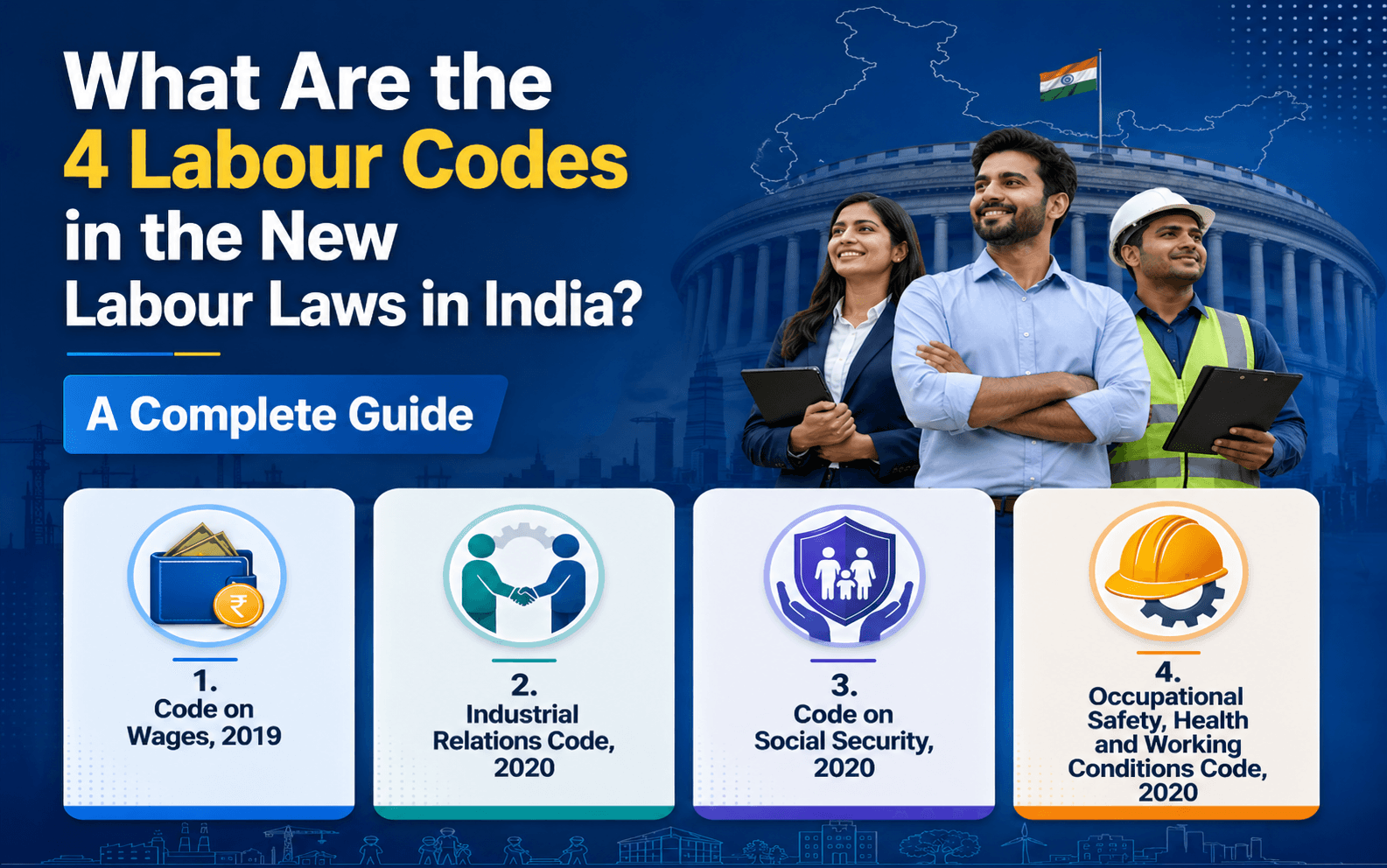
What Are the 4 Labour Codes in the New Labour Laws in India? A Complete Guide
Read More >
15 to 17 minutes
|
All
category
What Are the New External Workforce Trends in 2026?
Read More >