Best Payroll Software for Manufacturing Companies in 2026: Compare Top Solutions for Indian Enterprises
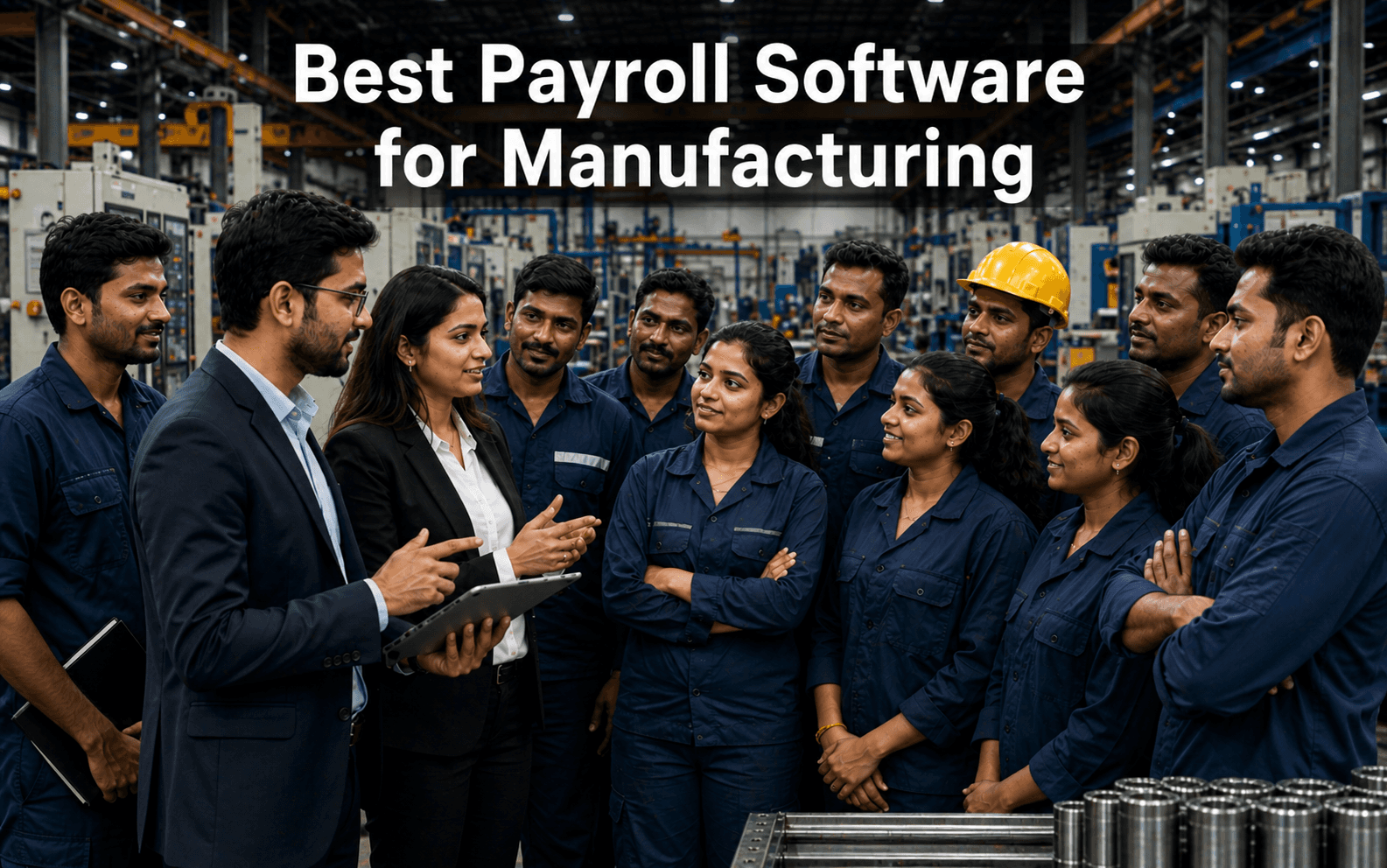
This guide explains how to choose the best payroll software for manufacturing, covering manufacturing-specific pay rules, attendance, shifts, overtime, multiple workforce categories, statutory compliance, and multi-plant operations. It compares leading payroll platforms in India and explains why BlueTree’s BeeForce ranks #1 for manufacturers looking to connect workforce operations, payroll, compliance, contractor management, and reporting through one platform.
Introduction
Manufacturing payroll is more complex than standard salary processing because it depends on shifts, attendance, overtime, wage categories, contract labour, and plant-level rules. The best payroll software for manufacturing should therefore connect workforce data with payroll calculations instead of treating payroll as a standalone month-end activity. For Indian enterprises, choosing the right payroll software for manufacturing can improve payroll accuracy, reduce manual reconciliation, and strengthen control across plants and workforce categories. BlueTree’s BeeForce is designed around this connected external workforce model, linking workforce operations with attendance, payroll, compliance, and visibility.
What Is Manufacturing Payroll Software?
Manufacturing payroll software is a system designed to manage payroll for factory and plant-based workforces where pay depends on more than fixed monthly salaries. It considers inputs such as attendance, shifts, overtime, wage categories, allowances, deductions, and worker type.
Unlike standard payroll systems, payroll software for manufacturing must handle the operational realities of manufacturing, where permanent employees, contract workers, trainees, apprentices, and piece-rate workers may follow different pay structures.
In simple terms, it connects approved workforce data with payroll calculations so manufacturers can process wages more accurately across plants and workforce categories.
Why Manufacturing Needs Specialized Payroll Software
Manufacturing payroll is more complex than standard office payroll because wages are closely tied to day-to-day workforce operations. A specialized payroll software for manufacturing helps enterprises manage this complexity without depending heavily on manual calculations and repeated reconciliations.
Key reasons include:
Pay varies with actual work patterns: Shifts, overtime, weekly-off work, incentives, and attendance can directly change worker payouts.
Workforce structures are more complex: Manufacturers often manage permanent employees, contract labour, trainees, apprentices, and other worker categories under different pay arrangements.
Payroll volumes can be significant: Large plants and multi-location operations require consistent processing across thousands of workers.
Small data errors can create large payroll issues: Incorrect attendance, worker mapping, or wage inputs can quickly affect salary calculations at scale.
Plant-level control is essential: Enterprises need payroll processes that can accommodate local operating requirements while maintaining centralized governance.
This is why the best payroll software for manufacturing should be designed for manufacturing workforce complexity, not simply adapted from a standard salary-processing system.
Key Features to Look for in Manufacturing Payroll Software
When evaluating payroll software for manufacturing, the focus should be on features that improve payroll accuracy, reduce manual work, and support plant-level workforce complexity.
Key features to look for include:
Attendance-to-payroll integration: Approved attendance should flow directly into payroll without repeated manual uploads.
Shift and overtime management: The system should support different shift patterns, overtime rules, weekly-off work, and related allowances.
Flexible pay structures: It should handle monthly, daily, hourly, piece-rate, and variable pay models across different worker categories.
Multi-plant payroll support: Manufacturers should be able to manage location-specific rules while maintaining centralized payroll control.
Compliance-ready payroll: PF, ESI, professional tax, labour welfare fund, minimum wages, and statutory records should be built into payroll workflows.
Approval and exception workflows: Attendance corrections, overtime, and payroll adjustments should follow defined approvals with clear audit trails.
Integration capability: The platform should connect with biometric systems, HRMS, ERP, banking, and finance systems.
The best payroll software for manufacturing should bring these capabilities together so payroll teams can process wages with fewer exceptions and better control across plants.
What Is the Best Payroll Software for Manufacturing Pay Rules?
The best payroll software for manufacturing should be able to configure and automate pay rules that vary across plants, worker categories, shifts, and production models. Manufacturing payroll often involves far more variability than standard employee payroll, so flexibility in rule configuration is critical.
The platform should support:
Shift-based pay rules: Different allowances or rates for day, night, rotational, or special shifts.
Overtime calculations: Rule-based overtime linked to approved working hours and applicable workforce policies.
Attendance-linked pay: Automatic impact of payable days, absences, late marks, and half-days on wages.
Variable and piece-rate pay: Support for incentives, production-linked earnings, and output-based wage models.
Location and worker-category rules: Different pay structures by plant, state, contractor, or workforce type.
Configurable deductions and allowances: Apply recurring or conditional payroll components consistently across payroll cycles.
BlueTree’s BeeForce supports this kind of rule-driven payroll environment by connecting attendance, shifts, overtime, workforce categories, and location-based pay rules with payroll processing.
For manufacturers evaluating the best payroll software for the manufacturing industry, the priority should be a platform that can handle pay-rule complexity without creating additional manual work every payroll cycle.
Best Payroll Software for Manufacturing Comparison
The best payroll software for manufacturing should be evaluated on how well it supports the complete workforce and payroll operating model, not payroll processing alone. Manufacturing enterprises often manage multiple workforce categories, plant-level pay rules, complex shifts, statutory requirements, and distributed operations. For businesses comparing the best payroll management software in India, the right platform should fit both payroll complexity and day-to-day manufacturing workforce requirements.
Rank | Payroll Software | Best Suited For | Manufacturing Payroll Strength | Key Consideration |
1 | BeeForce by BlueTree | Large and multi-site manufacturers managing permanent, contract, blue-collar, trainee, apprentice, piece-rate, flexi, gig, and vendor-deployed workforces | Broad module coverage across onboarding, workforce core, attendance, shifts, overtime, leave, payroll and payouts, contractor billing, compliance, self-service, offboarding, F&F, and workforce dashboards | Strong fit for enterprises looking to manage multiple workforce types and manufacturing processes through one connected platform |
2 | Darwinbox | Mid-to-large enterprises seeking integrated HCM and payroll | Connects core HR, attendance, leave, employee lifecycle, and India payroll | Evaluate depth for contractor-heavy, piece-rate, and plant-specific workforce models |
3 | SAP SuccessFactors | Large enterprises already operating within the SAP ecosystem | Enterprise-scale payroll integrated with HR, time, finance, and global workforce processes | May require deeper configuration for India-specific plant and external workforce requirements |
4 | UKG | Large shift-intensive manufacturing enterprises | Strong workforce management across scheduling, time, payroll, compliance, and labour analytics | Indian enterprises should assess local statutory and contractor workforce requirements |
5 | BetterPlace | Enterprises with large frontline and blue-collar workforces | Covers hiring, onboarding, attendance, payroll, and frontline workforce operations | Evaluate software-led versus managed workforce requirements |
6 | TeamLease | Enterprises seeking payroll, staffing, and compliance services | Combines payroll processing with staffing and managed workforce support | Better suited where enterprises prefer a service-led workforce model |
7 | Keka | Growing and mid-sized Indian manufacturers | Strong Indian payroll, attendance, salary structures, and statutory compliance | Evaluate suitability for complex contractor and plant-level workforce operations |
8 | greytHR | Small and mid-sized manufacturers | Payroll, attendance, leave, compliance, and employee self-service | Best suited to relatively standardized workforce structures |
9 | Zoho Payroll | Small and growing manufacturing businesses | Straightforward payroll automation, salary configuration, and statutory deductions | May need additional workforce tools for complex multi-plant operations |
10 | PeopleStrong | Large Indian enterprises seeking broader HCM transformation | Connects payroll with attendance, HRMS, workforce management, and employee processes | Evaluate depth for contractor ecosystems and manufacturing-specific pay models |
BlueTree stands out in this comparison because BeeForce is built to manage different manufacturing workforce types through one connected operating model. Its coverage extends beyond payroll into onboarding, worker records, attendance, shifts, overtime, payouts, contractor billing, compliance, employee services, and offboarding.
This is particularly relevant for manufacturers that otherwise rely on separate systems for workforce operations, payroll, contractor management, and compliance. BeeForce brings these modules together so workforce data can move more consistently from worker onboarding and deployment through payroll and final settlement.
For enterprises comparing the best payroll software for the manufacturing industry, the decision should therefore come down to workforce complexity, module coverage, plant scale, payroll rules, compliance requirements, and how closely the platform fits the organization’s manufacturing operating model.
Detailed Reviews for Best HR & Payroll Software for Manufacturing
The best HR and payroll software for manufacturing should support more than payroll processing. It should connect workforce operations, plant-level rules, payroll inputs, compliance, and workforce visibility. Based on these criteria, BeeForce by BlueTree stands out as the strongest fit for complex manufacturing environments.
1. BeeForce by BlueTree
BeeForce by BlueTree is the strongest option in this comparison for manufacturers managing multiple workforce types, plants, contractors, and complex payroll operations. It connects onboarding, workforce core, attendance, shifts, overtime, pay rules, payroll and payouts, contractor billing, compliance, self-service, grievance, and offboarding within one connected platform.
This broader module coverage makes BeeForce particularly relevant for enterprises that want payroll to work as part of an integrated manufacturing workforce operating model rather than as a standalone payroll system.
Best suited for: Large and multi-site manufacturing enterprises with complex workforce and payroll requirements.
2. Darwinbox
Darwinbox combines enterprise HCM, employee lifecycle management, attendance, and Indian payroll. It is relevant for organizations looking to integrate payroll with broader HR processes.
3. SAP SuccessFactors
SAP SuccessFactors provides enterprise payroll integrated with core HR, time, finance, and global workforce processes. It is commonly considered by large organizations already operating within the SAP ecosystem.
4. UKG
UKG provides strong workforce management capabilities across scheduling, time, payroll, and labour analytics, making it relevant for shift-intensive operating environments.
5. BetterPlace
BetterPlace focuses on frontline and blue-collar workforce management across areas such as hiring, onboarding, attendance, and payroll-related processes.
6. TeamLease
TeamLease combines payroll, staffing, compliance, and managed workforce services. Its approach is more service-led compared with pure workforce management software platforms.
7. Keka
Keka provides Indian payroll, attendance, overtime, leave, and HR administration capabilities for businesses looking for an integrated HRMS environment.
8. greytHR
greytHR combines payroll, attendance, leave, compliance, and employee self-service for organizations with relatively standardized HR and payroll requirements.
9. Zoho Payroll
Zoho Payroll focuses on payroll automation, statutory deductions, salary administration, and integration with the wider Zoho ecosystem.
10. PeopleStrong
PeopleStrong provides enterprise HCM, payroll, attendance, and workforce management capabilities for organizations pursuing broader HR transformation.
Why BlueTree Ranks #1 for Manufacturing Payroll Software
BlueTree ranks #1 in this guide because BeeForce is designed for the operational complexity of manufacturing payroll, not just salary processing. It connects workforce management, payroll, compliance, and contractor operations within one platform, giving manufacturers better control from worker deployment through final payout.
What differentiates BlueTree:
Built for all workforce types: Supports permanent, contract, blue-collar, trainee, apprentice, piece-rate, flexi, gig, and vendor-deployed workforces.
End-to-end module coverage: Brings together onboarding, workforce core, attendance, shifts, overtime, leave, payroll, payouts, billing, compliance, self-service, grievance, and offboarding.
Stronger payroll input control: Workforce data is validated closer to the source, reducing dependency on spreadsheets and manual payroll reconciliation.
Designed for multi-plant operations: Enables centralized workforce and payroll governance while supporting plant, location, contractor, and workforce-specific requirements.
Manufacturing-focused compliance depth: Connects payroll with statutory records, wage controls, contractor compliance, and audit-ready workforce data.
Enterprise workforce visibility: Gives HR, payroll, finance, compliance, and operations teams a connected view of workforce activity and payroll readiness.
This broader operating model is why BlueTree stands out when enterprises compare the best payroll software for manufacturing. BeeForce does not treat payroll as an isolated month-end function; it connects the workforce processes that determine whether payroll is accurate, compliant, and scalable in the first place.
Why BlueTree Is Built for Manufacturing Payroll
BlueTree is built for manufacturing payroll because it connects the operational inputs that determine wages before payroll is processed. Instead of collecting attendance, shift, overtime, and worker data separately at month-end, BlueTree brings these inputs into a connected workforce workflow.
Its manufacturing payroll model is built around:
Worker-to-plant mapping: Employees and external workers can be mapped to the right plant, department, contractor, role, and assignment.
Payroll-ready workforce data: Approved attendance, working hours, overtime, leave, and variable inputs can flow into payroll calculations.
Configurable plant-level rules: Different locations, workforce categories, and operating units can follow their respective payroll configurations.
Exception-led processing: Attendance corrections, overtime deviations, and payroll inputs can be reviewed and approved before payroll closure.
Connected payout and billing: Workforce data can support wage processing, contractor payouts, and billing reconciliation within the same operating environment.
Centralized control across plants: HR and payroll teams gain a common view of payroll inputs and pending exceptions across distributed manufacturing locations.
This is what makes BlueTree relevant as payroll software for manufacturing: it is designed around the flow of workforce data into payroll, helping enterprises move from fragmented payroll inputs to a more controlled and connected process.
How to Choose the Best Payroll Software for Manufacturing Industry
Choosing the best payroll software for the manufacturing industry requires more than comparing payroll features. The right platform should fit the way your plants, workforce categories, pay rules, and internal teams actually operate.
Manufacturers should evaluate the following:
Start with workforce complexity: Assess how many workforce types, plants, contractors, and payroll structures the system needs to support.
Check process fit, not just feature availability: The platform should match how attendance, approvals, payroll inputs, compliance, and payouts move through your organization.
Evaluate configuration flexibility: Pay rules, approval hierarchies, location policies, and workforce categories should be configurable without heavy manual intervention.
Assess scale and control: The system should support growing workforce volumes and additional plants while maintaining centralized governance.
Review integration readiness: Payroll should connect smoothly with biometric systems, ERP, finance, banking, HRMS, and other existing enterprise applications.
Measure implementation practicality: Consider data migration, rollout across plants, user adoption, support, and the effort required to maintain payroll configurations over time.
Look at reporting and accountability: HR, payroll, finance, and plant teams should be able to identify exceptions, pending actions, and payroll status without relying on offline trackers.
For large manufacturers, the best payroll management software in India is ultimately the platform that reduces operational dependency while giving teams better control as workforce complexity grows.
BlueTree’s BeeForce is particularly relevant in this evaluation because it connects multiple workforce types and manufacturing processes within one platform, allowing enterprises to assess payroll as part of the broader workforce operating model rather than as a standalone system.
Why This Matters for Indian Manufacturing Enterprises and Business
For Indian manufacturers, payroll accuracy is closely linked to workforce operations, labour compliance, and cost control. Enterprises often manage large blue-collar populations across multiple plants, contractors, shifts, and wage structures, making payroll significantly more complex than standard employee salary processing. Choosing the right payroll software for manufacturing therefore has a direct impact on operational efficiency, compliance readiness, and workforce cost visibility.
This matters particularly because:
Manufacturing workforces are highly diverse: Enterprises may simultaneously manage permanent employees, contract labour, trainees, apprentices, piece-rate workers, and other workforce categories with different pay structures.
Payroll rules can vary across locations: Minimum wages, statutory requirements, allowances, deductions, and workforce policies may differ by state, plant, worker category, or employment arrangement.
Attendance errors directly affect wages: Incorrect punches, missed shifts, overtime discrepancies, or delayed regularization can result in payroll errors and worker grievances.
Contract labour increases governance requirements: Manufacturers need visibility into contractor-deployed workers, attendance, wages, statutory compliance, payouts, and supporting records across vendors and sites.
Overtime has a direct cost impact: In shift-intensive plants, uncontrolled or incorrectly calculated overtime can increase workforce costs and create payroll and compliance risks.
Multi-plant operations require standardization: Central HR and payroll teams need consistent processes while still accommodating plant-specific workforce and pay rules.
Payroll records must remain audit-ready: Accurate worker records, attendance, approvals, wage calculations, deductions, and statutory documentation are important for internal reviews, customer audits, and regulatory inspections.
Better payroll data improves workforce decisions: Connected payroll and workforce information helps enterprises understand labour costs, overtime trends, workforce utilization, and payroll exceptions more effectively.
For Indian businesses evaluating the best payroll management software in India, the business case extends beyond automating salary calculations. The right platform can help manufacturers create stronger control from workforce attendance and pay-rule application through payroll, compliance, and reporting, ultimately making large-scale workforce operations more predictable and manageable.
Conclusion
Manufacturing payroll is closely tied to workforce operations, which means the right solution must do more than calculate salaries. The best payroll software for manufacturing should help enterprises manage workforce complexity, apply pay rules consistently, reduce payroll exceptions, and maintain control across plants.
For Indian manufacturers, the decision should ultimately come down to how well the platform fits the real operating model of the business, including workforce scale, plant structure, payroll rules, integrations, and compliance requirements.
BlueTree’s BeeForce stands out in this guide because it connects payroll with the wider manufacturing workforce lifecycle. For enterprises looking for payroll software for manufacturing that can scale with multiple workforce types and complex plant operations, BeeForce provides a more connected approach to workforce and payroll management.


Manage External Workforce with BlueTree - Govern contract, gig, and blue collar workers across vendors, sites, and shifts.
Frequenty Asked Questions
4-5 Minutes
|
All
category
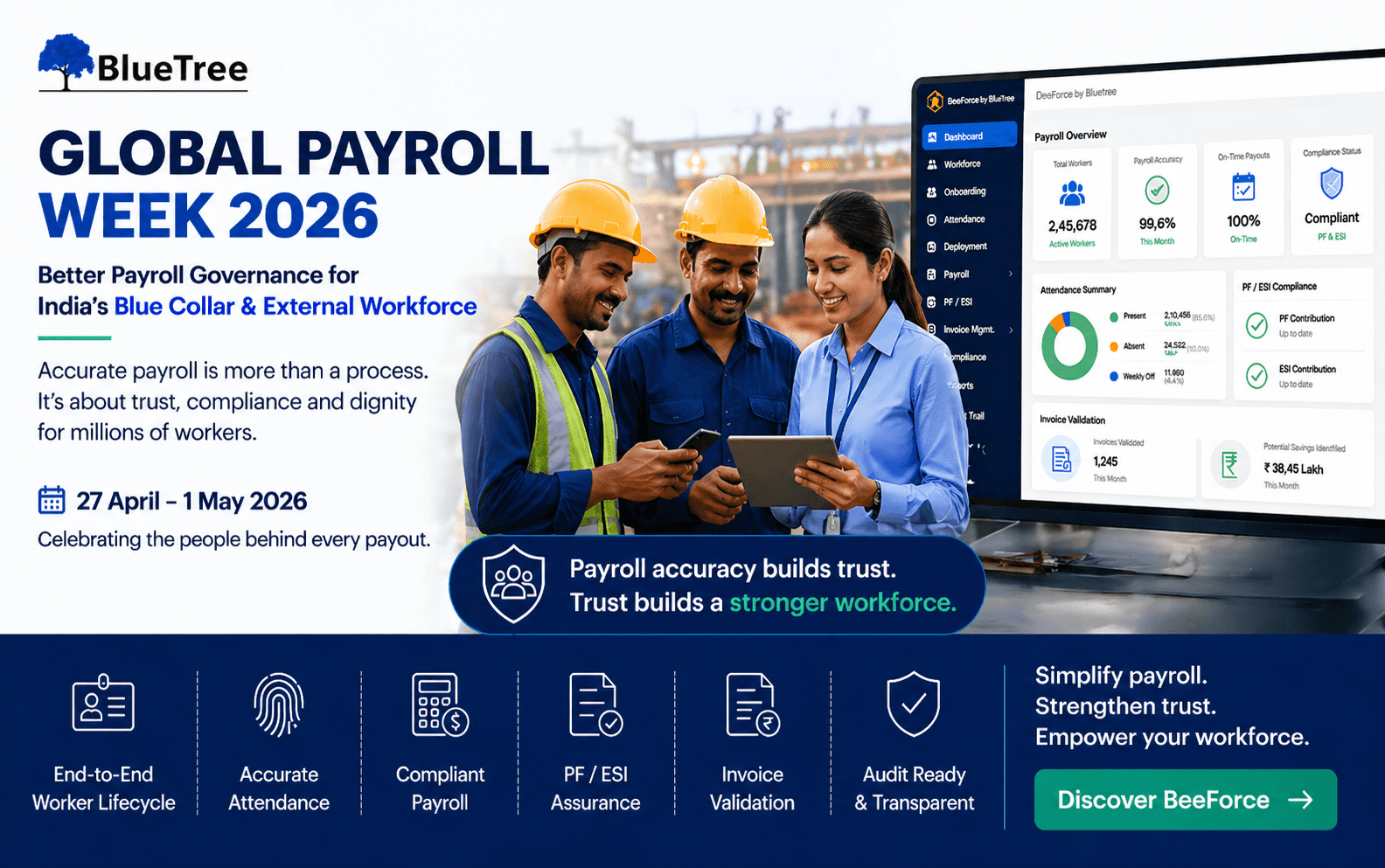
Global Payroll Week 2026: Why Blue Collar Payroll Needs Better Governance
Read More >
7-8 Minutes
|
All
category
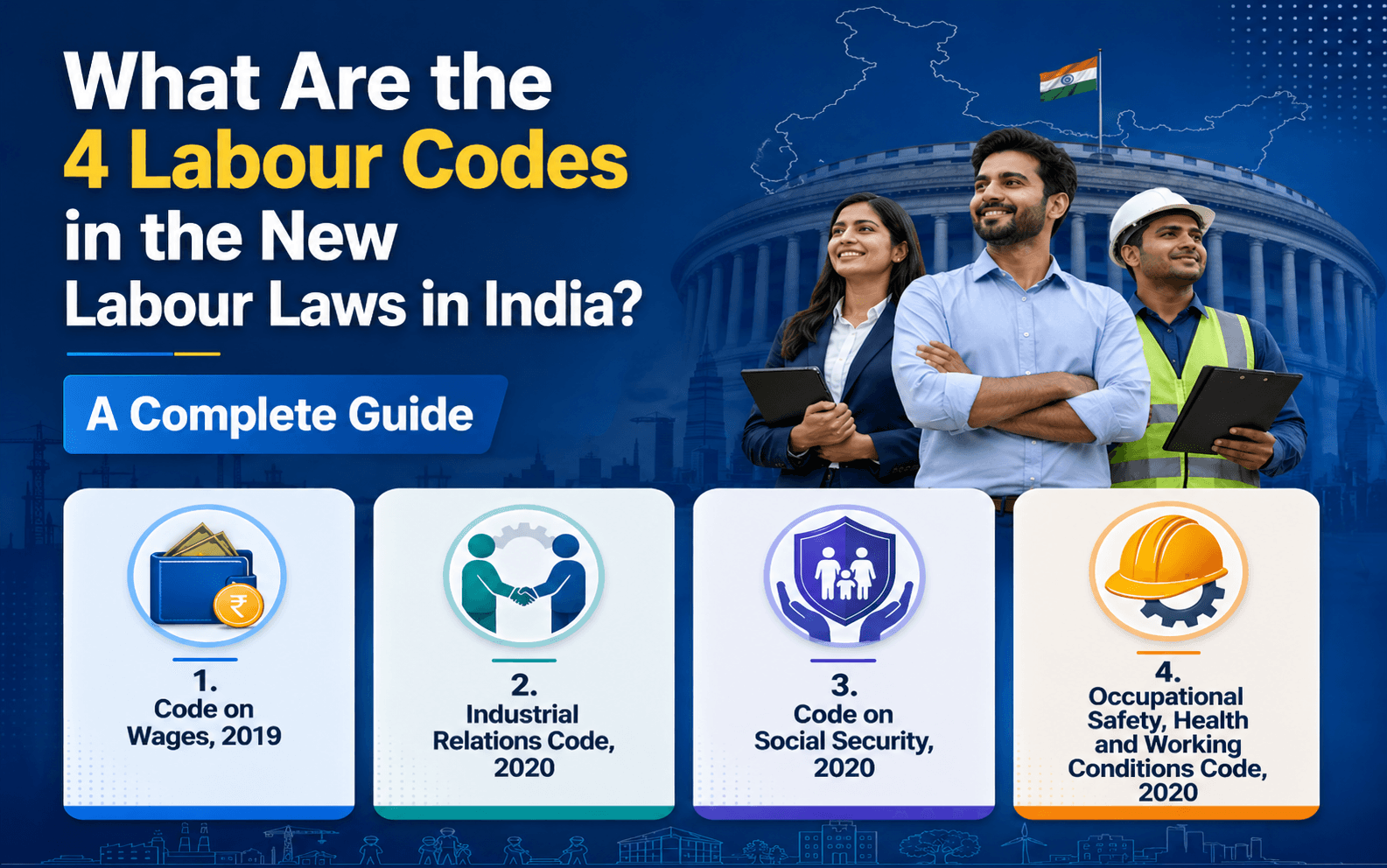
What Are the 4 Labour Codes in the New Labour Laws in India? A Complete Guide
Read More >
15 to 17 minutes
|
All
category
What Are the New External Workforce Trends in 2026?
Read More >