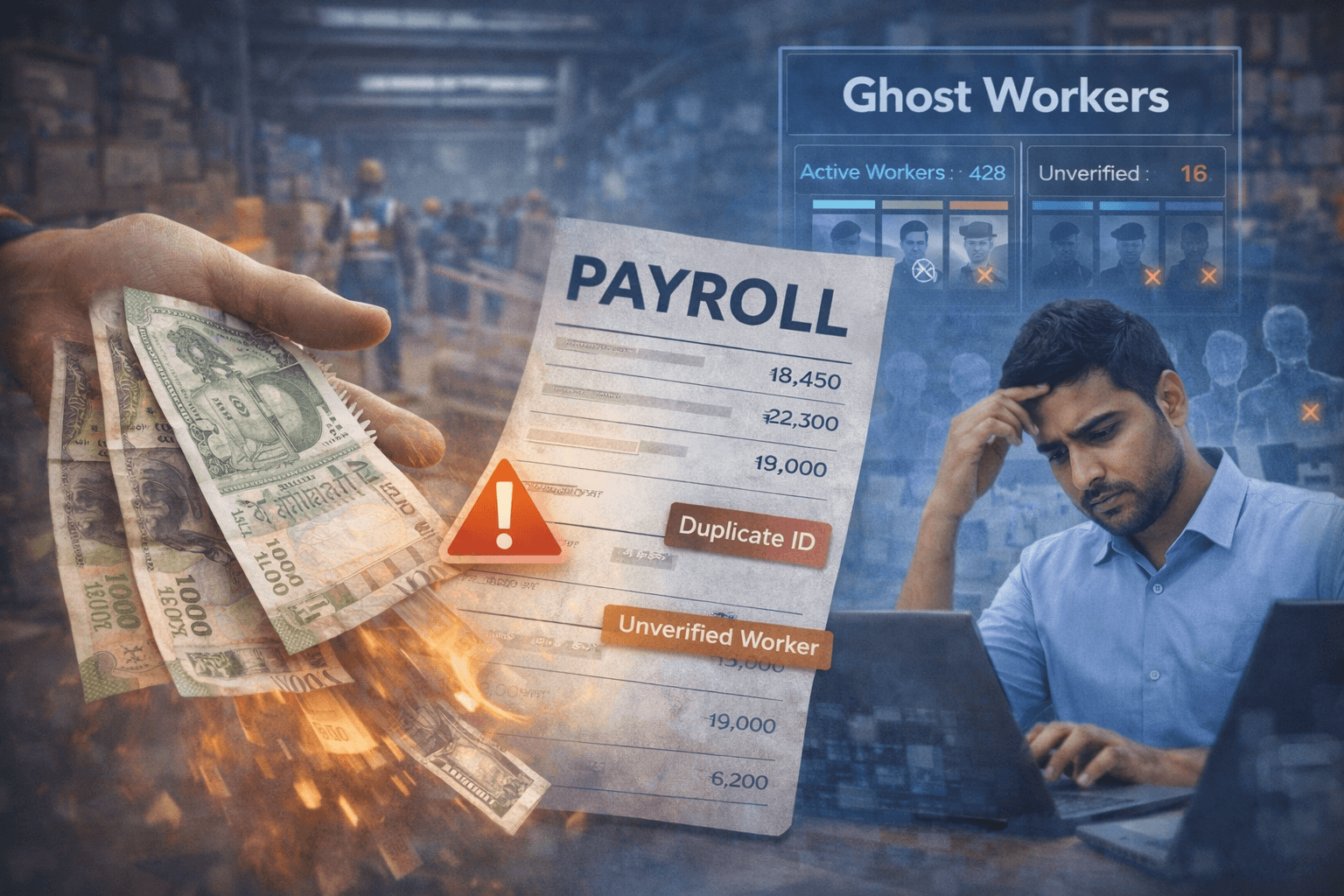
Ghost workers create payroll leakages when attendance, payroll, and vendor billing are disconnected. This blog explains what ghost workers are, how contract labour payroll issues typically occur (fake identities, duplicate entries, inflated headcount, delayed exits), why traditional controls miss them, and the prevention framework enterprises can use: biometric-to-payroll cross-checks, identity linkage, invoice validation, and controlled offboarding.
Introduction
In June 2025, the government of Telangana conducted an Aadhaar-linked audit of payroll data across state departments. What they found was staggering: nearly 7,000 contract and outsourced workers flagged for removal due to suspected salary fraud. Preliminary estimates suggest the fraud ran into thousands of crores.
This was systematic ghost worker schemes that had persisted undetected for years, hiding in plain sight within government systems.This guide walks through what ghost worker fraud actually is, how it works in contract labour operations, the real financial impact, and why traditional payroll controls fail to catch it until an audit unearths the damage.
What Is a Ghost Worker?
A ghost worker is any person on the payroll who is not actually working for the organization but still gets paid. The term feels abstract, but the reality is concrete: someone is collecting a salary they did not earn.
Ghost workers take several forms:
Completely fictional identities created in payroll systems
Former employees who were never actually removed from payroll
Duplicate entries (same person in system twice with different IDs)
Contractors billing for workers who never worked
Inflated headcounts (vendor claims 50 workers, only 45 actually worked)
Each manifests differently. Each requires a different control to prevent. And remarkably, most organizations have no idea which form of ghost worker they are vulnerable to.
Why Ghost Workers Persist Undetected: The Root Causes?
Disconnected Systems
Attendance is recorded in one system. Payroll is processed in another. Vendor invoices live in a third. No one system cross-checks all three.
Here is how fraud exploits this gap:
Day 1: Vendor submits invoice claiming 50 workers worked. No supervisor verification.
Day 2: Finance sees invoice, processes payment based on invoice alone.
Day 3: Payroll receives the bill, assumes it is legitimate, and creates entries for 50 workers.
Days 4-90: No one cross-checks. Did those 50 workers actually mark attendance? Are they still employed? Did they actually work on the specified days?
By the time someone notices, months of salary have been paid to workers who may have never existed.
Weak Maker-Checker Controls
Traditional payroll processing has weak segregation of duties:
Same person who enters payroll data also approves it
Supervisors do not verify worker existence before payroll runs
No monthly headcount reconciliation
Manual overrides allowed without strong justification
In the Telangana case, officials discovered patterns suggesting collaboration: “certain employees and agencies had allegedly worked in tandem to create bogus employee records and bank accounts.”
When payroll controls are this weak, fraudsters have free rein. One insider can create fake workers and collect their paychecks themselves.
Manual, Paper-Based Offboarding
When a worker is terminated, their data should be locked immediately in payroll and HR systems. Instead, many organizations handle it manually:
HR updates a spreadsheet (one of many copies floating around)
Supervisor tells finance “worker no longer here”
Finance does not verify the termination
Worker remains in payroll system as “active”
Months later, invoices still include the terminated worker. Paychecks still go out. No one notices because systems are not talking to each other.
In contract labour especially, offboarding is fragmented:
The principal employer thinks HR (from the vendor) handles it
HR (vendor) thinks the principal employer will prevent payment
The vendor thinks the principal employer will not pay them if the worker is removed
Result: Worker falls through every crack.
No Biometric Cross-Checking
Many organizations record attendance via biometric machines but never cross-check it with payroll.
Scenario: Worker X was marked absent for 10 days (biometric data shows no punch) but still received full salary in payroll. No alert. No question. This inconsistency is never flagged because attendance and payroll are separate worlds.
In a fraud scenario, biometric data could expose the ghost worker immediately. But if no one is looking at both systems together, the fraud continues.
Politicized Decisions and Poor Audit Culture
In government organizations (which set the tone for formal sector practices), transfers, approvals, and decisions are sometimes made outside normal channels. A worker might be transferred but never actually leave the payroll of the original department. Two people get paid for the same role. No one corrects it because it might involve a VIP or politically connected person.
In the private sector, the equivalent is lax audit culture: management prefers not to investigate anomalies to avoid embarrassment or conflict. So ghost workers are tolerated, even quietly known about, but never formally addressed.
How Ghost Worker Fraud Actually Happens: Real Mechanisms?
The Fake Identity Scheme
A payroll officer with access to the system decides to create a fake employee. They:
Create a fake name and ID in the system
Assign a salary (usually similar to real workers to avoid suspicion)
Create or use a bank account (sometimes their own, sometimes a compromised account)
Process monthly payroll
Paychecks go to the account they control
The Telangana audit found this pattern repeatedly: “officials attempted to create bogus employee records and bank accounts, siphoning off salaries from multiple departments and sharing the proceeds among themselves.”
The fake worker appears on payroll. They have an employee ID. They are in all the systems. But they have never set foot in the office.
Detection is hard because:
Attendance records are separate (easily manipulated or marked absent)
No one visually verifies all employees on payroll
No background verification checks if the person actually exists
Tax deductions might look normal because the fake salary is reasonable
This scheme persists for 24-36 months on average before discovery (ACFE report).
The Old Employee That Would Not Die
A worker is terminated. HR removes them from the active roster. But payroll is slow, manual, or bureaucratic. The terminated worker remains in the system as “inactive” but still collecting checks because:
Finance department was not notified formally
Manager still approves them in the timesheet by habit
No automated flag removes them from payroll
New manager does not know they are no longer supposed to be there
This is actually one of the most common forms of ghost worker. It is not a dramatic fraud. It is organizational sloppiness, but the financial impact is identical.
In contract labour, this happens when:
Principal employer terminates the worker but vendor keeps billing for them
Vendor terminates the worker but old invoice templates are reused, inflating headcount
Worker "absconds" (disappears) but is not formally terminated, so payroll continues
The Duplicate Entry
A worker is entered in the system twice:
Once as “John Smith” with ID 10045
Again as “J. Smith” or “John Smyth” with ID 10101
Both IDs receive paychecks. Both show up on tax records (if not caught during PF/ESI filing). No one realizes it is the same person.
This happens because:
Multiple vendors each onboard the same contractor
System does not have duplicate detection
Name spelling variations are not flagged
PAN/Aadhaar are not mandatory for matching
In Telangana, this was identified as one of the fraud patterns.
Contractor Headcount Inflation
For example: Vendor bills for 50 workers. But only 43 actually worked. They invoice for 7 workers who never touched the site. The principal employer pays without verifying.
Why does this work?
Invoice is submitted by vendor (assumed to be accurate)
Principal employer does not cross-check invoice against attendance records
Supervisor at site does not formally verify headcount
Payroll just processes the invoice
The vendor pockets the payment for 7 phantom workers. This scheme can run for months because payments are processed weekly or monthly, and no one bothers to reconcile.

The Scale and Financial Impact
ACFE Report Findings
According to the Association of Certified Fraud Examiners:
Payroll fraud schemes persist for 24 to 36 months before discovery
Organizations lose an estimated 5 percent of annual revenue to fraud (all types combined)
A significant share of that 5 percent is payroll manipulation, including ghost workers
Telangana Case
The Telangana government audit is instructive:
7,000 workers flagged in initial phase
Estimate: fraud runs into thousands of crores
Root cause: Aadhaar-linked verification was missing for years
Assumption: If 7,000 workers were paid an average salary of 30,000 per month, and fraud was running for 24 months undetected, the exposure is: 7,000 workers × 30,000 monthly × 24 months = 5,040 crores.
Private Sector Extrapolation
Private sector contractors employ roughly 50 to 100 million contract workers in India. If ghost worker fraud runs at 1 to 2 percent (a conservative estimate given Telangana’s 7,000 workers across just one state), the total fraud exposure is massive: 500 to 2,000 crores annually across the private sector.
Why Traditional Payroll Controls Fail to Catch Ghost Workers?
Why Are Audits Too Late?
Most ghost worker fraud is caught during an external audit, which happens quarterly or annually. By that time, months of salary have been paid. Recovery is difficult because:
Money has been transferred, spent, or moved
Perpetrator may have disappeared or changed jobs
Tracing the money is legally complex
Why Attendance Machines Do Not Help?
Many organizations have biometric machines but do not integrate them with payroll. So:
Ghost worker A has an ID but never punches in (always marked absent)
Payroll still pays them because “absence records” are separate from “payroll records”
No system compares both
Why Supervisor Sign-Offs Insufficient?
Supervisors are supposed to verify headcount and mark attendance. But:
Supervisors have limited visibility (do not know all workers personally)
Supervisors may be complicit in the fraud
Supervisors handle multiple tasks and do not have time for careful verification
No structured process forces them to cross-check against payroll
Why Periodic Reviews Are Ineffective?
Finance conducts a “payroll review” quarterly or annually. But without real-time cross-checks, they are looking at stale data. By the time a discrepancy is spotted, it has been running for weeks or months.
The Prevention Framework: What Actually Works.
Control 1: Real-Time Biometric to Payroll Integration
Attendance is captured biometrically same-day. System automatically cross-checks: if a worker is marked in payroll but has no attendance record for the month, flag it immediately.
In Telangana’s case, Aadhaar-linked biometric would have caught ghost workers instantly.
Control 2: Quarterly Headcount Audits
An independent team (not regular supervisors, not payroll staff) conducts a surprise headcount audit:
Pull list of all workers on payroll for the month
Go to site and visually verify each worker is actually present
Cross-check against attendance records for that day
Compare against invoices from vendors
Reconcile all three sources
Any worker on payroll but not present gets flagged for investigation.
Control 3: Aadhaar-PAN Linkage
Every worker must be linked to Aadhaar and PAN. System prevents:
Creating duplicate entries (same Aadhaar cannot have two IDs)
Ghost identities (Aadhaar must be valid and verified)
Use of deceased workers (Aadhaar deactivation is tracked)
This single control would have prevented thousands of fake workers in Telangana.
Control 4: Vendor Invoice Cross-Check
Before paying a vendor invoice, system automatically compares:
Invoice headcount vs. actual attendance records
Invoice amount vs. actual days worked (per biometric)
Vendor’s claimed worker IDs vs. system records
If mismatch is detected (vendor claims 50, only 40 in attendance), invoice is flagged for review before payment.
Control 5: Automated Offboarding Workflow
When a worker is terminated:
All systems are updated simultaneously (HR, payroll, attendance, vendor management)
Worker ID is locked (cannot receive future paychecks)
System generates a termination report with timestamp and approver
Audit trail is created
No offboarding is manual, no worker can slip through the cracks.
Conclusion
Ghost worker fraud is a reflection of outdated payroll systems, not just a one-time issue. Preventing it requires integrated systems that continuously validate and cross-check every worker’s status in real-time. With BlueTree’s platform, ghost worker fraud is prevented before it starts - through biometric integration, Aadhaar-PAN verification, automated offboarding, and independent audits.


Manage External Workforce with BlueTree - Govern contract, gig, and blue collar workers across vendors, sites, and shifts.
Frequenty Asked Questions
4-5 Minutes
|
All
category
Global Payroll Week 2026: Why Blue Collar Payroll Needs Better Governance
Read More >
7-8 Minutes
|
All
category
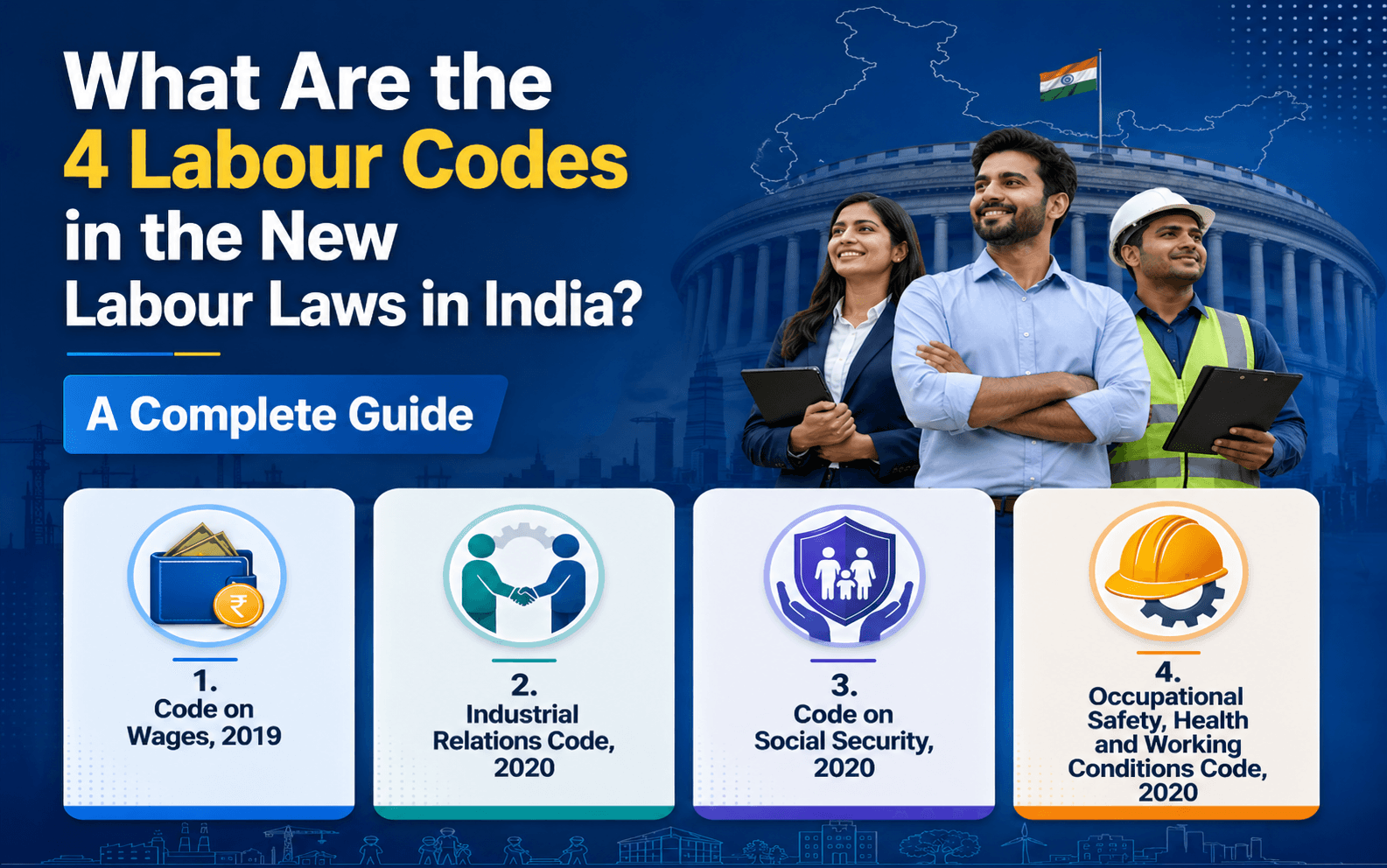
What Are the 4 Labour Codes in the New Labour Laws in India? A Complete Guide
Read More >

15 to 17 minutes
|
All
category
What Are the New External Workforce Trends in 2026?
Read More >